Most adult beginners don’t bounce off tabletop roleplaying games because the rules are too hard. They bounce off because the prerequisite to most TTRPGs is finding four other adults who will commit to meeting every other Sunday at 7pm. That’s a social engineering problem, not a game problem, and the right gift either solves it or sidesteps it.
This guide is organized by social on-ramp rather than by system. Each pick below is tagged to one of three honest realities: the recipient will play solo, will play a single one-shot with one or two willing friends, or has a group lined up and needs a full starter campaign.
Pick by how they’ll actually play, not by which book looks most impressive on a shelf. A $60 starter box that sits sealed for two years is a worse gift than a $25 softcover they open on a Tuesday night.
How we select these gifts
- Specialty retailers first: TTRPG starter kits are a niche where Austin-area game stores set the bar — we cross-referenced inventory at Dragon’s Lair Comics & Fantasy and Great Hall Games, both of which survive on return customers who teach beginners weekly. When a pick was too niche for local stores (Ironsworn, Dragonbane), we checked national specialty retailers like DriveThruRPG and Noble Knight Games.
- Community consensus: We cross-referenced what stores stock against what hobbyists actually recommend in r/rpg’s “what should I run for a new group” threads, r/Solo_Roleplaying for solo entry points, and the RPGnet “Recommended for Beginners” wiki. Products that appeared in both signals got the heaviest weight.
- Playable within 48 hours: Every pick either works solo, includes full pre-gens and a complete first adventure, or pairs with a session the giver can run themselves. Adults have high reading comprehension and low tolerance for setup friction — this guide respects both.
- Budget range: Picks span $9 to $60 so the guide works whether you’re adding a stocking stuffer or building a $100 all-in bundle.
- Skip-this guidance: Where a popular pick (DM screens, metal dice sets, hardcover Player’s Handbooks) looks thoughtful but actually raises activation energy for a first-timer, we say so and explain why.
How We Pick TTRPG Gifts for Adult Beginners
The three criteria this guide enforces: the gift has to be playable within 48 hours of unwrapping, it can’t require the recipient to independently recruit a group before using it, and it has to respect adult cognitive load — which means high information density is fine, but setup friction is not.
From there, every pick is tagged to one of three on-ramps. Solo on-ramp: the recipient can play tonight, alone, with nothing but dice and the book. One-shot on-ramp: the recipient plus one willing friend can run the included adventure in a single evening. Full-campaign on-ramp: the box carries a group through four to eight sessions, assuming a group exists.
The mistake most gift guides make is assuming every recipient is in the third bucket. The majority of adult beginners aren’t. Most have curiosity and zero group.
Ironsworn: Best Solo and GM-less On-Ramp
Ironsworn leads this guide because it solves the biggest blocker. The recipient can open it, read thirty pages, and start playing the same night — alone, at the kitchen table, with no GM and no party. It’s a recurring top pick in r/Solo_Roleplaying beginner threads for a reason.
The key mechanic is oracles: small tables that answer “does this happen?” and “what do I find?” when the fiction needs a prompt. That kills the blank-page problem, which is the real failure mode for new solo players. The player is never staring at a cursor wondering what the world does next.
It scales. The same book supports solo, co-op, and GM’d play with no rule changes. If the recipient plays alone for a month and then finds a friend, the book still works. The digital PDF is free, which sounds like an argument against buying the print copy — it’s actually the argument for it. The print softcover is the reading-experience upgrade, and unwrapping a free PDF is a thin gift.
D&D Starter Set: Heroes of the Borderlands — The Weekend-Ready Starter Box
If the recipient has even one willing friend, this is the default pick. The 2025 rebuild of D&D’s on-ramp did something the 2022 Stormwreck Isle set didn’t: it replaced rules memorization with physical objects. Class boards, token combat, and a card-driven resolution system let a table sit down and play in 15 minutes without cracking a sourcebook.
The three linked adventures teach the three pillars — exploration, social, combat — in deliberate sequence. That’s a teaching design, not a content design, and it matters. A new table that plays adventure one, then two, then three learns the game the way you’d learn a language through immersion rather than through grammar drills.
The honest trade-off is price. At $49.99, this set runs roughly double the 2022 Stormwreck Isle box. The cards, boards, and tokens are the reason, and for a beginner they earn the premium. If the recipient already owns the 2024 Player’s Handbook or has played a session, skip it — this set strips rules core-book readers will miss.
Pathfinder 2e Beginner Box: The Not-D&D Alternative
For the recipient who wants to try something adjacent to D&D but distinct from it, the Remastered Pathfinder 2e Beginner Box is the cleanest option. It’s consistently stocked at Dragon’s Lair and remains the top-recommended Pathfinder entry point in r/Pathfinder2e beginner threads.
The underrated pedagogical feature is the color-coded dice. A new player who has never held a d12 before sees the blue die called out in the rules and picks up the blue die. It teaches polyhedral identification by association rather than by shape memorization, and for a first-timer, that friction reduction is real.
Tactical pawn-based combat gives a different learning experience than 5e’s theater-of-the-mind default. Some beginners vastly prefer the spatial clarity. Honest caveat: Pathfinder 2e’s three-action economy is simpler than 5e’s action/bonus/reaction split, but the system as a whole is still rules-forward compared to Dragonbane or Ironsworn.
Dragonbane: Mirth & Mayhem Core Set — The Low-Crunch Fantasy Pick
Dragonbane is the sleeper recommendation for gift-givers who want fantasy adventure without the D&D brand halo. It’s a d20-based system with far fewer modifiers than 5e, which means a round of combat resolves in seconds rather than minutes of mental arithmetic.
The box ships with 11 adventures, a full campaign, and — critically — a solo-play booklet. The recipient can learn the rules alone on a Wednesday and bring a prepped character to a first group session on Saturday. That’s a real solution to the “I don’t want to hold up the table” anxiety that blocks a lot of adult beginners.
Free League’s production values make the box feel like a premium board game rather than a stack of paperbacks — it reads as a gift-grade object the moment it’s unwrapped. The trade-off is community size. D&D and Pathfinder have huge local player pools; Dragonbane has a smaller, more dedicated one. If the recipient is trying to plug into an existing Adventurers League group, system compatibility wins over system elegance.
Field Notes 5E Character Journal: The Accessory That Actually Matters
Most TTRPG accessories are level-up gear: dice towers, mini storage, GM screens. Beginners don’t need those. What beginners need is a place to externalize cognitive load so they can focus on the fiction instead of reconstructing what happened last session.
The Field Notes 5E journal dedicates real estate to the stuff a single-sheet character sheet crams into margins: inventory with room to breathe, NPC names and descriptions, session notes, level-up tracking. It was designed with Chicago Board Game Cafe, which means it was playtested by people who teach beginners weekly, not by a design team guessing at what new players need.
Pairs naturally with the D&D Starter Set as a two-item bundle. Skip it if the recipient plays primarily digital (D&D Beyond, Foundry) — the journal assumes pencil-and-paper flow.
Wiz Dice Series II: The Dice That Don’t Embarrass
The default beginner dice recommendation online is a Chessex Pound o’ Dice — a bag of unsorted factory seconds. For a new player, that’s exactly wrong. A beginner needs to identify each die quickly during the first five sessions, not rummage through a pile of 80 dice trying to find a single d4.
A matched 7-die Wiz Dice Series II set solves that for $9. Sharp edges, balanced construction, large readable numerals, velvet pouch so nothing gets lost between sessions. It’s the right tool for the stage.
It’s not forever dice. If the recipient turns out to be a stationery-quality person who gets into the hobby seriously, they’ll upgrade to a Level Up or Dispel Dice set within a year, and that’s fine. The job of a gift-grade beginner die set is to not get in the way during the learning curve, and these don’t.
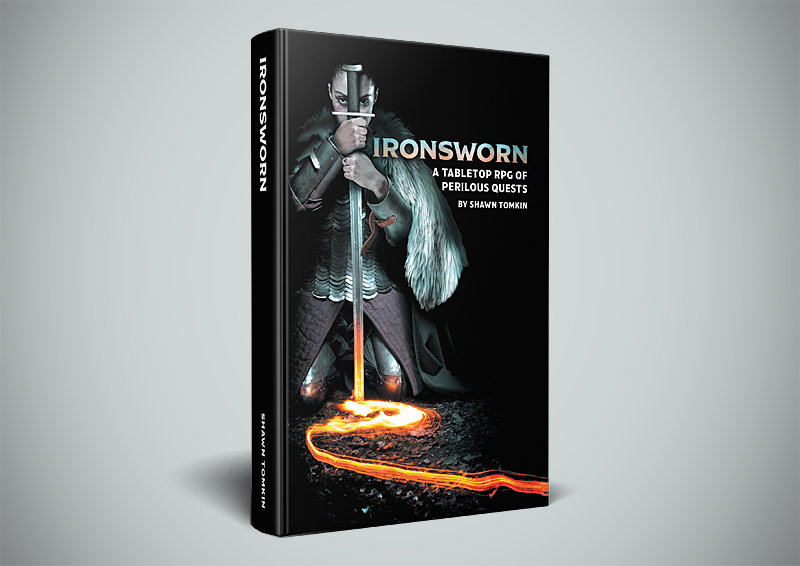
Ironsworn (Softcover)
The solo RPG answer to “I can’t find a group yet.” Supports solo, co-op, and guided modes — oracles and move structure generate a story with zero prep.
- Scales from solo to co-op to full group with the same book
- Oracle tables kill the blank-page problem on night one
- Digital PDF is free — print is the reading-experience upgrade
- Amazon listings are inconsistent — direct from Tomkin Press or DriveThruRPG is more reliable
D&D Starter Set: Heroes of the Borderlands (2025)
The 2025 rebuild of D&D’s on-ramp. Card-and-token design does the heavy lifting — an adult beginner can pick a class board and start playing in 15 minutes without reading a sourcebook.
- Class boards and token combat replace rules memorization
- Three linked adventures teach exploration, social, and combat pillars in sequence
- Full 11-dice set included — a new table can play straight out of the box
- $49.99 is roughly double the 2022 Stormwreck Isle starter — the price jump is real
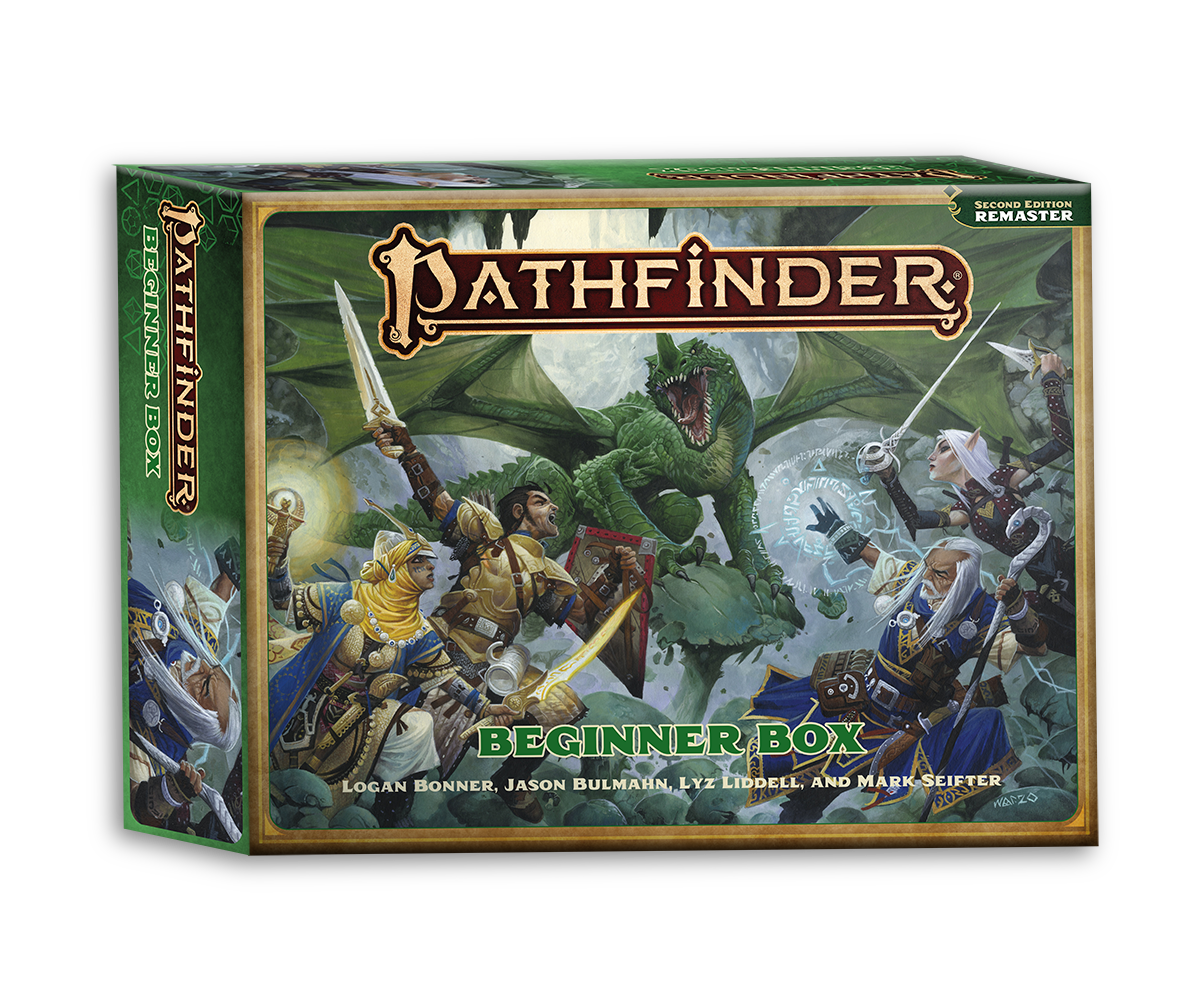
Pathfinder 2e Beginner Box (Remastered)
The not-D&D alternative. Color-coded dice teach polyhedral identification visually — a real friction point for first-timers. Includes four pre-gens, the self-contained “Troubles in Otari” adventure, and cardboard pawns.
- Color-coded dice teach polyhedral identification by association
- Remastered rules align with current Pathfinder 2e — transitioning to the Core Rulebook later is seamless
- Tactical pawn-based combat gives a different learning experience than 5e’s theater-of-the-mind
- Pathfinder’s three-action economy is simpler than 5e’s but still requires a rules-engaged GM
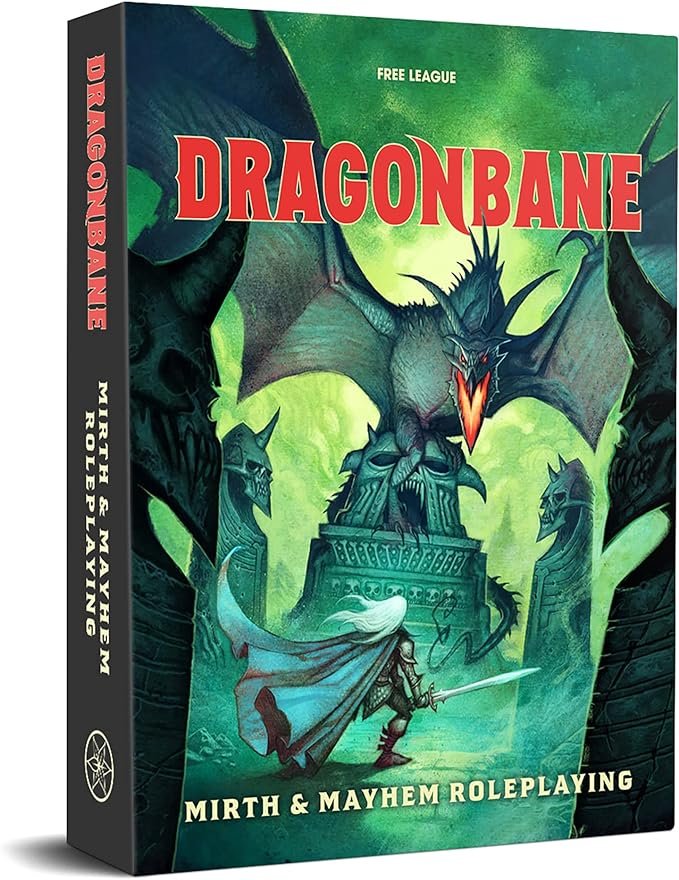
Dragonbane: Mirth & Mayhem Core Set
Low-complexity fantasy. d20-based with far fewer modifiers than 5e, and the box ships with a solo-play booklet — the recipient can learn the rules alone before a first group session.
- 11 adventures plus a full campaign — massive runway before anyone needs a supplement
- Built-in solo play booklet lets the recipient start tonight
- Free League’s production feels like a premium board game, not a stack of paperbacks
- Smaller community than D&D/Pathfinder — fewer local play opportunities
- Highest price of the starter boxes
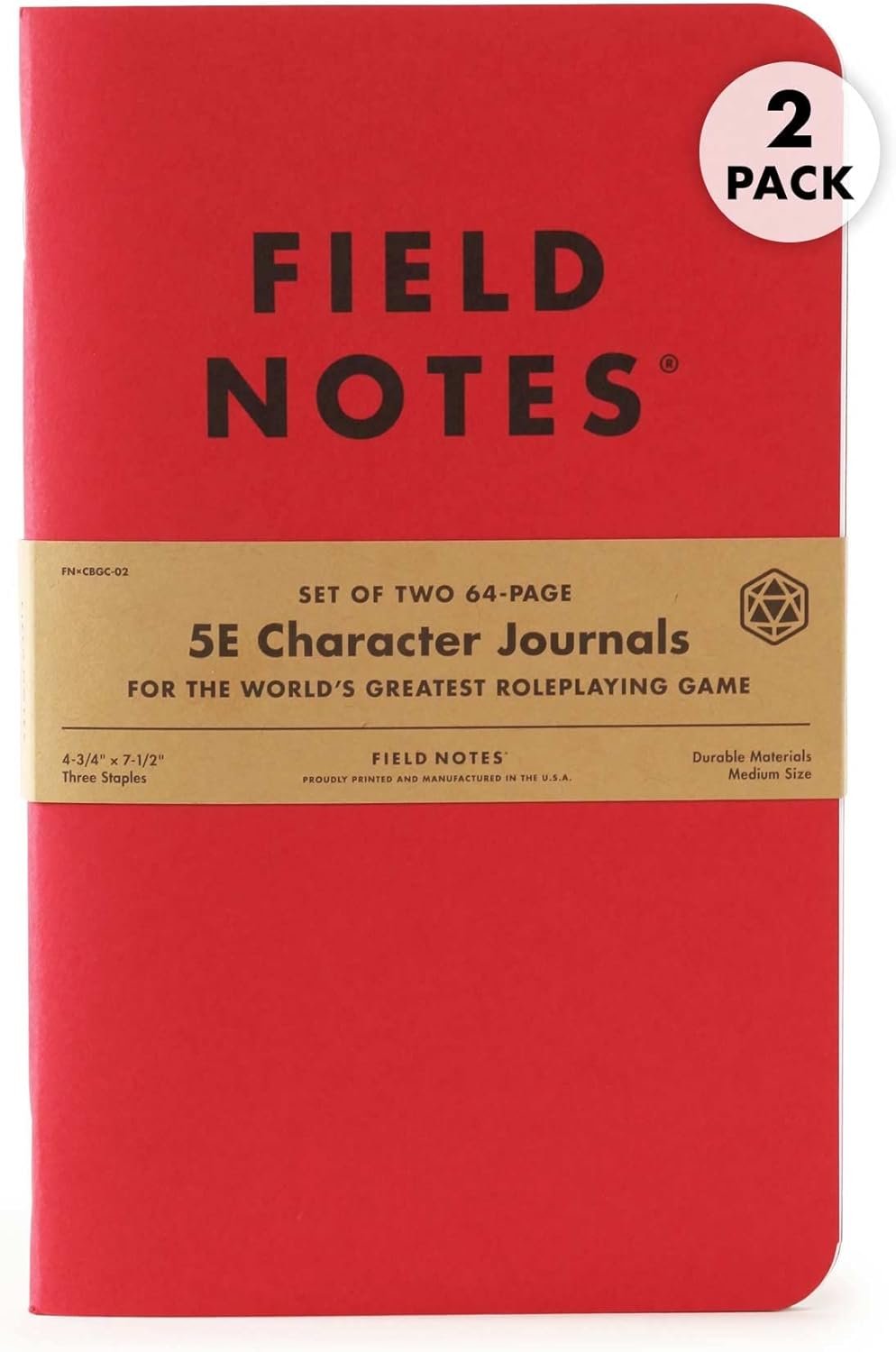
Field Notes 5E Character Journal (2-Pack)
The 64-page layout dedicates real estate to the stuff beginners forget — inventory, NPC contacts, session notes, level-up tracking — instead of a single-sheet character sheet that gets covered in scratch-outs.
- Designed with Chicago Board Game Cafe — playtested by people who teach beginners weekly
- Section layout encourages narrative engagement, not just combat bookkeeping
- Pocket size fits alongside the starter box
- Pages are fixed — players who heavily homebrew or play non-5e systems will find sections wasted
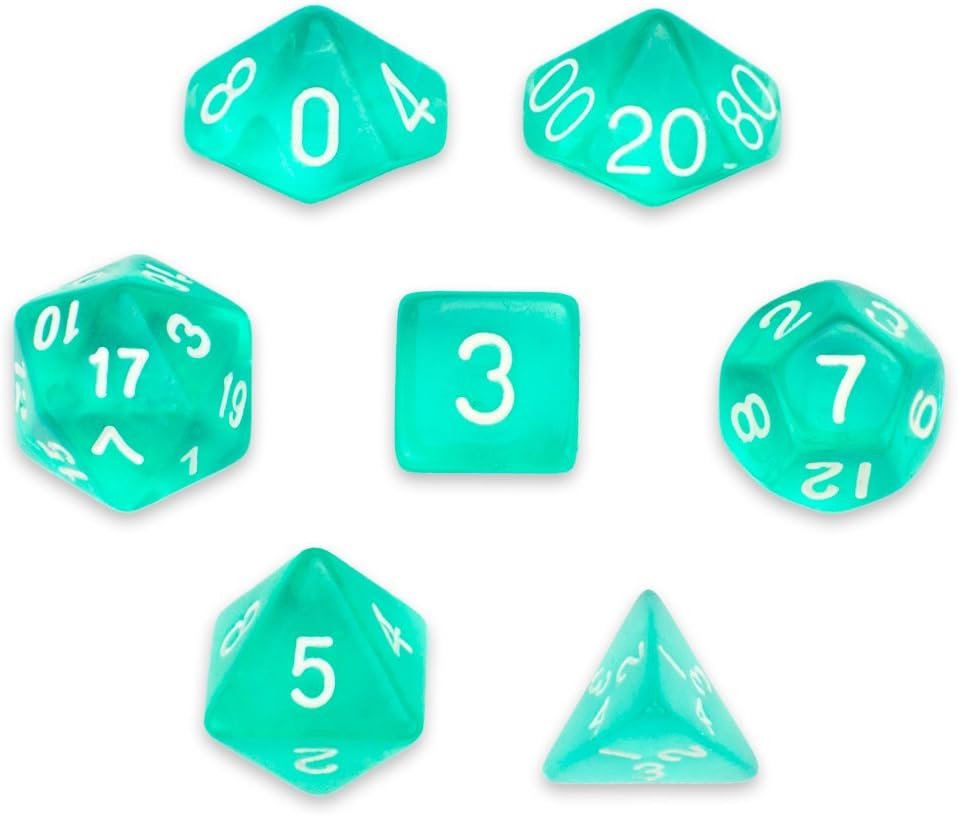
Wiz Dice Series II 7-Die Polyhedral Set
A matched 7-die set in a velvet pouch — exactly what a new player wants instead of an unsorted pile of factory seconds. Sharp edges, balanced construction, large readable numerals, all at a budget price.
- One matching set — easy to identify which die is which during the first five sessions
- Sharp edges and balanced construction despite the $9 price
- Velvet bag means no “where did I put the d4” between sessions
- Plastic construction — will eventually chip if dropped on hard floors
- Color variant is brand-selected at this price point
Budget Tiers: Under $25, $25–60, and the All-In Bundle
Under $25 — the stocking pair. Wiz Dice Series II ($9) plus the Field Notes 5E Journal ($17) lands at $26 and covers the two accessories a new player actually uses on night one. It’s the right gift for a recipient who already has a starter box coming from someone else, or for a secondary gift to pair with a session invitation.
$25–$60 — the single-box tier. Pathfinder Beginner Box at $40, the D&D Starter Set at $50, or the Dragonbane Core Set at $60 — pick by which social on-ramp fits. For the groupless recipient, Ironsworn softcover at $25 is the only item in this range that’s playable alone.
All-in ($100+). D&D Starter Set + Field Notes journal + Wiz Dice + a handwritten invitation to a session you’ll run yourself. The invitation is the actual gift. The box is the excuse to hand it over.
What to skip
Skip these, even though they’re tempting: generic dice-tower-and-metal-dice combos (gorgeous, unused), standalone hardcover Player’s Handbooks (a reference book, not a game), DM screens for someone who hasn’t chosen a system, miniature paint kits, and lore supplements. These are level-up gear for players who already have 10 sessions under their belt. A DM screen in particular looks thoughtful but it’s an admission the recipient is expected to GM — the opposite of reducing activation energy. Also skip any gift whose prerequisite is “first, find four friends who want to play every other Sunday at 7pm.”
Frequently Asked Questions
What is the best TTRPG to start with as an adult?
It depends on social context, not on which system is “best.” If the recipient has a group, the 2025 D&D Starter Set is the default. If they don’t, Ironsworn. If they want fantasy but not D&D, Dragonbane. Starting with the system that matches the recipient’s actual play situation produces real sessions; starting with the “best” system in the abstract produces a sealed box.
Is the D&D Starter Set or Pathfinder Beginner Box better for a first-time player?
The 2025 D&D Starter Set teaches faster — class boards and token combat do work that Pathfinder asks the GM to do. Pathfinder’s color-coded dice and pawn-based tactics suit a recipient who likes spatial, systems-driven games. Neither is wrong; they optimize for different brains. Ask which one the recipient’s likely friends already play.
Can you play a tabletop RPG alone without a group?
Yes — solo and GM-less RPGs are a mature category. Ironsworn is the strongest entry point, but Thousand Year Old Vampire, Delve, and the Solo Adventurer’s Toolbox for 5e are other well-regarded options. Solo play uses oracles — tables that answer yes/no and what-happens-next questions — to substitute for a GM.
What do you actually need to buy to start playing a TTRPG?
A rulebook or starter box, a set of polyhedral dice (d4, d6, d8, d10, d12, d20, percentile d10), a pencil, and paper. Starter boxes typically include everything except the pencil. Minis, maps, dice towers, and GM screens are optional upgrades that belong after session five.
Are solo journaling RPGs a good entry point for someone new to roleplaying?
For some beginners, yes — especially writers, journal-keepers, and anyone who’s tentative about group improvisation. Journaling RPGs lower the social stakes to zero. The trade-off is they’re a different skill from group play; a heavy journaling-RPG player may still feel like a beginner at a 5e table.
What is a GM-less RPG and why is it easier for beginners?
A GM-less RPG distributes the game master’s role across oracles, prompt decks, or shared narration among players. It’s easier for beginners because it removes the highest-skill, highest-prep role from the equation. Nobody has to “learn to run a game” — the book runs the game.
How much should I spend on a starter TTRPG gift?
$25 gets a genuinely playable gift (Ironsworn softcover). $50 gets a complete starter box for a small group (D&D Starter Set). $100 gets a starter box plus accessories plus a session invitation. Spending above $100 on a beginner — premium dice, lore compendia, DM screens — is usually misallocation for the stage. The recipient will know what to upgrade after session five.
The 48-Hour Rule
Every TTRPG gift decision should pass one test: can the recipient use this within 48 hours of opening it, alone or with one willing friend? If yes, it’s a gift. If no, it’s homework.
The best version of this gift isn’t the box — it’s the box plus a concrete invitation. A session you’ll run on Saturday. A paid-GM gift card from StartPlaying. A solo game they can try tonight while you’re still there to answer questions. Hand them the hobby, not just the equipment.
If you’re stuck choosing between two picks, pick the one with the lower activation energy. A too-simple system gets played; a too-complex one gets shelved. You can always gift the Player’s Handbook at session ten, when they’ve earned it.