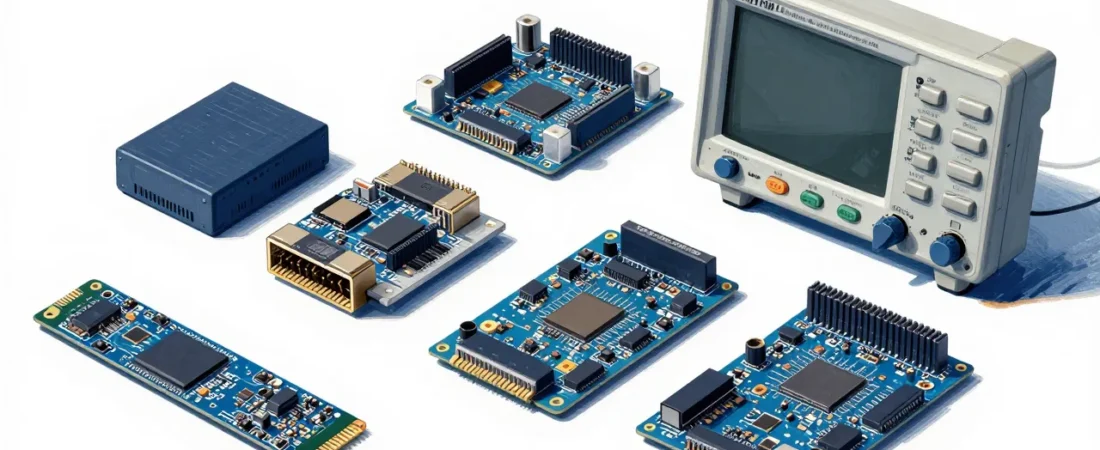
Expert Raspberry Pi users have production projects running — home servers, custom routers, NAS systems, or maker electronics. They’re comfortable with Linux, SSH, and custom hardware design. No Austin-area brick-and-mortar specialty store stocks Pi compute modules; PiShop US, Adafruit, and Seeed Studio are the primary specialty retailers.
The Expert Picks

Raspberry Pi CM5 (8GB/32GB/WiFi Bundle)
The production-grade Raspberry Pi compute module for embedded servers, Turing Pi cluster nodes, or custom carrier board projects. Jeff Geerling blog: ‘CM5 is 2-3x faster, drop-in upgrade (mostly).’ Stocked at PiShop US and Adafruit. The Waveshare bundle adds a heatsink and antenna kit immediately needed for server deployment.

Raspberry Pi Official M.2 HAT+
The $12 unlock that transforms a Pi 5 from microSD-based to NVMe-booted. Official Raspberry Pi product — NVMe boot is fully supported in raspi-config without community workarounds. Stocked at PiShop US and Adafruit. Tom’s Hardware: ‘Low-cost, high-speed.’ 9to5Linux: ‘It Just Works.’

Pimoroni NVMe Base for Raspberry Pi 5
The enthusiast community’s preferred NVMe HAT when full-size 2280 drives are needed. Achieves 858MB/s read in published tests. Underside mounting leaves the top GPIO fully free for additional HATs. Stocked at Adafruit and Micro Center. Tom’s Hardware and the Official Raspberry Pi Magazine both reviewed it positively.

Seeed Studio Dual GbE CM4 Carrier Board
The standard for CM4-based software router builds (OpenWRT, custom iptables). Dual Gigabit Ethernet in a 75x64mm form factor. Jeff Geerling documented it in his PCIe device database and in his ‘2021 Two Tiny Dual-Gigabit Routers’ post that became the community reference. Tom’s Hardware reviewed it positively. Stocked at Seeed Studio nationally.
Waveshare CM4 NAS Double Deck Board
The underrated pick for CM4-based NAS builds: two 2.5-inch SATA bays, dual Gigabit Ethernet, and a built-in 2-inch SPI LCD showing real-time CPU/RAM/network/temperature data. PiShop US stocks it as a named SKU. Forums.raspberrypi.com has an active thread of experts using it specifically for the SATA+display combination.
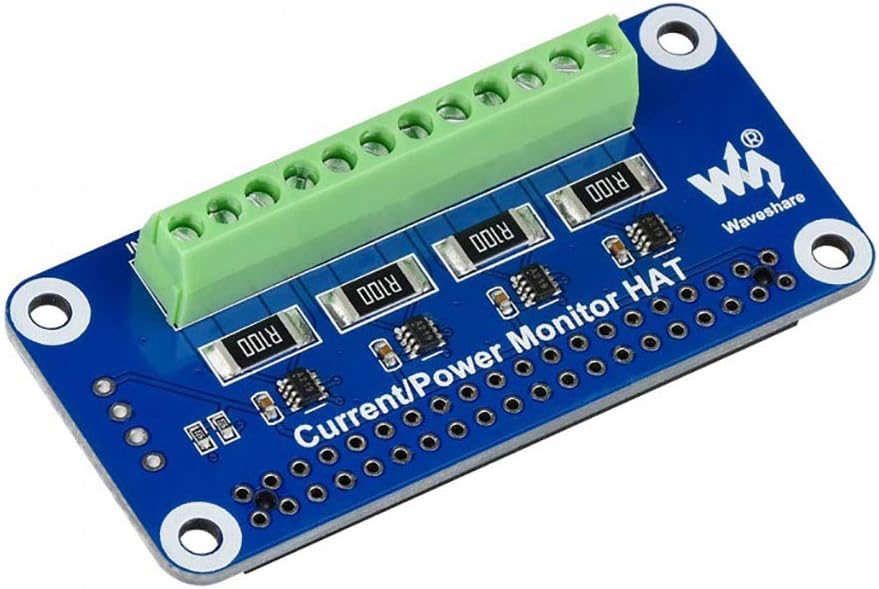
Waveshare 4-Channel Current/Power Monitor HAT
The expert sleeper pick: measures current, voltage, and power draw on four independent circuits simultaneously via I2C with a 40-pin GPIO passthrough header. Essential for experts sizing UPS capacity, characterizing power budgets across a HAT stack, or diagnosing intermittent brownout resets. Stocked at Waveshare nationally.
Rigol DHO924S 250MHz 4-Channel Oscilloscope
Expert makers designing custom CM4 carrier boards, debugging SPI/I2C/UART on Pi HATs, or bringing up new PCB designs need a real oscilloscope. In 2025-2026 community consensus has moved to the DHO924S: 250MHz bandwidth, 12-bit ADC, IPS touchscreen with pinch-to-zoom, 50Mpt memory depth, and a built-in function generator. HobbyistScope: 9/10.
What to skip
Skip generic microSD cards — expert Pi users have moved to NVMe. Skip generic USB-C power supplies — the Pi 5 requires the official 27W supply for full operation. Skip first-generation CM4 in favor of CM5 for new builds where CM5 compatibility is confirmed.