Home gym gifts are a strange retail category, because the person buying rarely has to answer to the person training. There’s no coach checking whether the gift actually gets used — just a shopper scrolling Amazon for something that looks impressive under wrapping paper. That’s exactly the incentive structure that keeps vibration plates and ab shakers on gift-guide bestseller lists year after year, despite gathering dust by February.
This guide inverts that pattern. Instead of asking what looks good unwrapped, it asks what a strength coach would actually hand a true adult beginner on day one — gear built to survive years of use, not just the holiday season.
Six products make the cut, organized around two forks: a premium-vs-budget choice on adjustable dumbbells, and a garage-vs-apartment choice on flooring. Everything else is a single, durable pick with no filler.
How we select these gifts
- Specialty retailers first: We start with what dedicated strength-equipment retailers actually stock and stand behind — brands like REP Fitness and PowerBlock that sell directly to serious home-gym builders, not just gift-season shoppers. Retailers whose repeat business depends on gear surviving years of loaded use don’t stock junk mechanisms.
- Community consensus: We cross-reference retailer catalogs against what r/homegym and r/xxfitness recommend to genuine beginners furnishing a first space — rubber stall matting as the default flooring answer, adjustable dumbbells that won’t fail under load, and benches that unlock the most exercises per dollar.
- Age and stage fit: This list assumes an unknown starting strength and mobility level — the defining trait of a true adult beginner. Every pick accommodates a wide load range (5 to 90 lb dumbbells, a bench rated to 700 lb) rather than assuming athletic ability the recipient may not have yet.
- Budget range: Picks span $34.99 to $429, so the guide works whether you’re spending on a small gesture gift or funding an entire starter setup.
- Skip-this guidance: Where a popular pick isn’t right for this specific stage — or carries a documented safety risk — we say so and explain why. Resistance bands, a common beginner recommendation, are intentionally left off this list: no band product currently clears our live-verification bar, and a basic set is cheap enough to add later on your own.
What an Adult Beginner Actually Needs in Year One
A true beginner is defined by unknowns, not by weakness. You don’t know their starting strength, their mobility, or how their joints will respond to load — which is why every pick in this guide accommodates a wide range rather than assuming a fitness level. A 35 lb kettlebell and a dumbbell pair that scales from 5 to 55 or 90 lb both hedge against guessing wrong.
Setup friction kills more home gyms than weak equipment does. If assembly takes an afternoon, requires bolting into studs, or needs a dedicated 10×10 room, the gear sits in a box until it becomes storage clutter. Every product here can be unboxed and in use within minutes — that’s not a convenience feature, it’s a habit-formation requirement.
The first 90 days are a habit-formation window, and they’re exactly when fun-but-useless gear does the most damage. A vibration plate is genuinely enjoyable to stand on for thirty seconds. It teaches nothing about progressive overload, builds no strength, and by week three it’s a laundry rack. Gear that demands a small amount of skill — a kettlebell swing, a dumbbell press, a bench setup — builds the competence that keeps someone coming back.
Safety margin matters more for beginners than for anyone else in the gym. A stable bench and real flooring reduce injury risk and protect the floor from dropped weight — unglamorous, but it’s what separates a garage that gets used for years from one where a first bad drop ends the whole experiment.
The Core Starter Rack
The rack starts with a single Yes4All 35 lb Cast Iron Kettlebell — the cheapest way to add ballistic and carry work to a beginner’s routine, and a weight that sits comfortably in the range trainers recommend for a male beginner starting swings and goblet squats.
From there, dumbbells are the fork. The PowerBlock Elite EXP Adjustable Dumbbells are the premium pick — USA-made steel, drop-safe, and expandable well past beginner loads — while the NordicTrack Select-a-Weight Dumbbells cover nearly the same exercise range at roughly a third less cost, with a more familiar dumbbell shape. Pick one, not both — they solve the same problem at different price points.
A bench comes next. The REP Fitness AB-3100 V3 Adjustable Bench turns two adjustable dumbbells into dozens of distinct exercises — flat press, incline press, rows, step-ups — and folds flat for storage, which matters more than it sounds like it should for keeping a garage gym usable.
Flooring is the second fork, and it depends entirely on the space. A dedicated garage or basement calls for the 4×6 Heavy-Duty Rubber Stall Mat, thick enough to absorb a dropped kettlebell without denting concrete. A rented apartment or shared living space calls for ProsourceFit Interlocking Foam Gym Tiles instead — lighter, no odor curing period, and easy to take apart at move-out. Again: match the flooring to the recipient’s actual space, don’t buy both.
Adjustable Dumbbells vs. Fixed Cast Iron: Why the “Space-Saving” Gift Often Breaks First
Adjustable dumbbells promise the output of a full rack in the footprint of one pair, and that promise is real — when the mechanism holds up. Most budget adjustable dumbbells use a dial-lock system: rotate a selector, and internal pins engage the plates you want. It’s an elegant idea with a real failure mode, because those pins are load-bearing moving parts subjected to repeated impact and torque.
The cautionary tale here is concrete. In June 2025, the CPSC recalled roughly 3.7 million units of the Bowflex SelectTech 552 after the dial mechanism let weight plates dislodge mid-use, with 111 injuries reported. That’s not a quality-control fluke on one bad batch — it’s a structural risk built into that class of dial-adjustable design, which is why it’s excluded from this guide entirely, not just flagged as lower-tier.
PowerBlock avoids that failure mode with a pin-based selector and a design that’s explicitly rated safe to drop from lifting height — a meaningful distinction for a beginner still building the motor control to set weights down cleanly every time. It’s backed by a lifetime warranty, which manufacturers don’t extend to products they expect to fail.
The kettlebell picks up where this logic ends. A single cast-iron kettlebell has no dial, no pins, no plates to dislodge — it’s the same object today as it will be in twenty years. That’s not a compromise; for a fixed-weight tool used for swings and carries, it’s the correct design.
Budget Tiers: What $40, $250-300, and $600+ Actually Buys a Beginner
At roughly $40-90, you’re buying a single, meaningful gesture: the ProsourceFit foam tiles, the rubber stall mat, or the kettlebell on its own. Any of these gets used on day one and doesn’t require the recipient to already own other equipment.
At roughly $180-300, the REP Fitness bench paired with the NordicTrack dumbbells makes a genuinely complete beginner rack — flat, incline, and decline pressing plus rows, all in a pair of dumbbells and a bench that fold away when not in use. This is the tier where the gift stops being a gesture and starts being a real training setup.
At $600 and up, PowerBlock plus the bench plus the rubber stall mat is the “I want to fund their whole setup” gift — durable enough to still be in use after the recipient has outgrown beginner status, with the PowerBlock expansion path covering years of progressive overload beyond that.

Yes4All 35 lb Cast Iron Kettlebell
A single quality kettlebell is the cheapest way to add full-body ballistic and carry work to a beginner rack, and 35 lb sits at the low end of the male-beginner range (24-35 lb) recommended by trainers while still being useful for swings and goblet squats as strength builds.
- Flat bottom lets it stand upright for goblet squats without rolling
- Powder coat resists chipping better than paint, so resale value holds
- You’ll likely need a second, lighter kettlebell within a few months for overhead work

PowerBlock Elite EXP Adjustable Dumbbells (5-50 lb)
This is the adjustable-dumbbell pick specifically because it scales — Stage 1 covers 5-50 lb, and expansion kits let the same pair grow to 90 lb. USA-made steel, lifetime warranty, and drop-safe — unlike the Bowflex SelectTech 552, excluded from this guide after a June 2025 CPSC recall covering roughly 3.7 million units for weight plates dislodging during use (111 injuries reported).
- USA-made steel construction with a lifetime warranty
- Rated safe to drop from lifting height, unlike most dial-adjustable competitors
- The blocky handle shape makes wrist curls and some grip-dependent moves awkward
NordicTrack Select-a-Weight Dumbbells (55 lb)
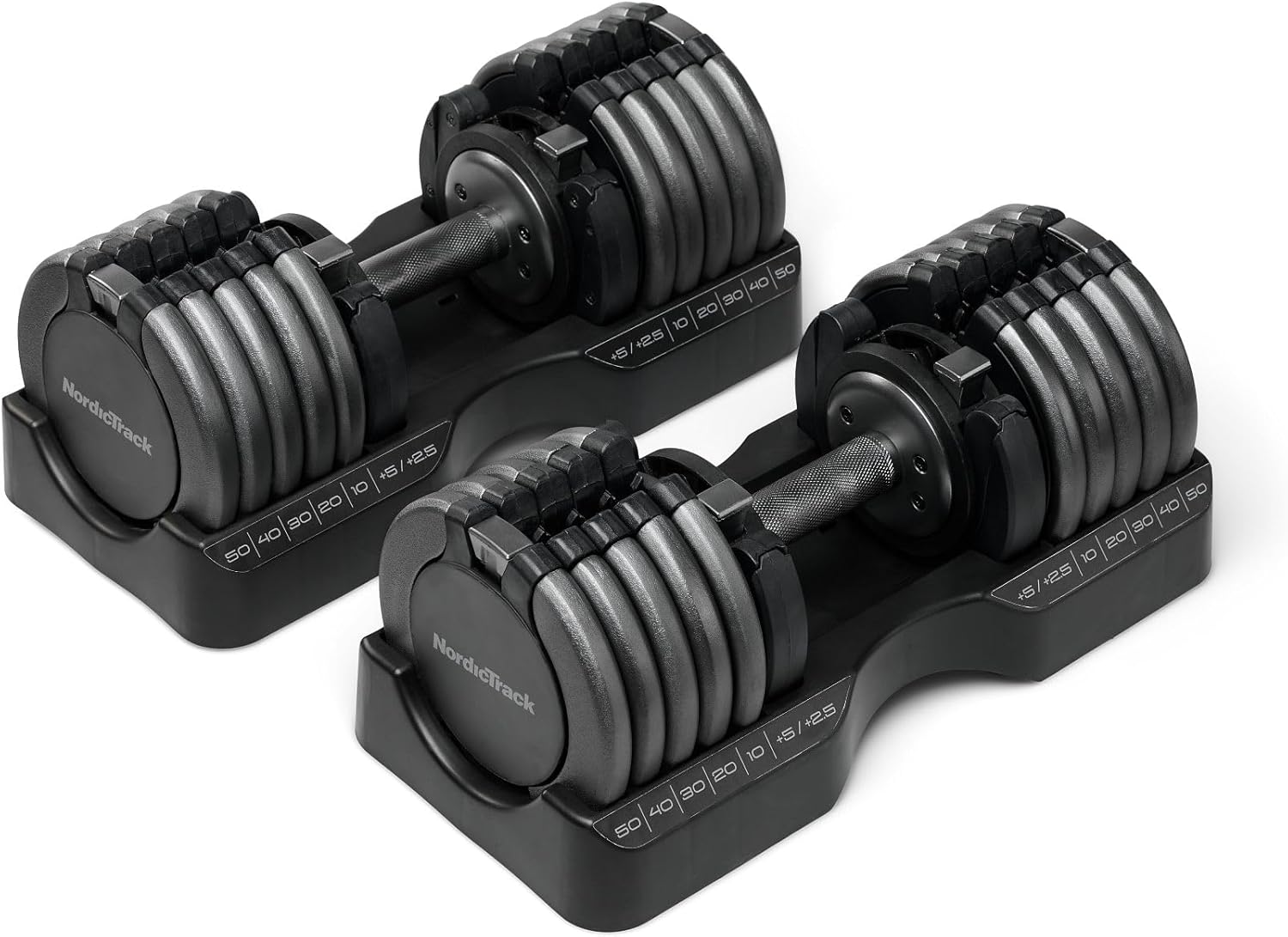
The budget-tier adjustable-dumbbell alternative — 15 selectable weights up to 55 lb per hand covers nearly every beginner exercise, and the traditional dumbbell shape feels more familiar to true beginners.
- Traditional dumbbell shape feels more familiar to true beginners
- 2.5 lb increments allow precise progressive overload
- 55 lb max means a strong beginner could outgrow the top end within a year or two

REP Fitness AB-3100 V3 Adjustable Bench
A true flat/incline/decline bench is the single highest-versatility piece in a starter rack — it turns two adjustable dumbbells into dozens of exercises the recipient will still use years into training. REP Fitness’s compact AB-3100 is a recurring pick in r/homegym beginner-rack threads, folds flat for storage, and is rated to 700 lb at a genuinely accessible price.
- Trusted REP Fitness manufacturing at an accessible price
- Folds flat for storage in a closet or against a wall
- Fewer incline/decline angle options than REP’s flagship AB-3000
4×6 Heavy-Duty Rubber Stall Mat (Gym Flooring)
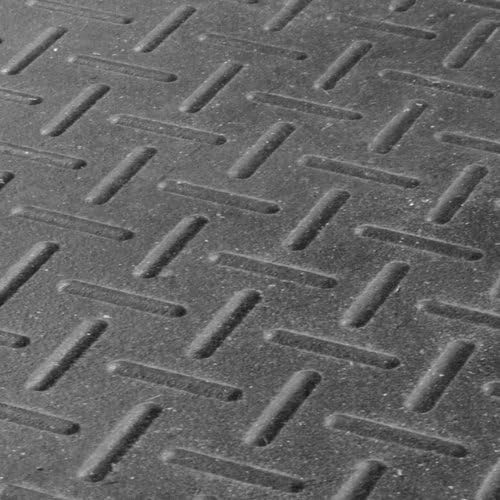
A 3/4-inch stall mat is the flooring category r/homegym treats as the default answer to “what do I put under my rack” — it protects the subfloor from dropped kettlebells and dumbbells and dramatically cuts noise.
- Thick enough (3/4 in) to absorb a dropped kettlebell without denting hardwood or concrete
- Effectively indestructible — a one-time purchase for the life of the home gym
- New mats can carry a strong rubber odor for the first few weeks
ProsourceFit Interlocking Foam Gym Tiles
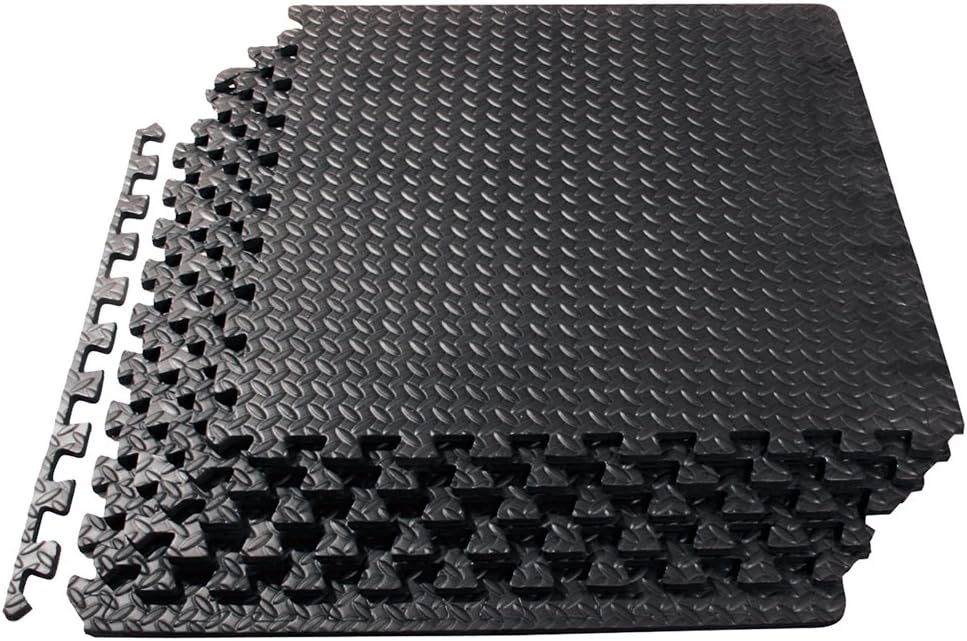
The apartment/renter-friendly counterpart to the stall mat pick — the interlocking tiles install and disassemble in minutes with no odor curing period or 100-lb rolls to maneuver, and pack flat for storage between sessions.
- Lightweight individual tiles are easy for one person to install or store
- No off-gassing odor period, unlike rubber stall mats
- Foam compresses and can permanently dent under a loaded rack over time
What to skip
Vibration plates, ab shakers, toning belts, all-in-one multi-gym towers, and gimmick resistance-band-in-a-box kits with no programming all sell well as gifts precisely because they look impressive unwrapped and demand nothing from the giver in terms of follow-through accountability. None of them build the strength or habit a true beginner needs in year one.
Also avoid cheap plastic-shell adjustable dumbbells with dial-lock mechanisms regardless of price or brand. The Bowflex SelectTech 552 recall — 3.7 million units, 111 injuries, plates dislodging mid-lift — is the concrete example of why this is a structural design risk, not just a quality-tier problem you can shop your way around.
The best home gym gift signals something specific: that you trust this person to actually stick with it. Not a novelty gadget that photographs well next to a tree, but gear that assumes they’ll still be training in eighteen months and deserves to survive that long.
When you’re unsure which pick fits, run it through the same filter we used to build this list — weight-bearing capacity, repairability, and resale value. Boring, durable gear beats a flashy gadget that’s clutter by February, every time.
If you’re torn between the two dumbbell picks or the two flooring options, let the recipient’s actual space and budget decide, not your instinct to buy the “nicer” one. A $300 NordicTrack setup that gets used beats a $429 PowerBlock setup that gets returned because it blew the budget for the rest of the gift list.