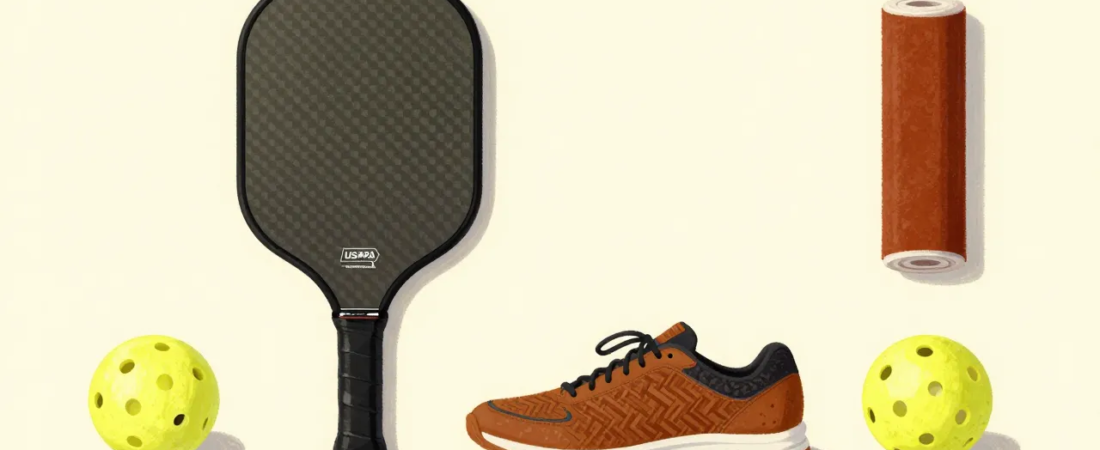
Most “beginner pickleball bundles” on Amazon are a trap. They pair two wood or low-grade composite paddles with a mesh bag, sell for $39, and teach grip and swing habits the recipient will spend their next six months unlearning. The set goes in a closet by week three.
If your recipient has played a few times and wants in — or has been hinting they want to try — the gift that actually keeps them in the sport isn’t the flashiest paddle in the catalog. It’s a tight trio: one USAPA-approved paddle they won’t outgrow until 3.5 level, the right ball type for where they actually play, and real court shoes. That combination is what separates a recipient who plays twice and quits from one who joins a Tuesday-night league.
This guide is built for gift shoppers buying for an adult beginner who plays even once a week. We’ve cross-checked picks against what Austin’s specialty pickleball retailer Pickleland actually stocks and what r/Pickleball recommends to new players in its weekly beginner threads.
How we select these gifts
- Specialty retailers first: We start with what Austin-area specialty retailers actually stock — Pickleland (Austin and Pflugerville), the largest dedicated pickleball facility and pro shop in central Texas. Stores whose business depends on return customers and league players don’t stock paddles that fall apart in a season.
- Community consensus: We cross-reference retailer inventory against what hobbyists recommend in their own communities — r/Pickleball’s weekly beginner threads and the “what should I buy first” megathreads where actual 3.0–3.5 players answer the same question every week. Products that show up in both signals get the heaviest weight.
- Age and stage fit: Adult beginners share a predictable set of habits — over-gripping the handle, swinging from the shoulder instead of the elbow, biasing power over placement, and not yet hitting third-shot drops. The right beginner gear forgives those habits while letting the recipient feel real progress within the first 50 hours of play. That means midweight (7.7–8.0 oz) standard or MAX-shape paddles with 16mm polymer cores, raw carbon faces for spin feedback, and grip sizes that don’t require a Day-1 overgrip workaround.
- Budget range: Picks span $10 to $130 so the guide works whether you’re spending $70 on a starter stack or $300+ on a complete kit.
- Skip-this guidance: Where a popular pick — wood paddles, ball hoppers, branded apparel — isn’t right for this specific stage, we say so and explain why.
How to Pick a Beginner-Friendly Paddle
Four specs decide whether a paddle helps or hurts a new player: weight, grip size, core thickness, and USAPA approval. Get these right and almost any paddle in the $60–$130 range will work. Get them wrong and you’ve handed the recipient a tool that punishes them every time they swing.
Weight. A paddle at 7.7–8.0 oz is the forgiveness zone — it has enough mass to absorb mishits without twisting in the hand, but it’s light enough that a beginner can react at the kitchen line. Anything 8.3 oz or heavier has a swing weight that punishes late reactions, and beginners are always late at first. Skip “power” paddles marketed at 8.4+.
Grip size. Most adults need a 4-1/8 or 4-1/4 inch grip. Hands smaller than average can wrap their fingers comfortably around a 4-1/8 without choking; larger hands or anyone with tennis background usually wants 4-1/4. If the recipient has small hands and the paddle only comes in one size, plan to add an overgrip — that’s a fix, not a flaw.
Core thickness. A 16mm polymer core is the control core. It dampens incoming pace, makes dinks land where the player aims, and is forgiving on off-center hits. A 13mm core is a “pop” core — faster off the face, but unforgiving. New players belong on 16mm. Period.
USAPA approval. The USA Pickleball approval stamp matters less for casual rec play and a lot for any league or tournament the recipient might join in year one. A non-approved paddle can be a quiet way to make the recipient feel sidelined when their friends invite them to a sanctioned event. Every paddle in this guide is approved.
Paddles That Won’t Need Replacing in 60 Days
Three paddles cover the realistic range a gift shopper will face. The Vatic Pro Prism Flash 16mm is the direct-to-consumer sweet spot at $99 — the paddle r/Pickleball points first-timers to when they don’t want to overspend but refuse to settle for box-store gear. It’s stocked at Pickleland’s Austin pro shop, which is rare for a DTC brand and tells you the local pros vouch for it.
The Selkirk SLK Halo Control Max is the right pick when the gift-giver wants a name brand with full retailer support and an oversized face that’s even more forgiving on mishits. Pickleland runs Selkirk demos on its courts, so the recipient can take it back if the grip doesn’t fit. The extra $30 over the Vatic buys you that warranty path and the wider sweet spot.
The JOOLA Journey is the sub-$70 floor — what to buy when the budget is real and a Costco set is the alternative. It’s a real JOOLA build at a price point where most paddles are garbage. It’s not as good as the Vatic, and we say so, but it’s miles better than the unbranded “set of 4” listings that dominate Amazon’s beginner search results.

Vatic Pro Prism Flash 16mm
Stocked at Pickleland’s Austin pro shop and the most-cited “first real paddle” in r/Pickleball beginner threads. The 16mm thick polymer core, standard-shape face, and ~7.8oz weight match exactly the midweight, mid-shape profile beginners need.
- T700 raw carbon face delivers real spin without forcing a power-game style — beginners actually feel the bite on dinks
- Foam-injected perimeter walls expand the sweet spot, which masks off-center contact common in the first 50 hours of play
- Comes with a paddle cover, so you don’t need a separate accessory to keep the face clean
- Direct-to-consumer brand means no in-person demo unless you visit Pickleland; sizing the grip relies on returns

Selkirk SLK Halo Control Max
Pickleland recommends Selkirk specifically for beginners and runs Selkirk demos on its courts. The Halo Control Max sits at 7.7-8.0oz with a 16mm Rev-Core poly core and an enlarged (“MAX”) face shape.
- Larger face shape gives a noticeably bigger sweet spot than standard “hybrid” shapes — fewer mishits in the first months
- Selkirk has full Austin demo presence at Pickleland; you can return on warranty without dealing with a DTC brand
- T700 raw carbon face still has enough texture for the slow-rolling topspin third drops beginners need to learn
- MAX shape is wider/shorter — the recipient won’t get the extra reach of an elongated paddle if they later move to singles
- Costs ~$30 more than equivalent DTC competitors for similar specs

JOOLA Journey
Pickleland stocks JOOLA, and the Journey is the model forum threads consistently point new players to when they want a real-brand paddle under $70 instead of a Costco set.
- Real JOOLA build quality at the price of a Costco box-set paddle — no edge-guard delamination after a season
- Slightly smaller grip circumference suits players with smaller hands who’d otherwise need to add overgrip immediately
- USAPA approved, so it’s ready for any local league or tournament play once they level up
- Fiberglass face has less spin bite than carbon paddles — limits how much topspin they can develop on serves and drives
- 10mm core is thinner than ideal for control; expect some pop-ups on hard incoming dinks
Indoor vs Outdoor Balls: Why It Actually Matters
This is the gift category most guides skip, and it’s the one most likely to make or break the gift’s usefulness. Pickleballs are not interchangeable. An outdoor ball is heavier, harder, and has 40 small drilled holes; an indoor ball is lighter, softer, and has 26 larger holes. Hand the recipient the wrong type for where they play and the gift goes in a drawer.
If your recipient plays outdoors at neighborhood courts — which describes most of Austin’s public pickleball — the Franklin X-40 is the answer. It’s the official ball of USA Pickleball and the US Open and the ball Pickleland uses on its outdoor courts. They’ll be practicing with the same ball they’ll see in any rec game or tournament they walk up to.
If they play at Pickleland’s indoor facility or any indoor rec league on a wood gym floor, get the Onix Fuse Indoor. Indoor balls bounce truer on hardwood and don’t blow around under HVAC airflow — outdoor balls feel like rocks indoors and indoor balls catch wind outdoors. The mismatch is real and immediate.
If you genuinely don’t know where they play most, ask them. “Hey, when you’ve been playing — is it outside at the park or inside at a gym?” is a normal question that gives nothing away.
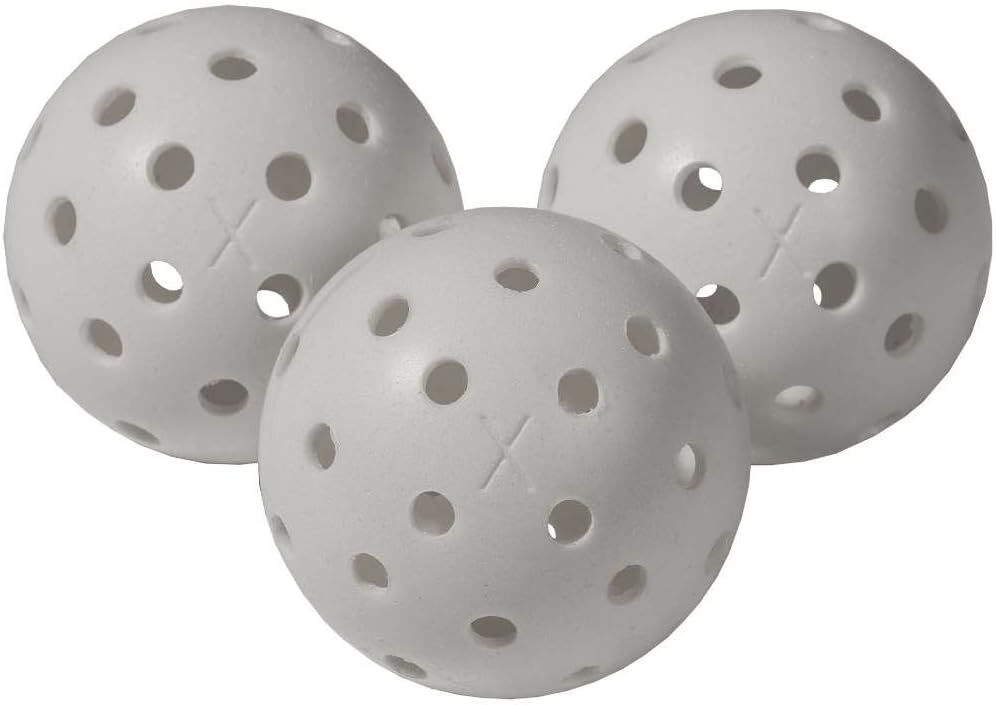
Franklin X-40 Outdoor Balls (3-pack)
Official ball of USA Pickleball and the US Open — and the ball Pickleland uses on its outdoor courts.
- Standard ball at almost every Austin outdoor court, so the recipient practices and plays with the same equipment
- Softer feel than Dura Fast 40 makes mid-court rallies more sustainable while learning
- Bright optic yellow is easier to track outdoors than older white pickleballs
- Cracks in cold weather (under 50°F); plan to replace 1-2 per session in winter
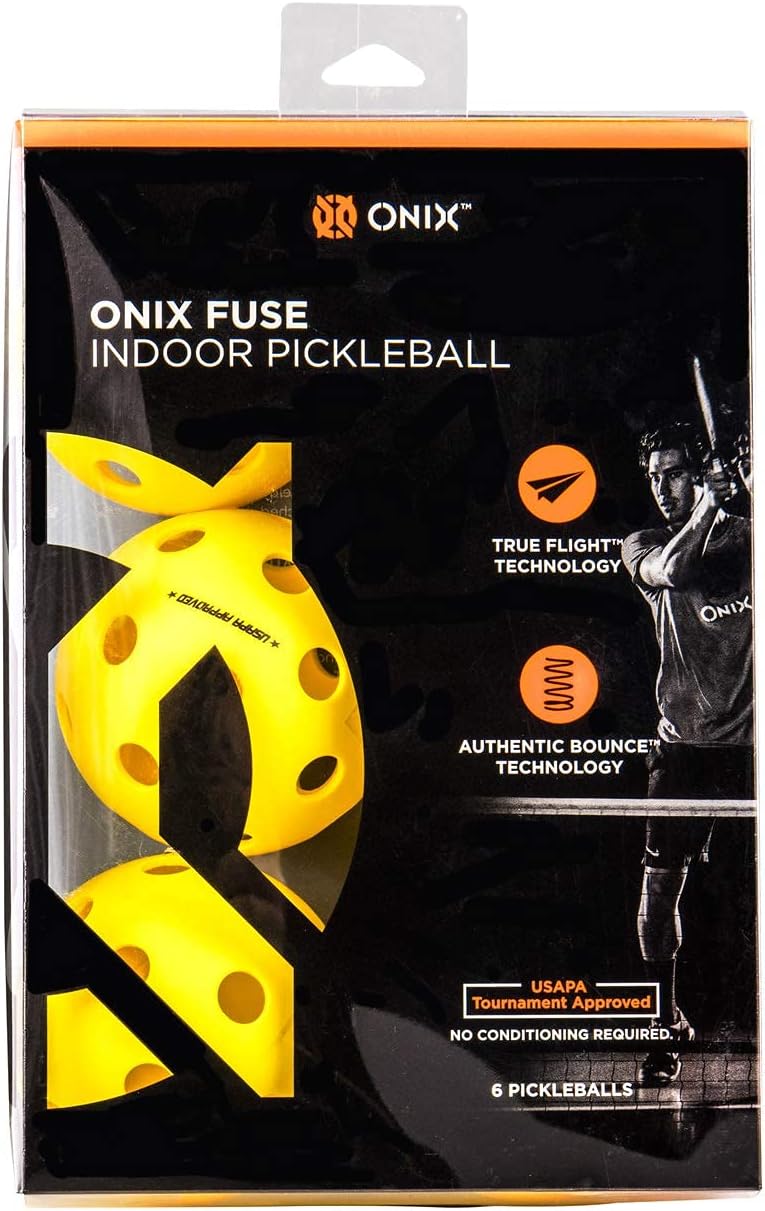
Onix Fuse Indoor Balls (6-pack)
Pickleland’s indoor courts in Austin and Pflugerville run the Onix Fuse — a recipient who plays indoor rec in Austin will literally be using these.
- USA Pickleball approved for tournament play, so no awkward switch when joining indoor leagues
- 6-pack at this price gives a reasonable buffer against the cracking that always eventually happens
- High-visibility yellow tracks well under fluorescent gym lighting
- Useless outdoors — too light, blows around in even mild Texas wind
- Softer plastic dents/cracks faster than outdoor balls; plan on replacement every 4-6 sessions
Court Shoes: The Ankle-Injury Gift
Here’s the ugly truth about pickleball injuries: the signature beginner injuries are rolled ankles, calf tears, and Achilles strains, and most of them happen because the recipient is wearing running shoes on a pickleball court. Running shoes are built to roll the foot forward — that’s what the rocker sole and elevated heel do. On a lateral pickleball move, that same geometry tips the ankle sideways with no lateral support to catch it.
Court shoes are a different category of footwear. They have a flat platform, a torsion shank that resists twisting, and an outsole rubber compound designed for sport-court and concrete. Tennis shoes work. Volleyball shoes work. Dedicated pickleball shoes work. Running shoes do not.
The ASICS Gel-Renma is the most-cited first court shoe in beginner threads for a reason — TRUSSTIC torsion shank in the midfoot, an Omnicourt outsole pattern that handles both indoor sport-court and outdoor concrete, and a price under $100. If the recipient already plays in tennis or volleyball court shoes they own, don’t double-buy. If they’re playing in running shoes, this is the single most important gift on this list.
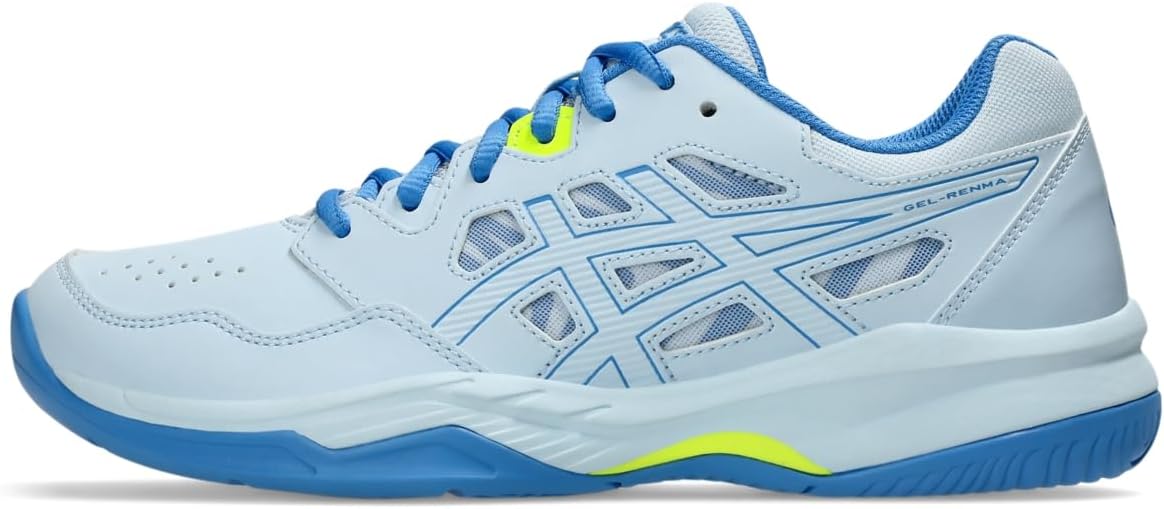
ASICS Gel-Renma Court Shoe (W) — also avail in Men’s
Court shoes are the single biggest beginner injury-prevention upgrade — running shoes’ rocker soles roll ankles on lateral pickleball moves.
- TRUSSTIC torsion shank physically resists the ankle-rolling motion that injures beginners
- Omnicourt outsole pattern works on both indoor sport-court and outdoor concrete — no need for two pairs
- ASICS Austin retailer support means easy returns if sizing is off
- Less cushioning than running shoes — recipients used to plush trainers will feel the difference for the first week
Accessories Beginners Actually Use
Two accessories are worth gifting; most others aren’t. The ONIX Pro Team Paddle Backpack is the right size for a beginner who’s playing at multiple courts — padded paddle pocket for two paddles, a main compartment that swallows balls and a water bottle, and a separate ventilated wet/shoe compartment that keeps sweaty court shoes off clean clothes. It’s carried by Austin specialty retailers, and a backpack is genuinely better than a tote when you’re walking from a parking lot.
The Tourna Mega Tac Overgrip 3-pack sounds like a small thing and isn’t. Beginners death-grip the paddle handle because they’re nervous, which causes forearm fatigue and is the fastest path to tennis elbow. A tacky overgrip lets them hold the paddle with less squeeze — they keep the paddle without consciously gripping it. Mega Tac is the most-mentioned overgrip in r/Pickleball humid-weather threads, which matters in Austin from May through October.
What’s not on this list: ball hoppers (a beginner isn’t drilling enough alone to need one yet), pickleball-branded apparel (they own athletic clothes that work fine), branded water bottles, and “training paddle” gimmicks. The money belongs in shoes and the right ball.

ONIX Pro Team Paddle Backpack
Three of Austin’s specialty retailers carry ONIX-brand bags directly — dedicated paddle pocket for 2 paddles, large main compartment that swallows balls, water, towel, and a wet/shoe pocket.
- Separate ventilated wet/shoe compartment keeps sweaty court shoes off clean clothes
- Padded paddle pocket actually fits two paddles flat without scuffing the faces
- Backpack carry frees up hands for water bottle and balls — better than a tote for walking from the car
- Maxes out at 2-3 paddles; serious players who collect demos will outgrow it
- No external bottle pocket on some color variants — check the listing image for your color choice

Tourna Mega Tac Overgrip (3-pack)
Beginners almost universally over-grip the paddle handle, leading to elbow pain and slipping when sweating. Mega Tac is the most-mentioned overgrip in r/Pickleball humid-weather threads — critical for Austin’s climate.
- Genuinely the tackiest overgrip on the market — recipient can hold the paddle with less squeeze, reducing forearm fatigue and tennis-elbow risk
- Pickleball-sized version is widely available, but the standard tennis 3-pack on Amazon works identically and is cheaper per grip
- Lasts 4-8 weeks of weekly play before sweat breakdown — way longer than thinner alternatives
- First wrap is a learning curve — there’s a YouTube tutorial step required for any beginner
Bundle Suggestions by Budget
~$70 starter stack: JOOLA Journey + Franklin X-40 + Tourna Mega Tac. This is the “they said they’d try it once” gift. It’s a real-brand paddle, the right outdoor ball, and an overgrip that helps them not develop tennis elbow on day one. Fits in a gift bag.
~$130 first-real-paddle stack: Vatic Prism Flash + Franklin X-40 (or Onix Fuse, depending on where they play) + Tourna overgrip. This is the gift for someone who has played a few times and is clearly into it. The paddle will carry them from beginner to 3.5.
~$220 injury-prevention stack: Vatic Prism Flash + ASICS Gel-Renma + balls + overgrip. Add the shoes and you’ve upgraded the gift from “nice paddle” to “gift that prevents the sprained ankle that would have ended their pickleball year.”
~$300+ complete kit: Selkirk SLK Halo Control Max + ASICS Gel-Renma + ONIX Pro Team Backpack + both ball types + Tourna overgrip. This is the milestone-birthday gift — everything they need to walk out the door and into a league night without buying anything else.
What to skip
Skip wooden paddles, no-name “paddle set” bundles, ball hoppers (a beginner isn’t drilling alone enough yet to justify one — they’d rather play points), and pickleball-branded apparel. The recipient already owns athletic clothes that work fine, and a logo’d polo doesn’t make them better. Every dollar that goes into a gimmick is a dollar that didn’t go into the shoes that prevent the rolled ankle that benches them for six weeks.
The best beginner pickleball gift isn’t the flashiest paddle. It’s the trio: one USAPA-approved paddle they won’t outgrow until 3.5, the correct ball type for where they actually play, and real court shoes. That combination is what separates a recipient who plays twice and quits from one who joins a Tuesday night league and texts you six months later about their first tournament.
If you’re still deciding between two paddles, default to the Vatic Prism Flash — it’s the paddle the most experienced beginner-coaches in r/Pickleball point new players to, and it’s stocked at Pickleland for warranty support. If you’re deciding between a paddle and shoes for the same recipient, and they’re currently playing in running shoes, get them the shoes. The paddle can wait. The ankle injury can’t.
One more move that costs nothing: when you give the gift, mention the local indoor or outdoor courts where the ball type actually matches. “I got you the outdoor balls because that’s what they use at the park down the road” turns a gift into an invitation to play.