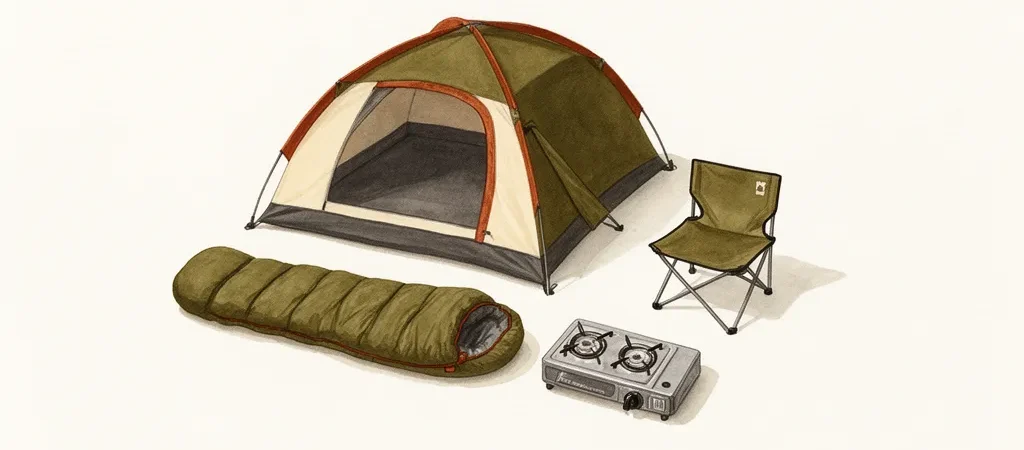
Most camping gift guides treat a first-timer the same as a seasoned backcountry regular — the same gear list, the same spec obsession, the same overkill. A beginner car camper has a narrower, more specific problem: they need to survive their first two trips comfortably enough to want a third.
Car camping is a forgiving format. You drive to the site, you pop a trunk, and you set up within 50 feet of the car. That means you can bring more, you can tolerate more weight, and a slightly fiddly setup won’t strand you three miles from the trailhead. What it does not forgive is a sleepless night in a too-cold bag or a stove that requires three YouTube videos to light. Those experiences kill the hobby before it starts.
The five picks below are the gifts a first-timer will actually open on their second trip, not just their first. Each one targets the exact friction point that separates a beginner who goes back out from one who stores the gear in a closet.
How we select these gifts
- Specialty retailers first: We start with what outdoor specialty retailers actually stock — REI, Backcountry, and dedicated camp supply shops. Stores whose business depends on return customers don’t stock gear that breaks on trip two. For this guide, product track records at REI (where floor staff fields questions from confused beginners daily) carry particular weight.
- Community consensus: We cross-reference retailer inventory against what campers recommend in r/camping, r/CampingandHiking, and the REI beginner camping community threads. Products that show up in both signals get the heaviest weight — Coleman’s two-burner stove is a recurring example, appearing in beginner threads alongside specialty retail endcaps simultaneously.
- Stage fit: These picks are calibrated for adult beginners doing their first two or three car camping trips in three-season conditions. That means: forgiving setup, widely available consumables (propane at a gas station, not specialty fuel at an outfitter), and enough comfort headroom that the experience stays positive even if conditions aren’t ideal.
- Budget range: Picks span $49.99 to $129.95 so the guide works whether you’re spending $50 or $130. Stacking two or three picks makes a complete first-kit without tipping into overinvestment.
- Skip-this guidance: Where a popular pick isn’t right for a beginner car camper — including gear the recipient may actively want — we say so and explain why.
How We Pick Gifts for First-Trip Car Campers
The mistake most camping gift lists make is optimizing for the wrong constraint. Ultralight titanium cookware is impressive; it is also unforgiving in the hands of someone who has never managed a camp stove’s heat. A sub-zero sleeping bag photographs beautifully; it will have a first-timer sweating through a July night in mild conditions, sleeping badly, and associating camping with discomfort. Optimization is the enemy of the beginner experience.
For a car camper on their first two trips, the criteria are different. Setup needs to be fast enough to manage after a two-hour drive and a camp dinner’s worth of day-drinking. Forgiveness matters more than specs: a tent with color-coded poles, a stove that ignites reliably, a sleeping bag rated well below the temperatures they will actually encounter. The gear should remove every decision that doesn’t need to be made on the first night.
We also deliberately weighted universality. A gift that only works in one narrow scenario — desert camping, solo trips, shoulder-season conditions — is a gift with an asterisk. Every pick here is a safe choice across the range of situations a beginner is likely to encounter before they develop strong opinions about their own camping preferences.
The Gifts: Ranked by How Much They’ll Actually Get Used
The sequencing here is deliberate. A tent is the non-negotiable foundation: nothing else on this list matters if the beginner gets rained on. Sleep quality ranks second because it is the single strongest predictor of whether a first-timer becomes a second-timer. Cooking rounds out the functional core, with the chair — the most chronically underestimated item on any first camping list — anchoring the end.
The Kelty Wireless 2 Tent earns its top position because it solves the most common first-trip failure mode: a beginner who cannot pitch their tent confidently in fading light. Color-coded poles and Kelty’s Quick Corners system turn what feels like an intimidating task into a straightforward 10-minute process, alone, without reading anything.
The stove section offers two picks intentionally: the Coleman Classic for anyone cooking for two or more, and the Snow Peak Home Camp Burner for solo campers who want something that earns its spot in a kitchen drawer between trips. See the “How to Match” section below if you’re deciding between them.

Kelty Wireless 2 Tent
Color-coded poles and Quick Corners system means a beginner can pitch it solo in under 10 minutes in the dark. At 5.6 lbs with fully taped seams, it fits a sedan trunk and handles unexpected rain. This is the tent to own before you know what tent you want.
- Color-coded Quick Corners — pitches in under 10 minutes alone, no manual needed
- Two doors and two vestibules — each person gets their own exit and dry gear storage
- Fully taped seams handle downpours; high bathtub floor
- 43-inch peak height feels low for anyone over 6’1″ sitting upright — size up to 4P if height matters
- 5.6 lbs is fine for car camping but too heavy for backpacking use

Kelty Cosmic Down 20 Sleeping Bag
A 20°F 3-season bag is the universally safe gift when you don’t know where or when the recipient will camp. DriDown resists humidity on damp nights. Sleep quality on the first trip is the single biggest predictor of whether a beginner goes back out a second time. A recurring recommendation in r/camping beginner threads, the Cosmic Down 20 consistently shows up as the answer to “what bag should I buy for under $150.”
- 20°F rating handles three-season camping including unexpected cold snaps
- DriDown treatment resists moisture — important in humid conditions
- Dual sliding zippers with draft tube allow ventilation without cold air intrusion
- Mummy cut suits most sleepers but side-sleepers who thrash may prefer a rectangular bag
- 550-fill down packs down larger than higher-fill alternatives

Coleman Classic 2-Burner Propane Stove
The stove against which all others are measured for car camping beginners. Two independent burners with WindBlock panels and a piezo igniter let a first-timer cook pasta and heat coffee simultaneously without overthinking fuel systems. Standard 1-lb propane canisters are available at REI, Walmart, and most gas stations — this is not a detail to take for granted when camping in unfamiliar territory. With 18,000+ Amazon reviews and decades of specialty retail shelf presence, it is the most field-tested beginner stove in the category.
- Two fully independent burners — cook at different heat levels simultaneously
- Uses standard 1-lb propane canisters available at REI, Walmart, and most gas stations
- 18,000+ Amazon reviews; decades-long specialty retail track record
- No integrated igniter on some production runs — carry a lighter as backup
- Folds to 13.7 x 21.9 inches when closed; needs its own footprint in the trunk
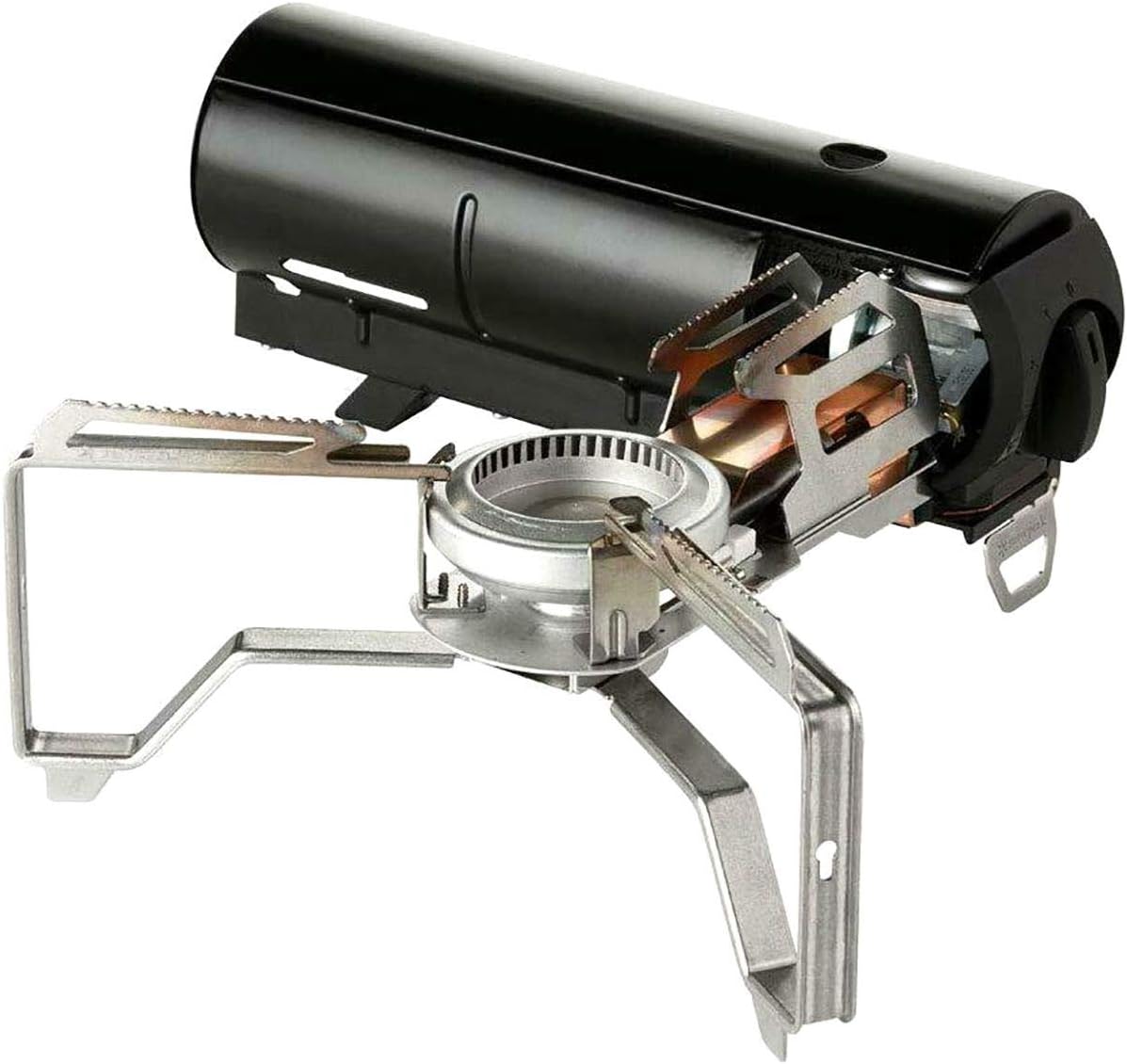
Snow Peak Home & Camp Burner
The underrated pick for solo campers or couples who want a stove they will use for a decade. It collapses to lunchbox size, the auto-ignition is built in, and the Snow Peak lifetime guarantee means this is literally the last burner they ever buy. It works with CB butane canisters and doubles as a kitchen burner at home — which matters because a gift that earns daily use between camping trips is a gift that does not get forgotten in the closet.
- Collapses flat — leaves meaningful trunk space for everything else
- Lifetime product guarantee from Snow Peak
- Auto-ignition; works with widely available CB butane canisters
- Single burner only — no simultaneous cooking for two dishes
- CB-format butane is less universally available than Coleman propane at remote gas stations
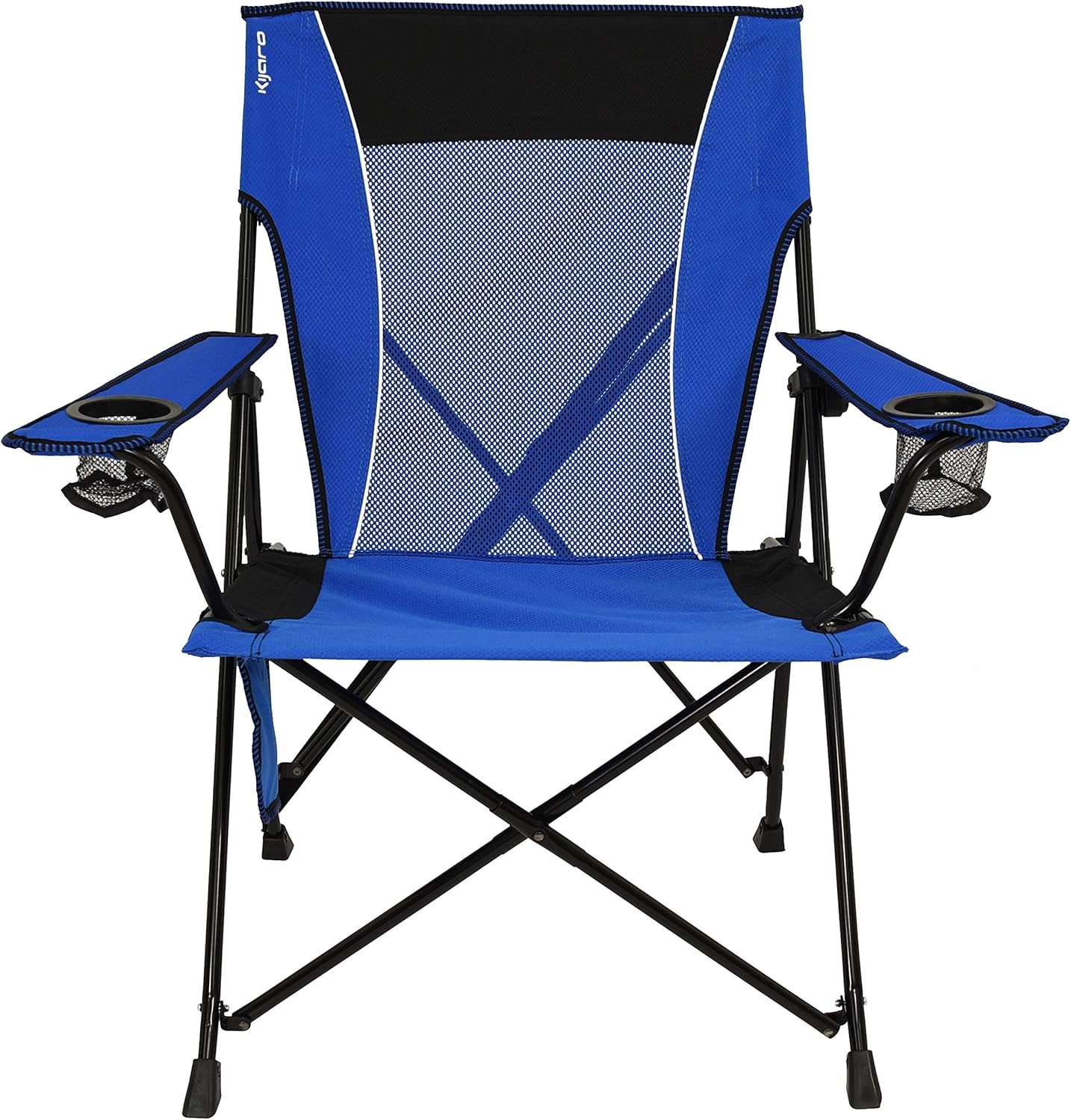
Kijaro Dual Lock Camp Chair
The comfort gift beginners chronically undervalue until they sit in a camp chair for four hours. The Dual Lock mechanism clicks open and closed with a single motion and will not fold under you on uneven ground — a real failure mode on cheaper chairs that ruins an otherwise good afternoon. Breathable mesh back keeps you from sweating through your shirt, 300-lb rated, and the built-in shoulder strap means one fewer thing to juggle between the parking lot and the site.
- Dual Lock mechanism clicks securely open and closed — won’t fold under you on uneven ground
- Breathable mesh back with supportive upright posture — no back pain after hours at the campsite
- Built-in shoulder strap for hands-free carry from car to site; 300-lb capacity
- Packed length is 45 inches — sits awkwardly in a sedan back seat unless you have full cargo space
- Narrow chair feet sink into sand or soft soil; best on firm campsite pads
What to Skip (And Why Every Camping Gift Guide Gets This Wrong)
The camping gear market is built on specifications that do not apply to car camping beginners. A 0-degree sleeping bag for a first-timer camping in July is expensive thermal overkill — it will have them sleeping on top of the bag by midnight. The rating on a sleeping bag is not a quality indicator; it is a temperature floor, and buying too far below the conditions you will actually camp in means sleeping too hot every night until the bag pays for itself on a winter trip that may never happen.
Ultralight titanium cookware is the other consistent mistake. The category punishes beginners who do not know how to manage intense, uneven heat on a camp stove — food burns, cleanup is miserable, and nothing about the experience signals that camping is enjoyable. A good nonstick camp pot set, or even a basic cast iron skillet if the car has space, will produce better first-trip meals than a $200 titanium setup that requires technique the beginner does not yet have.
Branded s’mores kits, 18-in-1 multi-tools, and specialty campfire cooking gadgets fall into the same category: novelty over utility, impressive in the box and largely unused at camp. A beginner does not know which blade on a multi-tool to reach for; they know how to use a regular knife, which they probably own. Get them gear that eliminates decisions, not gear that creates new ones.
What to skip
Do not buy a 0-degree sleeping bag for a first-time car camper — summer camping in mild conditions in a sub-zero bag is genuinely uncomfortable, and the beginner will associate camping with sweating through the night. Skip ultralight titanium cookware sets: they require heat management skills a beginner has not developed, and the first burned meal on a $180 pot is a discouraging experience. Branded s’mores kits, novelty camp cocktail sets, and multi-tools belong in the “looks great, rarely used” category — a first-timer benefits from one reliable tool per job, not one tool that does seventeen jobs poorly.
How to Match the Gift to Their Camping Style
Three questions narrow this list quickly. First: are they camping solo or with someone? If solo or paired, the Snow Peak Home & Camp Burner is the more considered choice — it packs small, auto-ignites, and earns daily use at home. If they are cooking for three or more, the Coleman two-burner wins on throughput without any tradeoff in ease.
Second: do you know where they are camping? If yes and it is summer in a region where overnight lows stay above 50°F, a 35°F bag is the comfortable choice. If you do not know — and most gift buyers do not — the Kelty Cosmic Down 20°F is the safe default. It runs slightly warm in mild conditions but will not leave them shivering if the forecast was wrong. Being too warm is recoverable; being too cold on the first night is the experience that ends the hobby.
Third: do they have a car with cargo space or a sedan with a packed back seat? The Kelty Wireless 2 at 5.6 lbs and the Coleman stove at 13.7 x 21.9 inches folded both assume you have a trunk to work with. If the recipient drives a compact car and is sharing gear with two other people, size down the stove to the Snow Peak. Everything else on this list fits comfortably in any car.
If you are still deciding between two picks, default to the one that addresses the biggest friction point for their first trip. Sleep is always the highest leverage: a well-rested beginner finds everything else forgivable. A beginner who slept badly will remember that first.
The gifts that keep a beginner camping are the ones that remove friction from trips two and three — not the ones that impress in the box. Sleep quality and a warm meal beat every gadget on the market for turning a tentative first-timer into someone who books the next site before they have driven home.