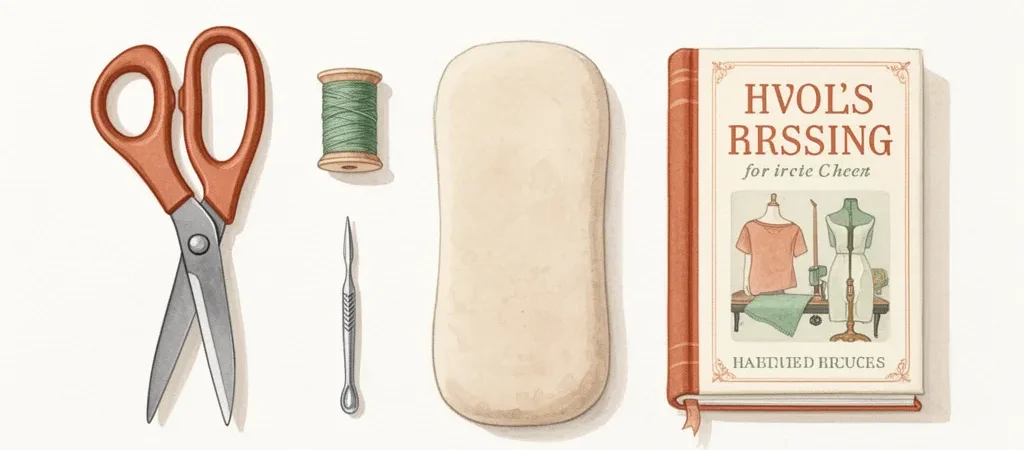
Buying a sewing gift for an adult who just started — or wants to start — sounds simple until you realize one question changes everything: do they already own a machine? The answer splits every gift recommendation in two. Buy the wrong thing relative to that one fact and the gift either duplicates what they have or, worse, skips the actual bottleneck holding them back.
The second problem is that sewing’s entry-level gift category is full of noise. The bundled starter kits, the novelty tools, the “learn to sew in a weekend” kits — they market to people buying gifts, not to people who actually sew. The items that make a beginner more capable are boring-looking and rarely presented as gift options.
This guide is organized around where the recipient actually is. If they don’t have a machine, that’s the gift. If they do, the highest-leverage gifts are the tools that prevent quitting — and there’s a specific short list of those.
How we select these gifts
- Specialty retailers first: We start with what specialty retailers actually stock — Austin Sewing Machines and Quilting in Round Rock, plus national specialty retailers like JOANN for category-wide coverage. A store that depends on repeat customers from quilters and garment sewists doesn’t carry tools that let beginners down in the first month.
- Community consensus: We cross-reference retailer inventory against what sewists recommend in their own spaces — r/sewing’s beginner recommendation threads and PatternReview’s new-sewist forums. Products that appear in both retailer stock and community consensus carry the heaviest weight.
- Stage fit — first ten hours at the machine: Adult beginner sewists face three specific failure points: scissors that fray fabric edges (so beginners blame their technique, not the tool), skipping pressing because they don’t understand its role, and threading and tension confusion from interfaces designed for experienced users. Every pick here addresses at least one of those friction points directly.
- Budget range: Picks span $35–$200 so the guide works whether you’re spending $35 on a reference book or $200 on a first machine.
- Skip-this guidance: Where a popular pick — like the ubiquitous 200-piece Amazon starter kit — isn’t right for a beginner, we say so and explain the specific reason why.
Machine First: What to Buy If They Don’t Have One Yet
The Singer Heavy Duty 4423 is the answer to “what machine should a beginner get?” that has remained stable across years of r/sewing recommendation threads, Wirecutter testing, and PatternReview community consensus. That kind of durability in a recommendation is worth paying attention to — beginner machine recommendations shift constantly as new cheap options enter the market, and the 4423 has stayed the call anyway.
The reason is mechanical controls. Computerized sewing machines sold at this price point often bury basic settings — stitch length, stitch width, tension — inside menu navigation. A beginner trying to adjust tension mid-seam should not need to tap through a screen. The 4423 uses physical dials. Every setting is visible and adjustable without entering a menu, which dramatically reduces the number of times a beginner has to stop sewing to figure out the machine.
The heavy-duty motor specification also matters more than it sounds. Budget machines at $60–$100 stall on denim, on multiple fabric layers at a seam intersection, on canvas. When a machine stalls, beginners troubleshoot the wrong things. The 4423’s motor handles those materials without complaint, which keeps the beginner’s attention on technique rather than on the machine’s limitations.
One honest caveat: $200 is real money. If budget is a constraint, check Austin Sewing Machines and Quilting for refurbished units — they carry serviced machines that have been checked for timing and tension, which matters more for a beginner than buying new.

Singer Heavy Duty 4423
The Singer Heavy Duty 4423 is the most broadly validated beginner sewing machine in its price range: 18,000+ Amazon reviews at 4.6 stars, Wirecutter’s longtime top pick, and the machine recommended most consistently across PatternReview and r/sewing beginner threads. Mechanical controls remove the computerized menus that confuse beginners. The heavy-duty motor handles denim and multiple layers without stalling. Stocked at Austin Sewing Machines and Quilting in Round Rock for buyers who want to purchase locally or pick up a serviced refurbished unit.
- 18,000+ Amazon reviews at 4.6 stars — the most field-validated beginner machine at this price point
- Mechanical dial controls mean the beginner can see what every setting does without navigating menus
- Heavy-duty motor handles denim, canvas, and double-denim without stalling — reduces mid-project troubleshooting
- At $200, the most expensive item in this guide — consider a serviced refurbished unit from Austin Sewing Machines or waiting for a sale
If They Already Have a Machine: The Tool That Prevents Quitting
The single most common reason adult beginners quit sewing early is not threading confusion or tension problems. It’s scissors. Specifically, it’s cutting fabric with a craft scissor or kitchen shear and producing frayed, uneven edges — then attributing that result to their own lack of skill rather than to the tool. A proper pair of dressmaker’s shears changes this completely, and Gingher 8″ Dressmaker’s Shears are the consistent recommendation across Threads Magazine and r/sewing for good reason.
The bent handle design is the functional detail that matters most. On flat-blade scissors, lifting the handle during a cut also lifts the fabric off the table — the fabric shifts, the cut line shifts, and the seam allowance becomes uneven. The bent handle on a dressmaker’s shear keeps the lower blade flat on the cutting surface throughout the cut, which is the physical reason they produce straighter, more accurate cuts on almost every fabric type.
German steel holds an edge substantially longer than the chromed steel used in budget shears, and the blade can be professionally resharpened when it eventually dulls. The practical gift instruction worth including: put a dot of nail polish on the handle. Gingher shears dedicated to fabric only stay sharp two to three times longer than shears that get grabbed for paper or packaging. That instruction is worth passing along with the gift.

Gingher 8″ Dressmaker’s Shears
Bad fabric scissors are the most common reason adult beginners quit sewing early — a craft scissor or kitchen shear crushes fabric fibers at the cut edge, producing fraying and uneven seam allowances that a beginner attributes to bad technique rather than the tool. Gingher 8″ dressmaker’s shears are the Threads Magazine and r/sewing recommendation across beginner scissors threads: the bent handle keeps fabric flat on the cutting surface during the cut, and the knife-edge German steel blade cuts through most fabric types cleanly in a single pass. Stocked at Austin Sewing Machines and Quilting.
- Bent handle keeps the cutting surface flat against the table — a meaningful ergonomic advantage for accurate seam allowances
- German steel blade holds an edge significantly longer than budget shears; can be resharpened professionally
- Requires dedicated use for fabric only — labeling the handle with nail polish is necessary to prevent household repurposing that dulls the blade quickly
The One Press That Changes Everything
Most beginners understand ironing as something you do to clothes after washing. Pressing in sewing is different — it happens before and after each seam, using steam to set the fabric and open or flatten the seam allowance. Experienced sewists will tell you that the difference between professional-looking and amateur-looking results is almost entirely pressing discipline. A beginner who skips this step will keep getting results that frustrate them without understanding why.
What a wool pressing mat adds to this equation is physics: wool fibers absorb steam from both sides of the fabric simultaneously. On a standard padded ironing board, steam escapes primarily upward — you press, the steam dissipates, you repeat. On a MadamSew Wool Pressing Mat, the steam is driven through the fabric and absorbed by the wool beneath, which means seams press flat in roughly half the passes. That efficiency matters for a beginner who is already managing a lot of new skills at once.
The 17×13.5″ size is practical rather than aspirational — large enough for most garment sections and quilt blocks, small enough to sit on a table next to the sewing machine rather than requiring a separate pressing station. It works with any iron the recipient already owns, which makes it a genuinely additive gift rather than one that requires them to buy something else first.

MadamSew Wool Pressing Mat
Pressing — using an iron on seams before and after sewing, not just at the end — is the skill most beginners skip and the one experienced sewists most consistently identify as the difference between professional and amateur results. A wool pressing mat absorbs steam from both sides of the fabric simultaneously, which means seams press flat in half the passes required on a standard ironing board. The MadamSew mat is the Amazon consensus pick at 3,200 reviews and 4.7 stars; the 17×13.5″ size works on any table surface with any iron the beginner already owns.
- Wool construction absorbs steam from both sides simultaneously — seams press flat in half the passes required on a standard ironing board
- 17×13.5″ fits on any table surface; works with any iron — no additional equipment required
- Requires flat storage — cannot be rolled or folded, which matters in small sewing spaces
The Book That Replaces 20 Hours of YouTube
YouTube is a fine way to learn sewing for some people. It is a poor reference tool for most. When a beginner is mid-seam and needs to remember how to finish a French seam, or which direction to press a dart, searching YouTube produces a video that starts with thirty seconds of preamble, covers a slightly different technique than what they need, and cannot be easily scanned to the right moment. A physical reference book at the machine is faster and more precise for technique lookup.
The Reader’s Digest Complete Guide to Sewing is the book experienced sewists consistently recommend when asked what reference they wish they’d had as a beginner. It covers the full range of techniques a beginner will encounter across their first two to three years — fitting, darts, zippers, buttonholes, seam finishes, hemming — with illustrated step-by-step sequences that work as lookup resources rather than read-through lessons. At 4.8 stars across 2,800 Amazon reviews, the signal is consistent.
The honest framing for gift shoppers: this is a reference book, not a workbook. It does not have projects with instructions from start to finish. A beginner who needs structured project guidance should look at pattern-based beginner books alongside this one. But for the question “how do I do this specific technique,” no other resource at this price point competes.

Reader’s Digest Complete Guide to Sewing
The Reader’s Digest Complete Guide to Sewing is the reference book that appears on experienced sewists’ recommendation lists when asked what they wish they’d owned as a beginner — a consistent signal across r/sewing and PatternReview recommendation threads over many years. It covers every technique a beginner will encounter in their first two to three years with illustrated step-by-step sequences designed for lookup at the machine, not read-through as a course. 4.8 stars across 2,800 Amazon reviews. At 528 pages, it replaces the 20 hours of YouTube searching required to access the same material in video form.
- Illustrated reference covering fitting, darts, zippers, buttonholes, and seam finishes — indexed for lookup at the machine, not read-through as a course
- Consistently recommended by experienced sewists as the reference they wish they’d owned from day one
- A reference book, not a guided project workbook — beginners who need structured project walkthroughs will need an additional resource for that
What to skip
Skip the 200-piece “complete sewing kit” sold across Amazon under a dozen brand names. These bundles ship flimsy scissors that crush fabric fibers rather than cut them, thread colors no beginner project actually calls for, and gadgets — seam gauges, bodkins, loop turners — that experienced sewists own but beginners will not use in their first year. The specific problem with the scissors is that a beginner cutting fabric with a cheap shear will produce frayed, ragged edges and attribute the result to their own technique. They’ll think they’re bad at sewing. They’ll quit. One good pair of Gingher shears does more for a beginner than an entire bundle of tools that look complete on the listing image but underperform in use.
The best sewing gift for an adult beginner removes friction from their first ten hours at the machine. That means starting where the recipient actually is. No machine yet — the Singer 4423 is the gift. Machine already owned — the shears are the highest-leverage single purchase, because bad scissors are the most common reason beginners quit before they develop any skill.
The pressing mat and the reference book compound from there. Both address skill gaps that only surface once the beginner has had a few sessions at the machine and started running into results they can’t explain. Giving both alongside the shears makes a strong combined gift if budget allows — they address three different friction points that hit a beginner in roughly the first three months.
If you’re still deciding between two items, think about where the recipient is most likely to stall. If they’re cutting fabric with whatever scissors are in the kitchen drawer, the Gingher shears will immediately change their results. If they’ve been sewing for a few weeks and the seams look fine but the finished item still looks homemade, the pressing mat is usually the answer to what they’re missing.