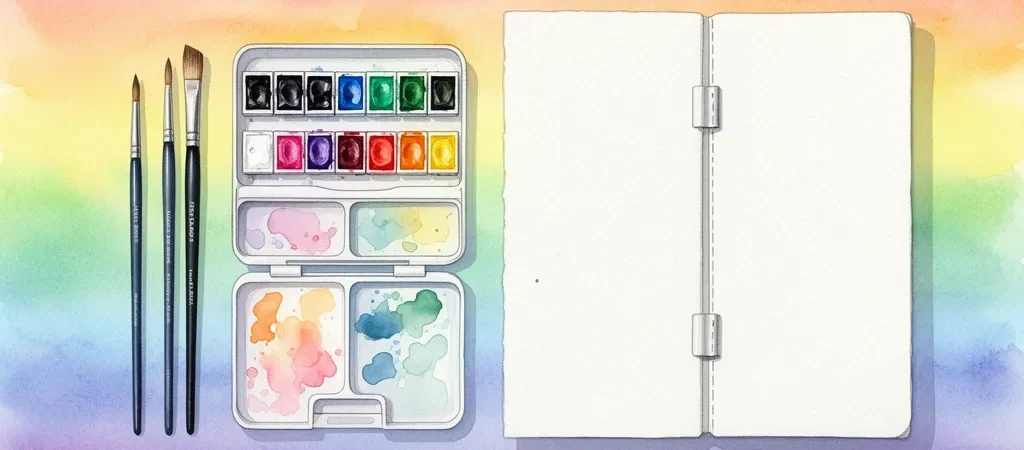
Most adults who try watercolor and quit blame themselves. The real culprit is almost always the supplies — specifically, cheap paper. Here’s the truth every instructor repeats: paper quality matters more than paint quality for beginners. Student paint on good cold-press paper looks great; artist paint on flimsy sketch paper buckles, pills, and disappoints. So this starter kit leads with the paper, pairs it with two trusted student paint sets, adds the right brushes and a real palette, and finishes with the book that turns a daunting medium into 30 small wins. Most of it is stocked at Austin’s Jerry’s Artarama.
How we pick these gifts
- Paper first: The single biggest lever for a beginner’s success — real 140lb cold-press, not sketch paper — leads the list.
- Specialty + community vetted: Cross-referenced against r/watercolor, Jenna Rainey’s lessons, and Austin’s Jerry’s Artarama / Paper + Craft Pantry.
- Trusted student grade: Real Winsor & Newton, Van Gogh, Princeton, and Arches — no no-name craft-store kits.
- Budget range: from an affordable practice pad to a 100% cotton ‘treat’ block.
Start With the Paper (Seriously)
This is the most important section. A practice pad you won’t feel guilty using, plus the cotton ‘treat’ that proves how much paper matters.

Canson XL Watercolor Pad (9×12, 30 Sheets, 140lb Cold Press)
The single most important pick for a beginner and the centerpiece of the ‘cheap paper ruins the experience’ message. Real 140lb cold-press paper at 30 sheets for a low price means a beginner can practice fearlessly without feeling each sheet is precious. The universal r/watercolor answer to ‘what cheap paper is actually good?’
- True 140lb/300gsm cold-press surface handles real washes without the pilling or warping of sketch paper
- 30 sheets at a low price removes the ‘too precious to practice’ anxiety that kills beginners’ progress
- Cellulose (non-cotton), so colors lift back more than cotton; less forgiving for wet-on-wet than Arches

Arches Cold Press Watercolor Block (9×12, 140lb, 100% Cotton)
The ‘treat’ paper that proves the niche message: student Cotman paint on Arches 100% cotton looks dramatically better than artist paint on cheap paper. The glued-on-four-sides block keeps paper flat without taping, so a beginner gets clean edges and no buckling. The universal ‘splurge’ answer in r/watercolor.
- 100% cotton surface stays luminous, lets pigment move beautifully, and forgives lifting and re-working
- Block format (glued 4 sides) keeps sheets dead flat with no taping or warping
- Much pricier per sheet than Canson XL, which can make timid beginners hesitant to practice on it
The Paint: Two Trusted Student Sets
Either of these is the right first paint — pick one, not both. Cotman for reliability, Van Gogh for vibrancy.

Winsor & Newton Cotman Sketchers’ Pocket Set (12 Half Pans)
Cotman is the gold-standard student-grade set and the most-recommended starter paint in r/watercolor for adults — genuinely lightfast and transparent without artist-grade prices. The pocket-box format with a built-in lid palette means the beginner can sit down and paint immediately. Stocked at Jerry’s Artarama Austin alongside the artist-grade lines.
- Reputable student-grade pigments with good transparency and tinting strength, far above craft sets
- Self-contained pocket box with lid palette and brush — zero additional setup for a true beginner
- 12 half pans is a limited palette; serious learners will eventually add tube colors

Van Gogh Watercolor Pocketbox (12 Half Pans + Brush)
The perennial Cotman alternative in r/watercolor — many beginners prefer its brighter, more intense pigment load and rate it half a step above Cotman for vibrancy at a similar price. Stocked at Jerry’s Artarama Austin. Including it gives the gift-buyer a genuine choice between the two trusted student lines.
- Brighter, more saturated student pigments that many beginners find more rewarding out of the box
- Most colors carry strong lightfastness ratings, so early paintings won’t fade
- The included pocketbox brush is mediocre; pair it with the Princeton Snap brushes instead
Brushes, Palette & a Field Option
Decent synthetic rounds, a real mixing palette for when they outgrow the lid, and an all-in-one kit for the ‘I won’t have time’ painter.

Princeton Snap! Synthetic Brush Set (Rounds + Shader)
Princeton Snap is the default ‘first real brushes’ recommendation in beginner watercolor communities — the synthetic Taklon holds water, snaps back to a point, and survives a learner’s heavy hand. Princeton brushes are stocked at Jerry’s Artarama Austin. A small round-plus-shader set covers everything an adult beginner needs without overwhelming choice.
- Synthetic Taklon points hold a surprising amount of water and recover their tip, ideal for learning control
- A trusted brand carried by specialty retailers, not a disposable big-box brush
- Synthetic doesn’t hold as much water as a natural sable mop; some will later add a wash brush

Mijello Fusion Airtight 18-Well Watercolor Palette
Once a beginner moves from a tiny lid-palette to mixing real washes, a proper folding palette with deep wells and a big mixing area is the next upgrade — and the airtight Mijello keeps squeezed-out tube paint or moisture from drying between sessions. The most-cited ‘real palette’ in r/watercolor, stocked at Jerry’s Artarama Austin.
- Airtight seal keeps paint workable for days, so a beginner can paint in short sessions without rewetting
- Large dedicated mixing area trains proper wash and color-mixing habits the tiny lid palettes can’t
- Larger and less pocketable than a pan-set lid; overkill if they only use the all-in-one field kit
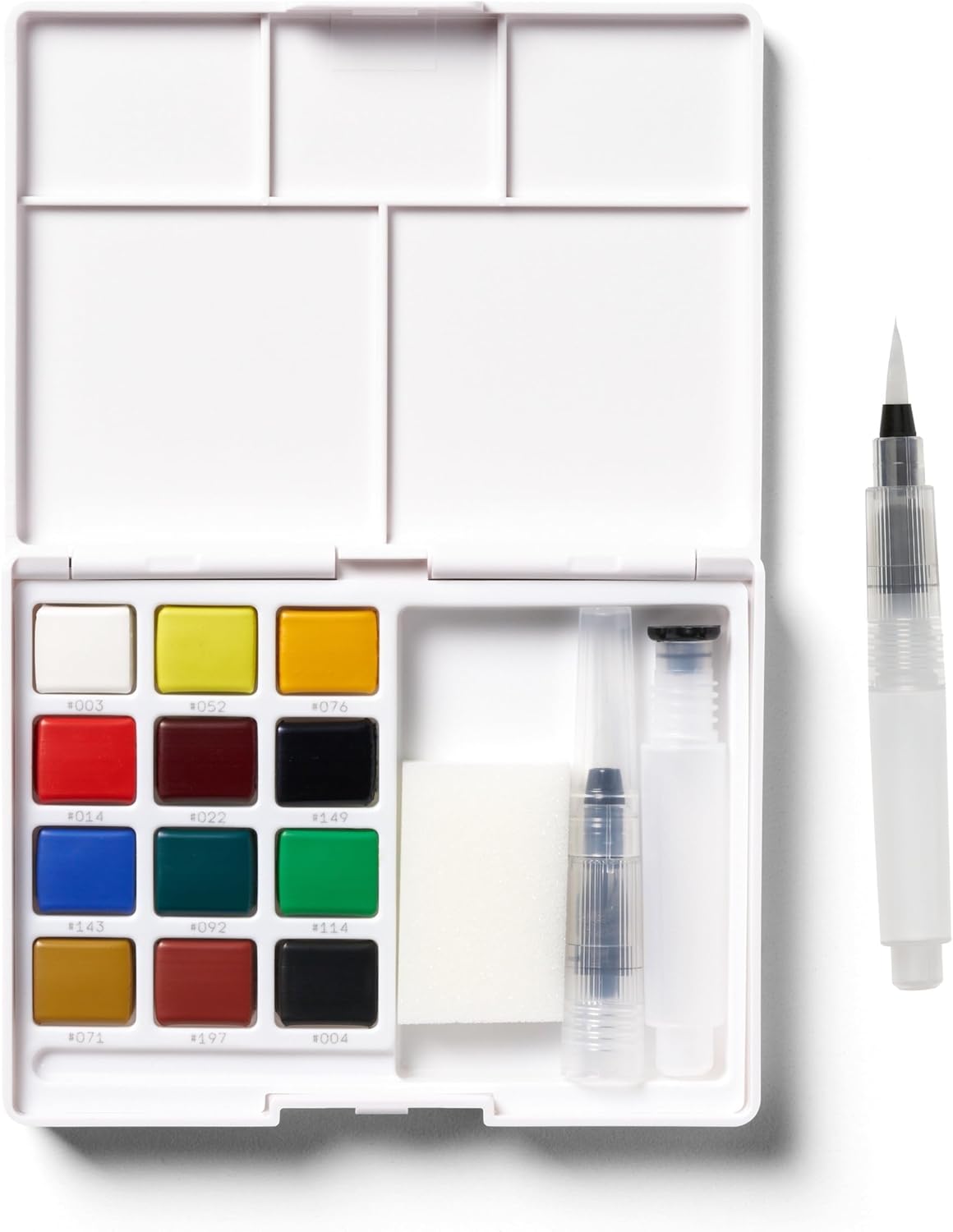
Sakura Koi Pocket Field Sketch Kit (12 Colors + Water Brush)
The underrated, unexpected pick: the Koi field kit is the cult favorite for adults who think they ‘won’t have time to paint,’ because the built-in water brush and snap-flat palette let them paint on a lunch break or a park bench with zero setup. A recurring urban-sketching recommendation in r/watercolor, carried by Austin’s Paper + Craft Pantry.
- All-in-one with refillable water brush and built-in palette — no water cup or extra gear needed
- Genuinely portable, which keeps a busy adult actually painting instead of waiting for the ‘right’ moment
- Pigments are fine for sketching but less re-wettable and lightfast than Cotman for finished pieces
Something to Learn From
Good supplies still need structure — the most-gifted beginner watercolor book there is.

Everyday Watercolor: Learn to Paint in 30 Days (Jenna Rainey)
An adult beginner with good supplies still needs structure, and this is the most-gifted, most-recommended beginner watercolor book in the community — its 30-day format builds skills incrementally instead of overwhelming. Rainey’s huge YouTube following means the buyer can pair the book with free video lessons. Directly addresses the frustration beginners feel without guidance.
- Structured 30-day progression turns a daunting medium into small daily wins, ideal for learning solo
- Pairs with the author’s large free YouTube library for video reinforcement of each lesson
- A few absolute beginners wish certain early steps were more detailed
What to skip
Skip the giant ‘all-in-one’ craft-store watercolor kits with 48 colors, a dozen brushes, and a pad of thin paper — the paint is chalky, the brushes shed, and the paper buckles, which is exactly the frustrating first experience that makes people quit. One good 12-pan set, a few Princeton brushes, and real cold-press paper beats a 60-piece bargain box every time. Also skip ‘watercolor markers’ as a substitute — they’re a different medium and won’t teach real brush-and-water control. One inexpensive add-on worth grabbing separately: a roll of artist/masking tape to fix paper to a board.
If you buy just two things, make them the Canson XL pad and one paint set — that combination alone gives a beginner a genuinely good first experience. Add the Princeton brushes and the Everyday Watercolor book and you’ve covered supplies and instruction completely. And if they’re convinced they’re ‘not creative enough to bother,’ the Sakura Koi field kit lowers the barrier to almost nothing — paint anywhere, no setup.