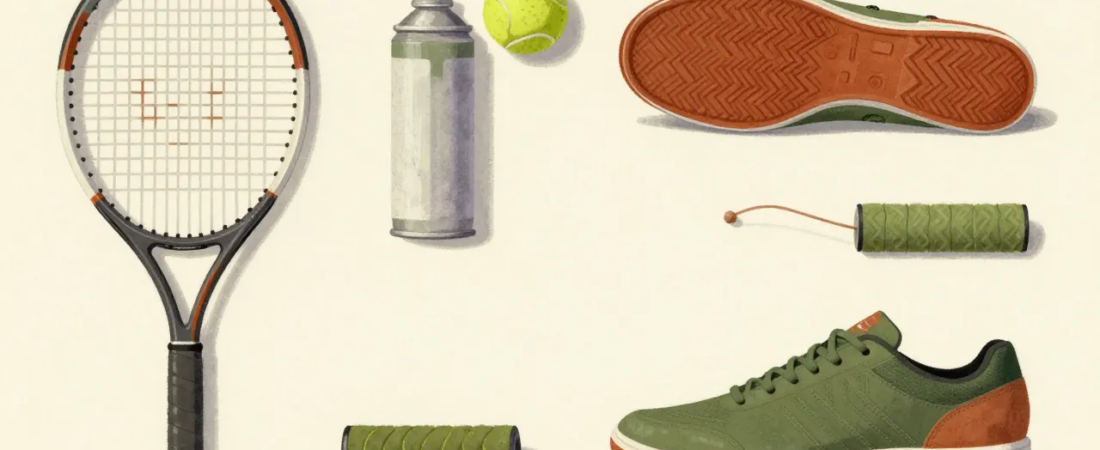
Most “beginner tennis gift” lists are warmed-over pro-shop bestsellers or kid-focused starter kits. Neither fits an adult who’s just picking up a racket for the first time at 35 or 55. The friction points are different: tennis elbow from a frame that’s too stiff, blistered feet from running shoes worn on a hard court, dead balls bought in bulk that feel like rocks by week two, and no one to hit with on a Tuesday night.
This guide is built around those specific failure modes. The picks below are the ones that survive the awkward first 90 days — when form is bad, mishits are common, and the difference between “I’m sticking with this” and “the racket is in the closet” usually comes down to whether their elbow hurts after a session.
If you’re shopping for someone who’s already past the tentative phase and swinging hard with decent form, this isn’t the right guide — they need a different frame and probably a string job, not a starter kit. For everyone else, here’s what actually keeps adult beginners on the court.
How we select these gifts
- Specialty retailers first: We start with what tennis-specific retailers actually stock and recommend to adult beginners — Tennis Warehouse, Tennis Express, and Austin’s Whole Earth Provision Co. and Roger Bowman Tennis pro shop.
- Community consensus: We cross-reference retailer inventory against what adult beginners discuss in r/10s, the Talk Tennis forum, and tennis coach YouTube channels (Essential Tennis, Intuitive Tennis). Frames that show up on every “best for adult beginners” list and don’t show up in tennis-elbow horror threads get the heaviest weight.
- Age and stage fit: Adult beginners need rackets in the 9.5–10.6oz strung range with 100–115sq in heads and stiffness ratings under ~68 RA. We screen every frame against these specs.
- Budget range: Picks span roughly $7 to $899 — so the guide works whether you’re filling a stocking or buying the partner who’s been talking about lessons for six months an actual setup.
- Skip-this guidance: Pro-level frames and stiff “tweener” rackets dominate beginner gift lists because they look impressive. We say no when a popular pick is actually a fast track to tennis elbow.
How we pick gear for adult beginners
Three things separate gear that gets used from gear that gets shelved: arm-friendliness, foot support, and friction removal. Adult bodies don’t bounce back from bad equipment the way teenage bodies do. A 14-year-old can swing a stiff Babolat Pure Drive with sloppy form for a year and feel fine. A 42-year-old will be icing their elbow by week three.
The spec window we look for: rackets between 9.5 and 10.6oz strung, 100–115 square inch head, frame stiffness under about 68 RA, and a string pattern open enough (16×19 or 16×20) that the ball doesn’t feel like it’s hitting a board. Anything outside that window is either too unstable for poor contact or too punishing on the arm.
The other half of the equation is what’s not a racket. Court shoes prevent the rolled ankle that ends a tennis career two weeks after it starts. Pressurized balls keep practice realistic. A grip that doesn’t turn into a wet noodle in Austin humidity keeps the racket from flying out of someone’s hand on a serve. These aren’t accessories — they’re the difference between a beginner who plays twice a week and one who plays once and remembers it as miserable.
Rackets sized for adult beginners
The right beginner racket is forgiving on mishits and gentle on the arm — full stop. Power is irrelevant at this stage; an adult beginner has more swing speed than they know what to do with, and modern rackets generate plenty of pace on their own.
The hero pick here is the Wilson Clash 100L V3. The Clash line is a recurring recommendation in r/10s “what should I buy” threads specifically because of its FreeFlex frame technology, which gives it the lowest stiffness rating of any mainstream performance frame. For an adult who’s still developing form — meaning lots of off-center contact — that flexibility absorbs shock instead of transmitting it into the elbow. It’s the racket coaches hand to clients with existing tennis elbow.
If the budget is tighter or the recipient is genuinely unsure they’ll stick with the sport, the Head Ti.S6 is the honest answer. It’s been sold continuously for nearly three decades because the formula works for adult beginners: 8.7oz, 115 square inch head, head-heavy balance that produces effortless power on slow swings.
The middle option is the Babolat Boost Drive. It’s the entry-tier graphite frame in Babolat’s lineup — the brand most adult beginners want because Nadal plays Babolat. The Boost Drive gives them that brand association at a beginner-appropriate weight and stiffness. Just be aware: the full-fat Pure Drive is one of the most common “I gave my partner tennis elbow” stories in coaching forums. Do not buy a Pure Drive for a beginner.
Court shoes — why running shoes hurt them
Tennis is a lateral sport. Running shoes are built for forward propulsion, with cushioned, narrow heels and minimal lateral support. The first time an adult beginner pushes off hard to chase a wide forehand in their Brooks Ghosts, they’re going to roll an ankle. This is the single most common avoidable injury for new tennis players, and it’s entirely a gear problem.
The ASICS Gel-Dedicate 8 is the cheapest legitimate court shoe on the market — under $70, with the herringbone outsole and Trusstic midfoot piece that prevents lateral collapse. It’s not a flagship shoe, but for someone playing twice a week on a hard court, it’s all they need for the first six months. ASICS’ Gel-Resolution and Court FF lines are the upgrade paths once they’re playing more.
One thing to check before buying: hard court vs. clay court outsole. Most public courts in the US, including everything in Austin’s parks system, are hard courts. The Gel-Dedicate 8 ships with a hard-court outsole by default, which is what you want unless the recipient specifically plays at a club with HarTru clay.
Balls, grips, and elbow-saving accessories
The cheap stuff matters more than people think. The Penn Championship 15-pack is the default rec ball at every public court and most clubs in Austin — it’s the USTA’s official ball. Buying these means the recipient practices with the same ball they’ll see in any beginner clinic or doubles round-robin. Don’t buy pressureless “trainer” balls; they feel dead and teach bad habits.
For grip, Tourna Grip XL is the only overgrip that actually works in Texas humidity. It’s a recurring pick in r/tennis grip threads because of its dry feel — the grip gets tackier as you sweat into it, the opposite of cheap synthetic grips that turn slimy by the third game. Ten-pack form is right; one overgrip lasts about 6–10 hours of play.
The Gamma Shockbuster dampener is a small but worthwhile add-on — but only if the recipient is playing a stiffer frame like the Babolat Boost Drive or the Ti.S6. It reduces the high-frequency string vibration that contributes to arm fatigue. If they’re already on a Wilson Clash, skip it; the frame already does the dampening work.
When a ball machine makes sense
Hitting partners are the bottleneck for adult beginners. Lessons are once a week, drop-in clinics fill up, and most coworkers don’t play. A ball machine solves this — but only at the right price point and only for someone who’s committed.
The Slinger Bag is the only sub-$1000 machine worth considering. It’s wheeled (drags onto a court like luggage), battery-powered (no extension cord at the public court), and holds 144 balls. The catch is real, though: it only feeds flat balls, no topspin or slice variation. That’s fine for groove practice and footwork drills, less fine if the goal is realistic match prep.
Before dropping $899 on this, check whether the recipient’s local club rents a Tennis Tutor by the hour. Most do, and a few rentals will tell you whether they’ll actually use a machine often enough to justify owning one. Many beginners think they want a ball machine and discover after two sessions that what they really wanted was a hitting partner.
Bundle ideas by budget
Under $100: Head Ti.S6 ($60) plus a Penn Championship 15-pack ($25). That’s a complete entry-level setup for someone testing the waters.
Around $300: Babolat Boost Drive ($129), ASICS Gel-Dedicate 8 ($70), Penn 15-pack ($25), Tourna Grip XL ($27), Gamma Shockbuster ($7). The full kit for someone taking their first lessons — racket, real shoes, balls, sweat-proof grip, and a dampener for the stiffer frame.
Around $400, arm-friendly: Wilson Clash 100L V3 ($249), Gel-Dedicate 8 ($70), Penn 15-pack ($25), Tourna Grip XL ($27). This is the setup for an adult who’s already prone to elbow or shoulder issues, or for someone over 50.
Splurge, ~$1100: Slinger Bag ($899) plus the Clash 100L ($249). Only justified if the recipient has already taken five or more lessons and is asking about how to practice between them.

Wilson Clash 100L V3 (Strung)
The Clash 100L is the gold standard recommendation for adult beginners. At 9.9oz strung with a 100sq in head and unusually flexible frame (FreeFlex tech), it’s forgiving on off-center contact and arm-friendly enough to survive bad form during the still-learning phase.
- Flexible frame is the most arm-friendly racket in this price range — the Clash forgives bad form that would cause tennis elbow on stiffer Babolats
- 100sq in head + 9.9oz weight hits the exact specs developmental notes call for
- Comes pre-strung at factory tension, ready to play out of the box
- Pricier than entry-level options — you’re paying ~$80 over a Ti.S6 for arm-friendliness that matters most after 6+ months of consistent play

Head Ti.S6 (Prestrung)
A 30-year-old design that won’t die because it works for adult beginners — 8.7oz strung, 115sq in head (massive sweet spot), and head-heavy balance that gives effortless power on slow swings.
- Cheapest legitimate adult racket on the market — under $60 prestrung
- Oversized 115sq in head means even your worst mishits go in
- Featherweight makes it ideal for older adults or anyone with shoulder issues
- Stiff aluminum-titanium frame can transmit shock — not ideal if you have existing tennis elbow
- You’ll outgrow it within a year if you progress — but that’s the point at this stage

Babolat Boost Drive (Strung)
Babolat’s beginner-tier full-graphite frame: 9.8oz strung, 105sq in head, 16×19 string pattern that gives the spin-friendly feel of the pro Pure Drive without the 11oz weight or stiffness.
- Full graphite (not aluminum) — hits and feels noticeably more like a real performance racket
- Open string pattern (16×19) helps generate spin once your form develops
- 9.8oz keeps it within developmental notes’ 9.5-10.5oz target
- Stiffer than the Wilson Clash — riskier choice if you’re prone to elbow pain

ASICS Gel-Dedicate 8
Running shoes get you ankle rolls on hard courts because they’re built for forward motion, not lateral cuts. The Gel-Dedicate 8 is ASICS’ entry-level court shoe — stiff lateral support, herringbone outsole, GEL cushion in the heel.
- Sub-$70 court shoe with real lateral support — the cheapest ‘not running shoe’ option that won’t fall apart in 3 months
- Trusstic midfoot support unit prevents the ankle-roll scenario
- Available in wide widths
- Cushioning is firm by tennis-shoe standards — heavier players may want the Gel-Resolution 9 instead

Tourna Grip XL 10-Pack
The Austin heat makes overgrip non-optional — and Tourna’s the only dry-feel grip that actually works in humidity (the famous light blue grip seen on tour).
- Gets tackier as you sweat — opposite of cheap grips that turn slimy
- 10-pack drops cost-per-grip below $3 vs $5+ for singles
- Made in USA, uniform quality batch-to-batch
- No tapered end — first install is fiddly until you watch the YouTube tutorial

Penn Championship Tennis Balls (15-ball pack)
The default rec ball at Austin public courts and clubs. USTA’s official ball — beginners practice with the same ball they’ll see in any clinic.
- Official USTA ball — what every Austin club and public court uses
- Penn Championship is the cheapest pressurized ball that doesn’t go dead in a single session
- Mix of duty types covers both Austin hard courts and any clay sessions
- Pressurized balls go dead in 1-2 weeks once opened — not a stockpile, plan to play

Gamma Shockbuster Dampener
The string-bed worm dampener — Zorbicon gel that meaningfully reduces the high-frequency sting beginners feel on off-center hits with stiffer rackets.
- Targets the actual source of arm fatigue — string-bed vibration on mishits
- Stretches across 4 main strings for more contact area than button dampeners
- Cheap enough to throw one in every racket bag
- Doesn’t help with shock from frame flex — only string vibration
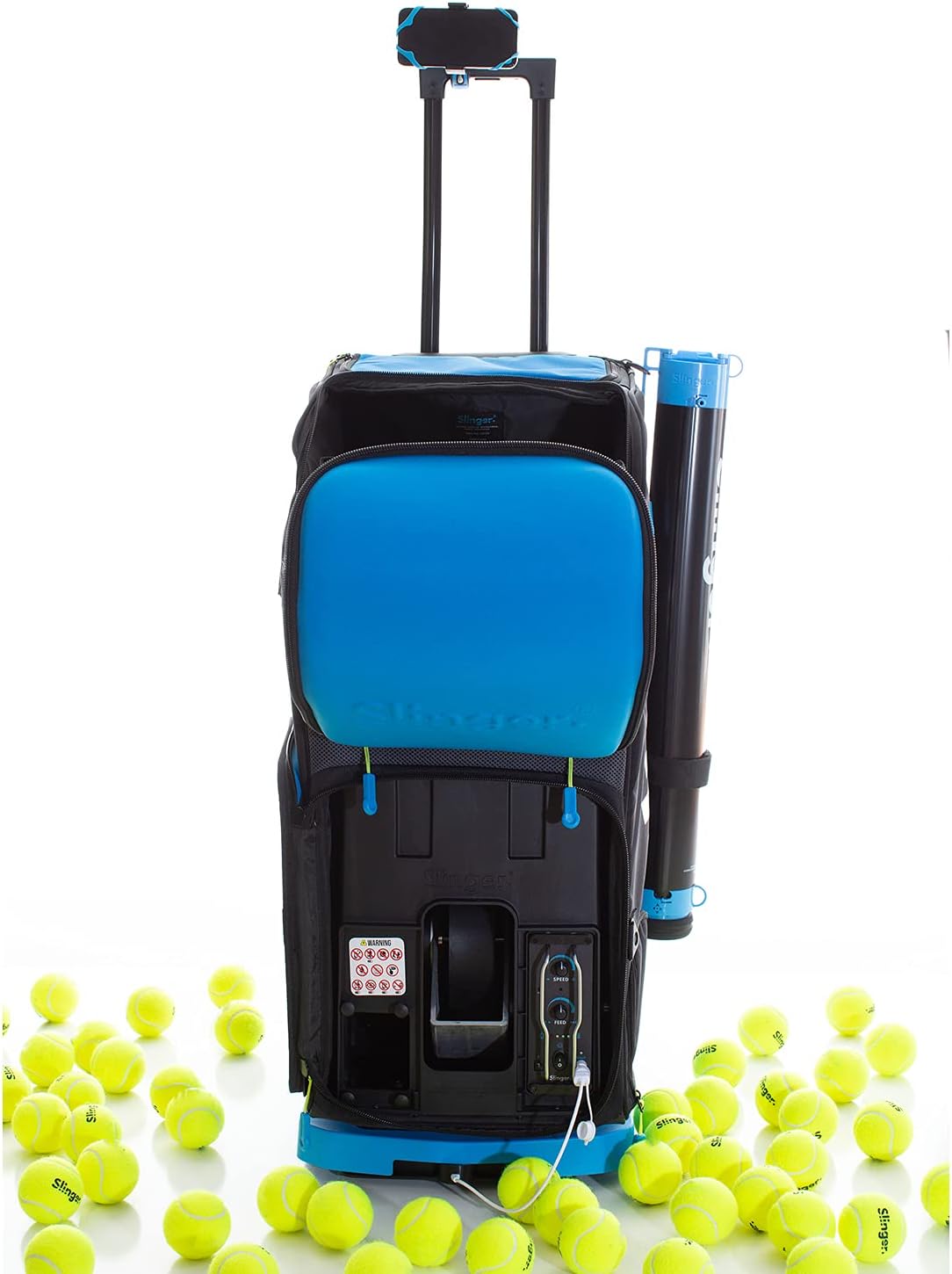
Slinger Bag Tennis Ball Launcher
For an adult beginner who can’t find a hitting partner on weekday evenings. A wheeled bag with a launcher that does 144 balls at 10-45mph.
- Wheeled bag form factor — drags onto the court like luggage, no separate cart
- Battery-powered with remote start — no extension cords needed at public courts
- 144-ball capacity = ~30 min of feeds before refill
- Flat feeds only — no topspin/slice; beginner can’t practice returns of varied shots
- Battery life is ~3 hours; heavy users complain about long-term motor durability
What to skip
Skip pro-level rackets under 11oz strung with polyester string — they’re a fast track to tennis elbow even for advanced players, let alone beginners with developing form. Skip the Babolat Pure Drive specifically; it’s the single most common frame in “I gave myself tennis elbow” coaching forum posts. Skip vibration dampeners as a standalone gift (they’re a $7 stocking stuffer, not a main present), any “tennis starter set” bundling a $30 racket with pressureless balls, and ball machines over $400 from brands you’ve never heard of — most beginners quit before justifying the spend, and the cheap machines die within a year.
The best gift for an adult beginner is one that removes a specific friction point. Match the gift to the friction, not the price tag. A $60 Ti.S6 paired with $70 court shoes will keep someone playing far longer than a $300 frame they can’t swing yet — because the shoe prevents the rolled ankle that ends the experiment, and the racket forgives the mishits that would otherwise hurt.
What this gift signals is that you took their “I’m thinking about tennis” seriously enough to research what would actually help — not the prettiest box on the shelf, but the thing that solves the problem they’re going to hit in week three. That’s a different kind of gift than a generic starter kit.
If you’re stuck between two options, default to the lighter, more flexible racket and the cheaper shoe. A too-forgiving racket gets used; a too-demanding one ends up in the closet. And if you’re really unsure whether they’ll stick with the sport, the under-$100 Ti.S6 plus Penn balls bundle is the lowest-regret path — it’s enough to find out, without the sting of a $300 frame collecting dust.