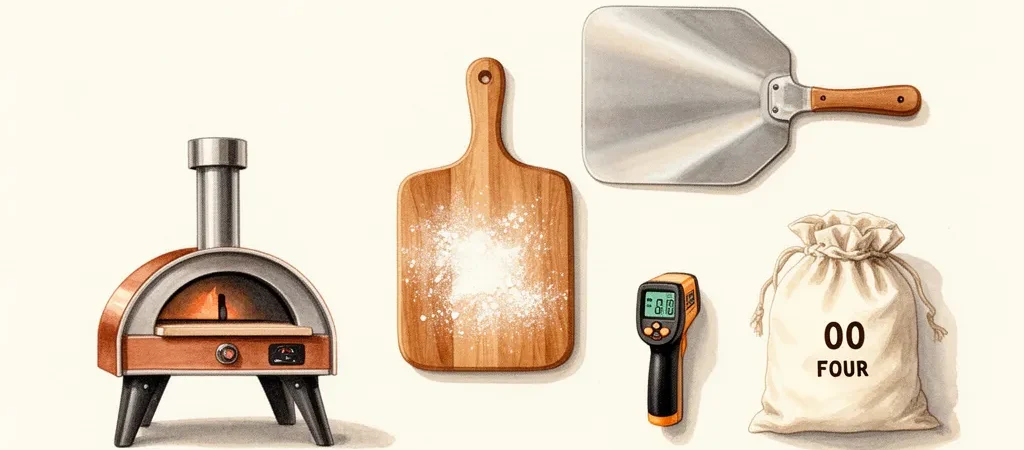
The video is always the same. Someone slides a raw dough disc into a gas-fired oven, and 60 seconds later they’re pulling out a pizza with a blistered, leopard-spotted crust and a soft, chewy center. Then the beginner tries it at home, in a standard oven, and gets something pale, tough, and cracker-flat on one side. Same dough. Same toppings. Wildly different result.
The gap isn’t skill, and it isn’t the brand of oven in the marketing footage. It’s temperature. A home oven tops out around 550°F. A Neapolitan pizza wants 750–900°F, and it wants to hit that heat on the cooking surface, not just the air around it. Every gift on this list exists to close that specific gap — nothing here is chosen because it looks good in a box.
That means some obvious gift picks — countertop “pizza ovens,” novelty peels — don’t make the cut, and some unglamorous picks — a $20 infrared thermometer, a $13 bench scraper — do. This guide sorts gear by what it actually does to the number that matters.
How we select these gifts
- Temperature is the filter, not price: Neapolitan-style crust needs 750–900°F+ surface heat and a bake under 90 seconds. A standard home oven caps around 550°F. We only recommend gear that closes that gap — either by generating real outdoor-oven heat or by re-engineering a home oven’s cooking surface with a conductive material.
- Specialty retailers first: We cross-check inventory against what outdoor cooking specialty retailers stock and keep in rotation — brands that show up repeatedly in pizza-oven forums and Reddit’s r/pizza and r/ooni, not just what’s algorithmically pushed on marketplace search.
- Community consensus: r/pizza and r/ooni threads are unusually specific about what actually hits temperature versus what’s marketed to sound like it does. Products that show up consistently in both retailer stock and community recommendation get the heaviest weight here.
- Two legitimate paths, no in-between: A true beginner either commits to an outdoor oven, or works within a standard kitchen using a steel and a thermometer. We don’t recommend hybrid gadgets that promise Neapolitan results without either.
- Budget range: Picks span $12.97 to $349, so this works whether you’re buying one $20 tool as a stocking stuffer or building a full outdoor setup.
- Skip-this guidance: Where a popular pick doesn’t actually reach pizza-cooking temperature in real use, we say so and explain the physics.
Path One: An Outdoor Oven for Someone Ready to Commit
An outdoor pizza oven is the only category on this list that can reliably clear 900°F, and it’s the gift for someone who wants the full experience — flame, char, the actual 60-second bake. But “biggest oven” and “best first oven” are different questions, and beginners get this wrong constantly.
The Ooni Koda 12 is the correct starting size. It reaches 950°F in under 15 minutes on a simple propane hookup, with no wood or pellet fire to manage — no learning curve on fuel, just gas flow and a flame. That matters more than it sounds: a beginner’s first ten pizzas should be about dough handling and launch technique, not about troubleshooting an unpredictable wood fire at the same time.
A bigger oven, like Ooni’s 16-inch models, is genuinely better once someone knows what they’re doing — more room for error on launch, bigger pies. But it’s also heavier, pricier, and no more capable of actually making a beginner’s first pizza turn out well. Gift the oven that matches the skill level in front of you, not the one with the biggest spec sheet.
Path Two: No Outdoor Space? The Steel-and-Thermometer Hack
Not every recipient has a patio, and not every gift budget covers a $349 oven. The legitimate workaround is a pizza steel paired with an infrared thermometer, both used inside a completely standard kitchen oven.
Here’s the mechanism: a ceramic pizza stone is a poor conductor. It absorbs heat slowly, needs a 45–60 minute preheat to fully saturate, and still transfers energy to the dough gradually — which is exactly why home-oven pizza crust so often turns out pale and gummy on the bottom. Steel is roughly 20 times more conductive than ceramic. It saturates faster, dumps heat into the dough almost instantly on contact, and gets you a genuinely blistered, browned bottom crust that a stone in the same oven can’t produce. This isn’t a nicer stone — it’s solving a different physics problem.
The Etekcity infrared thermometer is the second half of this gift, and it’s the cheapest, highest-leverage item on this whole list. A home oven’s dial says 500°F or 550°F, but that’s air temperature, not surface temperature — and surface temperature is what determines cook time. Beginners without a thermometer guess, and they guess low, pulling pizza too early or leaving it in too long trying to compensate. Fifty dollars for the two together removes the single biggest variable a home-oven beginner can’t see.

Ooni Koda 12 Gas Pizza Oven
The most-recommended beginner outdoor oven for a reason: it hits 950°F in under 15 minutes and produces a genuine 60-second Neapolitan bake, no wood or pellet fire management required. At 20 lbs it’s portable enough for a patio, balcony, or a friend’s backyard cookout. This is the right first oven — not because it’s the biggest, but because propane removes an entire skill (fire management) a beginner doesn’t need to learn yet.
- 950°F in under 15 minutes, no fire-tending skill required
- 20 lbs and genuinely portable for patios, apartments with outdoor space, or transport to gatherings
- Requires outdoor space and a propane tank — not usable indoors or on covered balconies with restrictions

NerdChef Pizza Steel (1/4-inch, 14.5″x16″)
Roughly 20 times more conductive than a ceramic stone, this steel turns a standard 500°F home oven into a legitimate pizzeria-style cooking surface. Stones need a 45–60 minute preheat and still transfer heat slowly, which is the actual cause of pale, gummy bottom crust. This is a recurring pick in r/pizza home-oven threads for exactly that reason — it fixes the conductivity problem instead of just holding more heat longer.
- USA-made with a lifetime guarantee
- Works in any standard home oven — no outdoor space or propane needed
- Heavy (roughly 20 lbs) and needs a permanent storage spot; not something you move in and out of the oven casually

Etekcity Lasergrip 774 Infrared Thermometer
The $20 tool that prevents the single most common beginner failure: guessing cook time off the oven’s dial instead of measuring actual surface temperature. A 12:1 distance-to-spot ratio means you can safely check a 900°F steel or stone from a foot away. Pair this with pick #2 and hand it over together — one without the other still leaves the guesswork problem unsolved.
- Instant surface-temp readings remove the guesswork that causes undercooked or scorched crust
- Under $20 — the highest-leverage item on this entire list per dollar
- Reads surface only, not internal dough temperature — still useful mainly as a “is my oven actually hot enough” check
Peels: Wood for Launching, Metal for Turning
A single peel is a compromise. Launching raw dough and turning a partially baked pizza mid-cook are two different jobs with two different material requirements, and gifting the matched pair — rather than one “do it all” peel — is what actually prevents the beginner’s most common on-oven disaster: a torn, stuck launch.
Wood works for launching because it absorbs a small amount of moisture from the dough’s underside, reducing stick in a way smooth metal can’t. The Ooni bamboo peel is sized to match a 12-inch oven or steel setup and doubles as a serving board afterward.
Metal is for turning, once the crust has set enough that sticking is no longer the concern. The Ooni perforated turning peel is thin enough to slide under a half-baked pizza, and the perforations shed excess flour before it burns onto the stone — which is what causes the acrid smoke smell and dark bitter specks beginners often blame on their oven rather than their peel.
One more free tip worth including with either peel: dust with semolina, not cornmeal. Cornmeal burns at high temperature and leaves a bitter char; semolina’s coarser grain rolls under the dough like ball bearings and holds up at 900°F without scorching.

Ooni 12″ Bamboo Wood Pizza Peel
Wood resists dough stickage far better than metal because it absorbs surface moisture on contact — the reason most beginner “my pizza tore on launch” failures happen with metal peels, not wood ones. Sized to match a 12-inch oven or steel, and it doubles as a serving board afterward, so it’s not a single-use tool sitting in a drawer.
- Genuinely reduces launch-sticking versus metal
- Doubles as a serving board — gets daily use, not just bake-day use
- Not suited for mid-bake turning — too thick to slide under a partially cooked crust
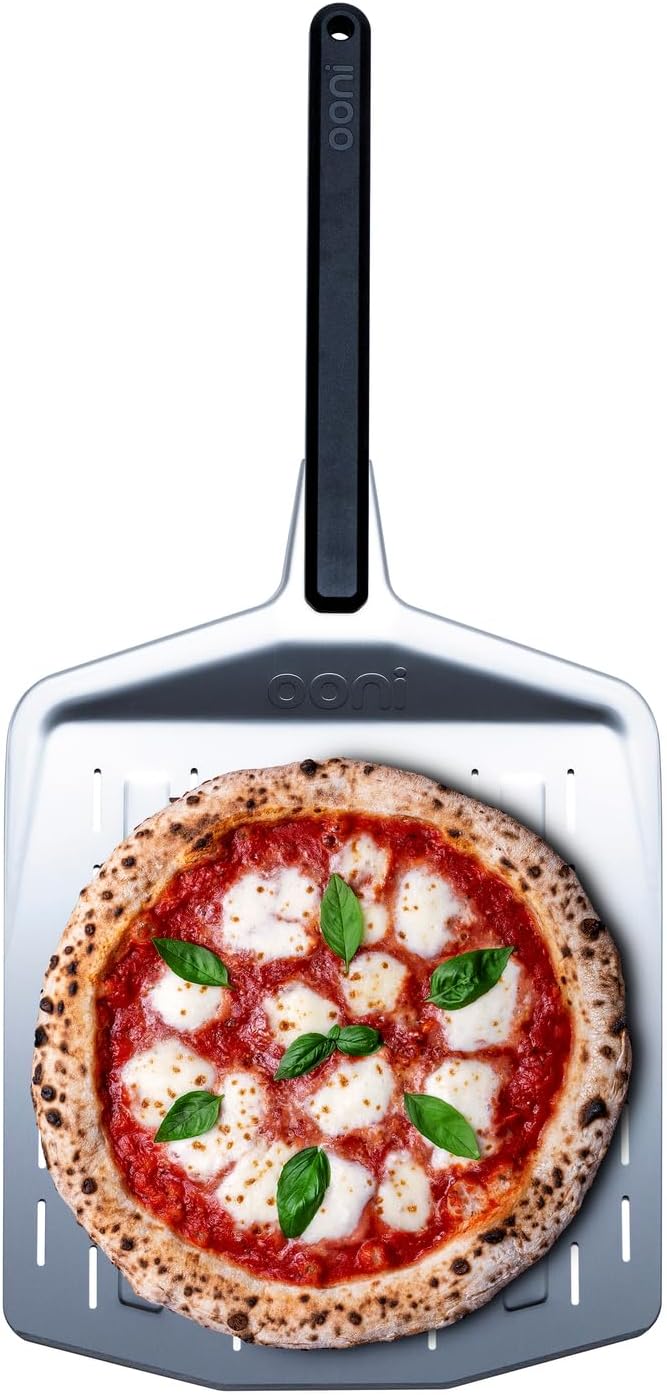
Ooni 12″ Perforated Metal Turning Peel
Thin aluminum slides under a partially baked pizza where a wood peel is too bulky, and the perforations shed excess loose flour before it can burn onto the stone. This solves the classic one-side-burnt result from not rotating during a 60–90 second bake — outdoor ovens cook unevenly, and turning mid-bake isn’t optional at that heat.
- Thin profile slides easily under a partially set crust
- Perforations prevent flour buildup and burnt-flour bitterness on the stone
- Poor choice for the initial launch — smooth metal grips raw dough more than wood does
Dough Tools Worth Gifting
Oven and peels solve the bake. Dough handling is the other half of the problem, and it’s where beginners hit friction in their very first batch — well before temperature even becomes relevant.
A bench scraper portions bulk dough into consistent balls and cleans sticky work surfaces that a knife or spatula can’t handle cleanly. It’s not glamorous, but every beginner needs one within their first attempt.
Caputo 00 flour solves a different friction point: ingredient sourcing. High-heat-rated 00 flour behaves completely differently than all-purpose at 900°F — different gluten structure, different browning behavior — and most beginners don’t know to look for it until their first pizza comes out wrong for reasons that have nothing to do with their oven.

Spring Chef Stainless Steel Bench Scraper
Portions bulk dough into consistent balls, with built-in ruler markings that help beginners eyeball 250–280g portions without a scale. Also cleans sticky flour and dough residue off work surfaces faster than a rag or spatula. Cheap and unglamorous, but every beginner hits this exact need in their first batch of dough.
- Ruler markings help with consistent portioning before a beginner owns a kitchen scale
- Doubles as a surface scraper for cleanup
- Not pizza-specific — a general baking tool, so it may feel like a minor add-on rather than a headline gift
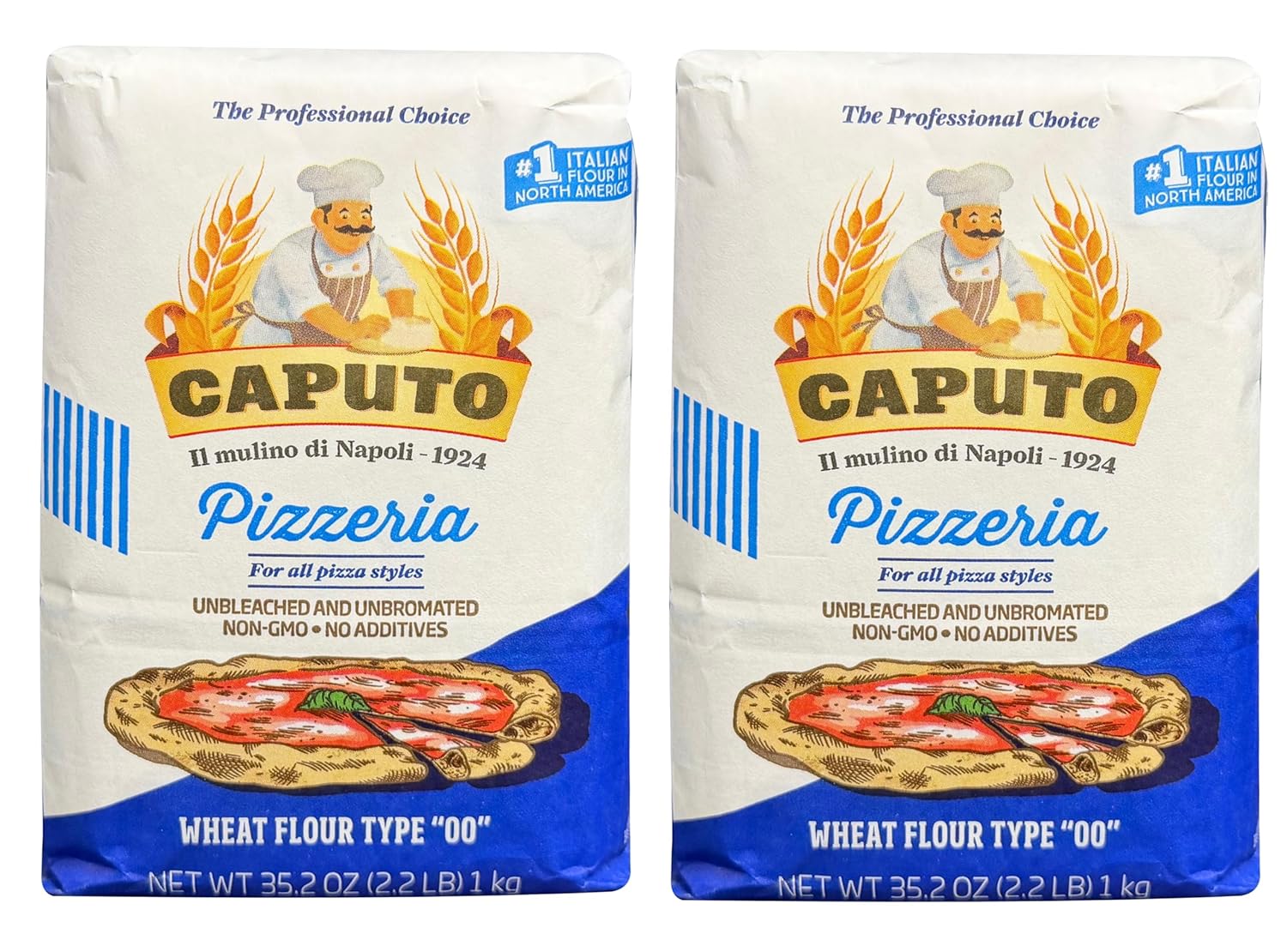
Caputo Pizzeria 00 Flour (2-Pack, 4.4 lbs)
High-heat-rated 00 flour behaves completely differently than all-purpose flour once it’s in a 900°F oven — different gluten development, different browning, different stretch. This removes the beginner’s first ingredient-sourcing hurdle entirely. Two 2.2 lb bags let them test a batch or two before committing to a 55 lb bulk bag they may not need.
- Purpose-built for high-heat cooking, not a substitute ingredient
- Smaller pack size is a lower-commitment way to try it before buying bulk
- Overkill for a standard 500°F home oven bake, where all-purpose or bread flour performs nearly as well
What to skip
Skip countertop “pizza ovens” that advertise Neapolitan-style results but top out around 500–700°F in real-world testing — many of the advertised peak temperatures aren’t actually reached once you account for door-opening heat loss and undersized heating elements. That’s a home-oven result at a premium price, not a real fix. Also skip novelty peels marketed with a special “non-stick” coating as the sticking solution — the actual fix is a dusting agent (semolina, not cornmeal) and the shimmy test before launch, not a coated surface. A gimmick peel doesn’t solve a technique problem.
Both paths here end at the same place: a crust with real char, real chew, and a bottom that isn’t pale or leathery. The Ooni Koda 12 is the gift for someone ready to commit to an outdoor setup and wants the full 900°F experience without managing a wood fire on day one. The steel-and-thermometer combo is the gift for someone working with a standard kitchen — apartment, no patio, smaller budget — who still deserves a real fix instead of a nicer stone.
Either path, paired with the right peel for the right step and a couple of unglamorous dough tools, gets a true beginner to leopard-spotted crust faster than a bigger, pricier oven would on its own. The gear matters less than most marketing suggests. The temperature is the whole story.
If you’re still deciding between the two paths, ask one question: does the recipient have outdoor space they’d actually use regularly? If yes, the oven is the better gift. If no, the steel and thermometer solve the same physics problem inside a kitchen they already have.