
There are two reliable ways to sabotage a new pitmaster, and both of them look like generosity. The first is the $200 offset smoker — the long black barrel with the side firebox that looks like real Texas barbecue. The second is a drawer’s worth of novelty gadgets: a meat-shaped branding iron, a Bluetooth fork, a rub-injector kit nobody asked for.
The cheap offset is the more expensive mistake. A thin-gauge offset can’t hold heat — the steel is too light to buffer temperature swings — so the cook spends six hours fighting a fire that lurches from 180°F to 350°F and back. That is the single most common reason a beginner smokes once, produces a dry, sooty brisket, and quietly puts the thing on Craigslist. The gadgets are a smaller waste, but they share the same flaw: they’re answers to problems the recipient doesn’t have yet.
What a new pitmaster actually reaches for is short and unglamorous: a forgiving cooker that holds a steady temperature, an accurate thermometer so they stop guessing, a clean way to light charcoal, and the right wood. Get those right and they pull a juicy pork shoulder their first weekend — which is what keeps anyone in this hobby. This guide is built around that, not around what photographs well in a gift box.
How we select these gifts
- Specialty retailers first: We start with what Austin-area specialty retailers actually stock — in this case BBQ Outfitters, the Texas pitmaster shop whose entire business is repeat customers who’d notice if a smoker was junk. Where a niche fell outside their floor, we cross-checked national specialty sources rather than guessing.
- Community consensus: We weighed retailer inventory against what beginners are actually told to buy in their own communities — TVWBB (the Weber Smokey Mountain forum), r/smoking, and r/BBQ. Picks that showed up in both signals got the heaviest weight; the Weber Smokey Mountain and the chimney starter are near-unanimous across all three.
- The one skill that matters: Every pick here either builds or protects the core beginner skill — holding a steady 225–250°F for hours, low and slow. We deliberately skipped anything that automates that skill away or rewards the tenth cook over the first one.
- Budget range: Picks span $14.99 to $449, so the guide works whether you’re adding to a grill they already own or buying the cooker itself.
- Skip-this guidance: Where a popular gift is wrong for this stage — the cheap offset, the smoke tube, the WiFi blower — we say so and explain why, rather than padding the list.
The contrarian thesis is worth stating plainly before the picks: the cure for a struggling new smoker is almost never another gadget. It’s a cooker that’s hard to screw up and a thermometer that tells the truth. Everything below is organized around that, starting with the most consequential decision — the cooker itself.
The Cooker: Why the Cheap Offset Is the #1 Beginner Trap
An offset smoker is a wonderful thing once you can run a fire. The problem is that running a fire is the skill the beginner doesn’t have yet, and a cheap offset punishes its absence harder than any other cooker. To hold a steady temperature, an offset needs thick steel — roughly a quarter inch — which is why the offsets serious cooks use start north of $800 and weigh a few hundred pounds. The $250 version at the big-box store is built from sheet metal that heats and cools almost instantly, so every gust of wind and every splash of fuel sends the temperature swinging. A beginner ends up chasing the fire all day instead of cooking.
So skip that fork in the road entirely. For a beginner, there are two cookers that forgive mistakes, and the right one depends on a single question: does the recipient want to learn fire craft, or do they just want to cook great meat now?
If they want to learn the craft, the answer is the Weber Smokey Mountain — a charcoal bullet smoker whose water-pan design holds temperature for hours with almost no babysitting, while still teaching real charcoal-and-wood cooking. If charcoal sounds like a chore they’ll resent, the Pit Boss 700FB1 pellet grill lets them dial in 225°F like an oven and walk away. Both are genuinely beginner-forgiving. Neither is a thin offset.
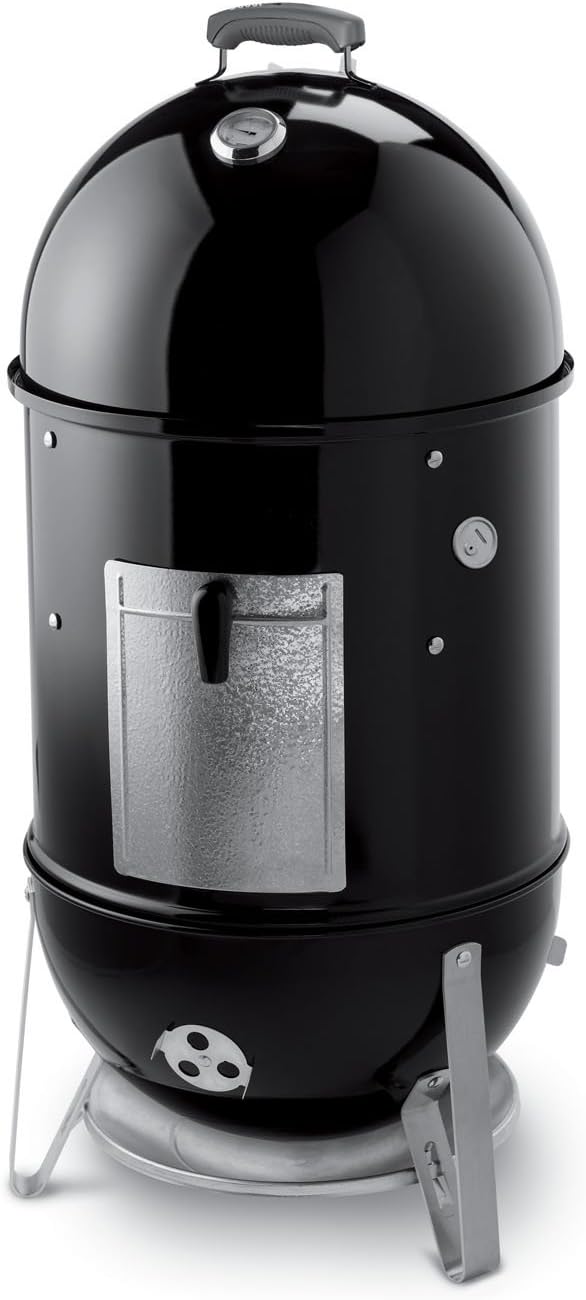
Weber Smokey Mountain Cooker 18″ Charcoal Smoker
The single most-recommended charcoal smoker for adult beginners across every tier we checked — stocked at BBQ Outfitters in Austin and the literal namesake of TVWBB, the largest beginner smoking forum. The 18-inch size is the sweet spot the community steers new pitmasters toward: large enough for a brisket or two pork butts, small enough that the charcoal-and-water-pan design holds 225-250°F for hours with minimal fiddling, which is exactly the low-and-slow skill a beginner wants to build.
- Holds temperature for 8-12+ hours on a single charcoal load once the vents are dialed in — genuinely forgiving for first cooks
- Bulletproof porcelain-enameled steel; these run for 15+ years and have the deepest community knowledge base of any smoker (every problem is already solved in a forum thread)
- Produces true charcoal-and-wood flavor that pellet units can’t fully match, so the beginner learns ‘real’ BBQ
- Charcoal management has a learning curve vs. set-and-forget pellet grills — the first 2-3 cooks involve babysitting the vents
- No digital readout or app; you supply the thermometer (see picks #2 and #3)
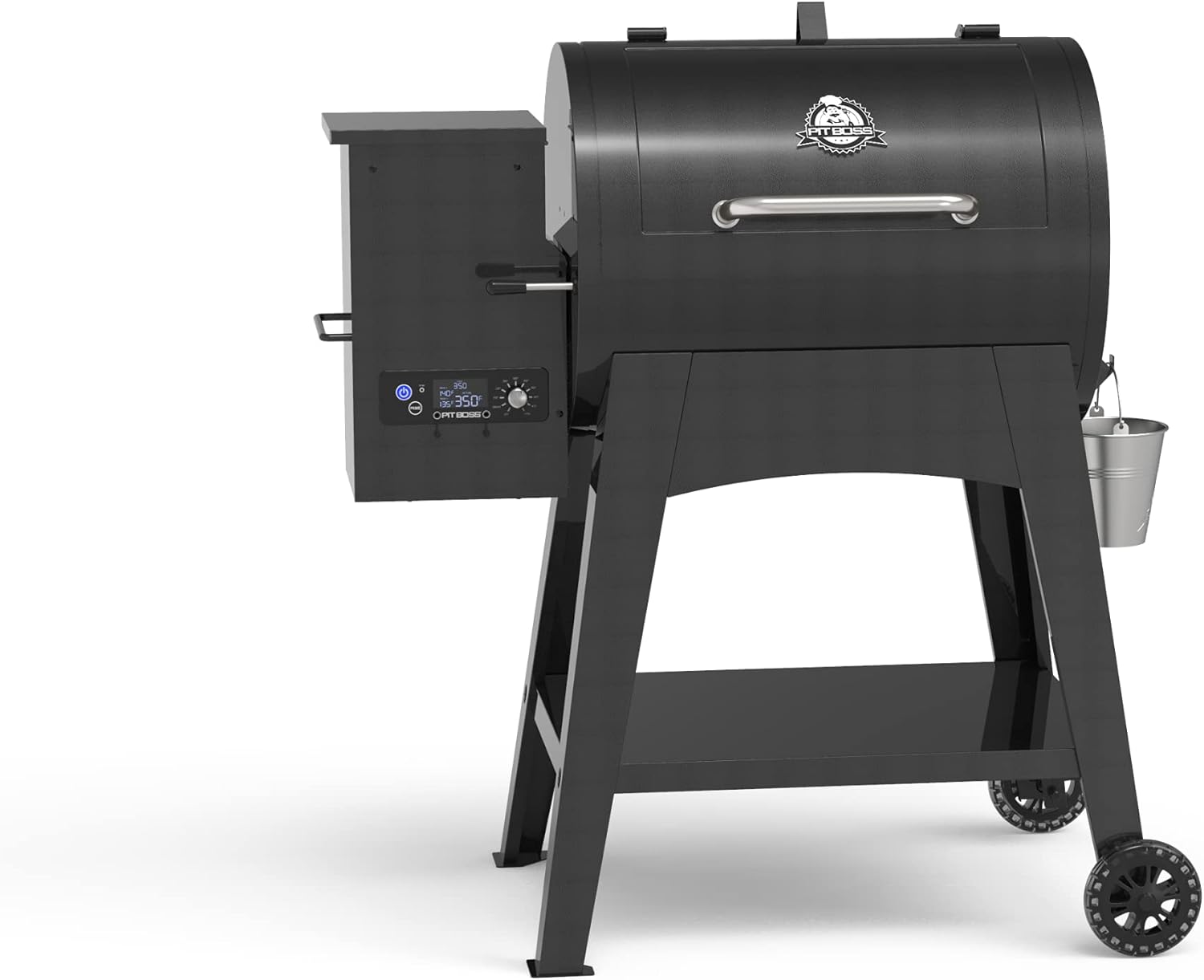
Pit Boss 700FB1 Wood Pellet Grill & Smoker
The ‘set-it-and-forget-it’ alternative for beginners intimidated by charcoal — a recurring budget-pellet pick in r/smoking and the winner of Smoked BBQ Source’s Pit Boss-vs-Z-Grills value shootout. The digital controller and 743 sq in of grate (fits 27 burgers / multiple racks of ribs) let a new cook dial 225°F and walk away, while the flame-broiler slider still allows high-heat searing — so it doubles as the household’s everyday grill. Stocked in the pellet category at BBQ Outfitters.
- Digital dial-in control board makes temperature management nearly automatic — the lowest-friction on-ramp to smoking
- Large 743 sq in cook surface plus sear capability and a 5-year warranty at a sub-$400 price
- Burns wood pellets for genuine smoke flavor without any fire-tending skill required
- Budget PID control swings more than premium pellet grills (Traeger/Yoder), and some owners report lighter smoke output at high temps
- Needs a covered/outdoor power source and shelter from rain — more setup constraints than a charcoal unit
The One Non-Negotiable: Thermometers
If you take one idea from this guide, take this: barbecue is a temperature game, not a timing game. The classic beginner failure is cooking to the clock — “the recipe says six hours” — and then panicking somewhere around hour four when the meat’s internal temperature stops climbing and parks at 150–170°F. That plateau is called the stall, and it’s normal; moisture is evaporating off the surface and cooling the meat as fast as the fire heats it. A beginner who’s watching the clock cranks the heat or wraps in a panic and ruins the cook. A beginner who’s watching a thermometer just waits it out.
That’s why a thermometer is the one accessory we’d call non-negotiable — and why the two thermometers below are complementary, not redundant. The ThermoPro TP20 is a leave-in dual-probe: one probe in the meat, one clipped at grate level, both reading all day so the cook can set a target and go inside. The ThermoWorks Thermapen ONE is an instant-read for fast spot-checks — you pull it out to verify doneness in different spots of a brisket in about a second, then put it away.
On an analog cooker like the Weber Smokey Mountain, which has no readout of its own, the leave-in is what turns the whole thing from guesswork into a feedback loop. Buy the TP20 if you buy only one. Add the Thermapen when the budget allows; experienced cooks almost universally say it’s the tool they wish they’d bought first.

ThermoWorks Thermapen ONE Instant-Read Thermometer
The instant-read thermometer the entire hobby converges on — a recurring ‘just buy the Thermapen’ refrain in r/smoking beginner threads and AmazingRibs’ Platinum pick. A sub-1-second, ±0.5°F reading is the fastest way for a beginner to learn doneness by feel and stop overcooking; it’s the one accessory experienced cooks say they wish they’d bought first. Pair it with a leave-in (pick #3): the Thermapen is for fast spot-checks, not all-day monitoring.
- Reads in about one second with ±0.5°F accuracy and a NIST-traceable cert — removes guesswork that ruins beginner cooks
- Auto-rotating backlit display and motion-wake; IP67 waterproof body with a 5-year warranty
- Holds resale value and reputation in the community better than any competitor
- Premium price for a single-function tool — budget shoppers balk until they use one
- It is a spot-check tool only; it cannot monitor a cook unattended
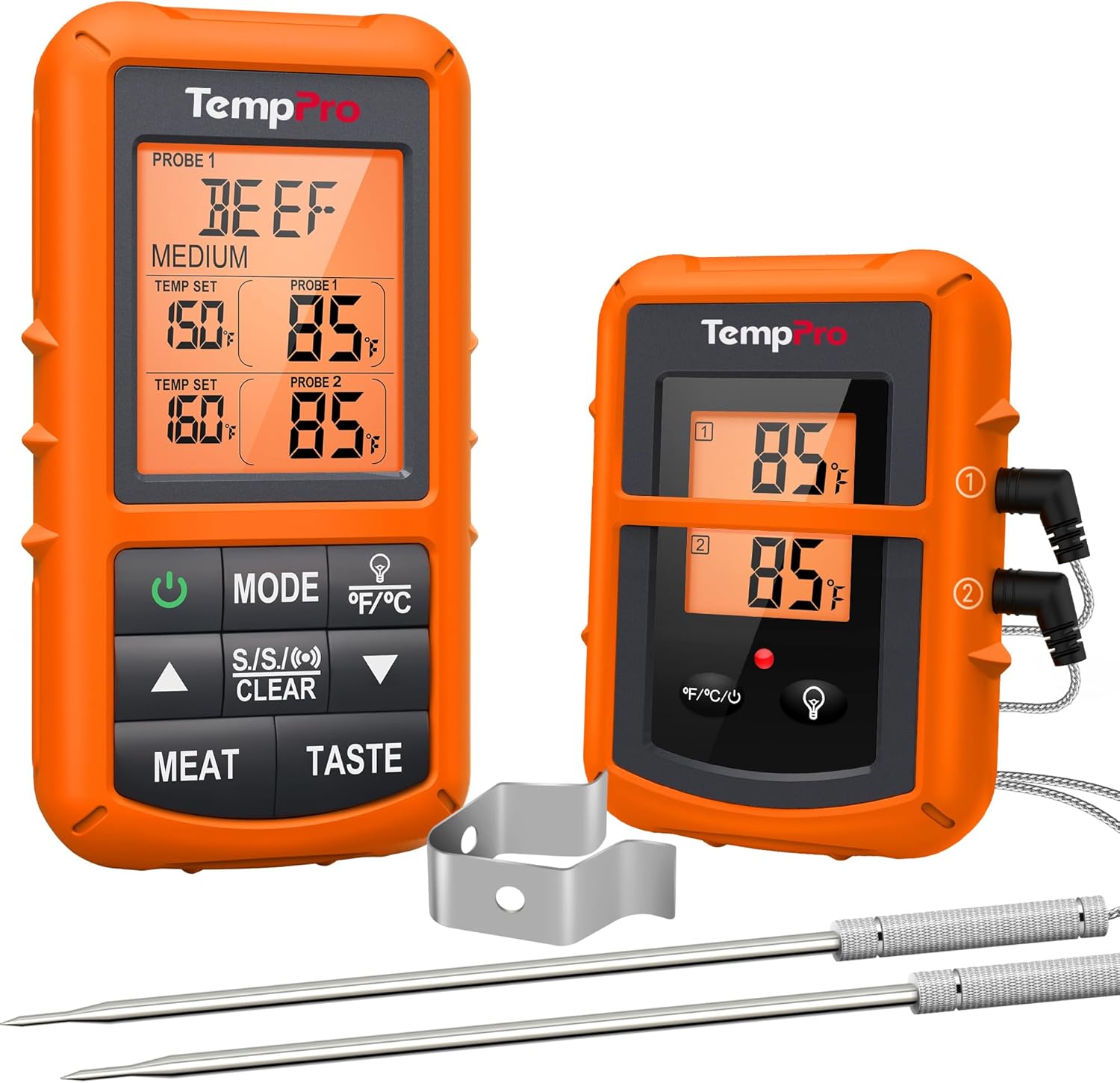
ThermoPro TP20 Wireless Dual-Probe Meat Thermometer
The leave-in counterpart to the Thermapen and the single best-selling beginner BBQ thermometer on Amazon for a reason: two probes track the meat’s internal temp and the pit’s ambient temp at the same time — exactly the data a beginner needs on an analog cooker like the Weber Smokey Mountain (pick #1) that has no readout of its own. The wireless transmitter sends both readings to a 300-ft remote receiver with no app, no Bluetooth pairing, and no dropouts, so a new cook can set a target, walk inside, and get an alarm when the pork shoulder hits temp. It directly cures the #1 beginner mistake — cooking to the clock and panicking through ‘the stall’ — by making temperature, not time, the thing they watch.
- Dual meat + ambient probes with presets for 9 meats and 5 USDA doneness levels — a beginner-proof feedback loop
- App-free 300-ft RF range with a dedicated receiver; no phone, no Bluetooth dropouts on an overnight cook
- One of the most-reviewed BBQ thermometers on Amazon (tens of thousands of ratings) at roughly half the price of pro leave-ins
- Probes and wires are consumables — rated to 716°F but they eventually wear and need replacing
- The RF receiver is one more thing to keep batteried vs. a glance-down built-in readout
Fire & Smoke Control Gifts
These are the gifts that don’t photograph well and matter more than anything that does. The first thing every charcoal forum tells a beginner is to throw away the lighter fluid and buy a Weber chimney starter. Lighter fluid leaves a chemical taste in the meat and lights unevenly; a chimney lights a full load of coals to glowing-ready in 15–20 minutes with nothing but a wad of newspaper. It’s a $25 gift that fixes a flavor problem the beginner can’t yet diagnose.
The second is wood — and the format matters. Give Weber hickory chunks, not chips. Chips flash off in minutes and are really meant for gas grills; chunks smolder slowly alongside the charcoal, which is what low-and-slow needs. Hickory is the community’s “training wheels” wood: bold, forgiving, and great on the pork and beef beginners cook first.
One teaching note worth passing along with the wood: use two to four chunks, not a panful. The instinct of every beginner is that more smoke equals more flavor, but oversmoking turns meat acrid and bitter. And to be explicit about restraint — a beginner does not need a smoke tube, and they definitely don’t need a WiFi fan controller. Both solve problems they won’t have until they can already manage a fire by hand.

Weber Rapidfire Chimney Starter (7416)
The first thing every charcoal forum tells a beginner to buy and the reason to never touch lighter fluid — a near-universal r/BBQ and TVWBB recommendation, and BBQ Outfitters includes fire-starter cubes free with smoker purchases for exactly this method. The 1.6-gallon cone-grate design lights a full load of coals to glowing-ready in 15-20 minutes with newspaper or a cube, giving a clean, chemical-free start that’s essential for good smoke flavor. The budget anchor of the kit at ~$25.
- Lights ~5.7 lbs of charcoal in 15-20 minutes with zero lighter fluid (no off-flavors) — the single biggest beginner upgrade for $25
- Large capacity and heavy aluminized steel that outlasts the thin bargain chimneys by years
- Pairs with any charcoal cooker the recipient owns now or later
- Gets dangerously hot — must be set on a heatproof surface, never a wood deck
- Irrelevant to a pellet-grill owner who never burns loose charcoal
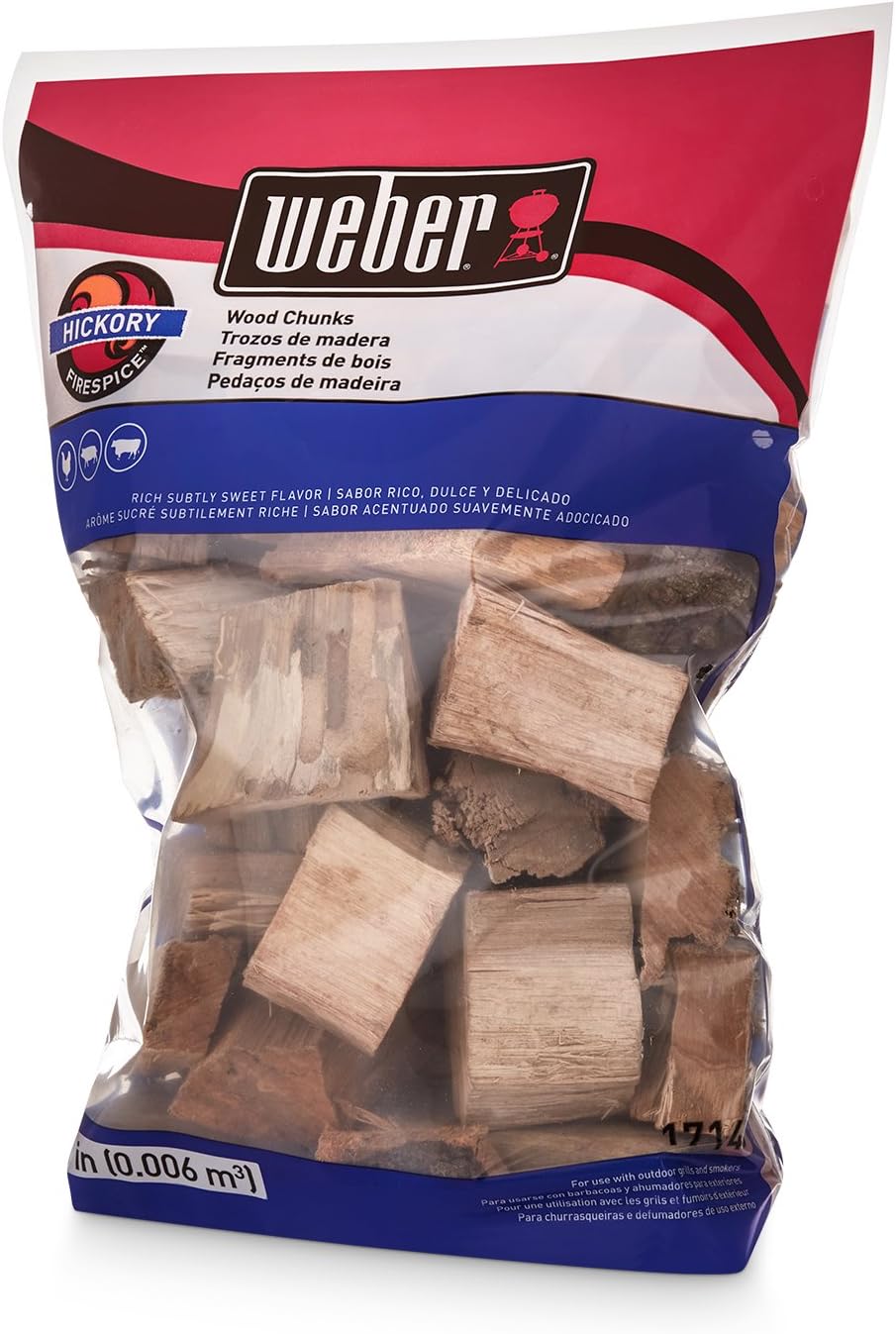
Weber Hickory Wood Chunks (4 lb)
Fuel/wood is part of the real first-setup stack, and chunks (not chips) are what the forums tell charcoal beginners to buy — they smolder slowly on a WSM or kettle instead of flashing off in minutes. Hickory is the community’s recommended ‘training wheels’ wood: bold, forgiving, widely available, and great on the pork and beef beginners cook first. r/smoking’s standard beginner advice is to start with small oak or hickory chunks and learn how much smoke you like. The lowest-price entry in the kit.
- Chunk format gives a long, steady smoke ideal for charcoal smokers — the right fuel form for low-and-slow
- Hickory is the most beginner-forgiving, widely-loved smoke profile for pork and beef
- Inexpensive and pairs with whichever cooker the recipient gets
- Hickory can turn acrid if a beginner over-smokes — use 2-4 chunks, not a panful (a teaching note worth including in copy)
- Less useful for a pellet-grill owner, who buys hopper pellets instead of chunks
Hands & Hardware That Earn Their Keep
Most “BBQ tool” gifts are a tax on the giver and a drawer-filler for the recipient. The exception is safety gear, because a beginner is going to be lifting hot grates, dumping a glowing chimney, and pulling foil-wrapped meat out of a 250°F box — and they’re going to do it tentatively, which is how forearms get burned.
The RAPICCA 17-inch gloves are the recurring budget pick in r/smoking precisely because the long cuff covers the forearm — the spot that meets the rim of the smoker when you reach in. Unlike fabric pit mitts, the waterproof neoprene grips greasy meat and rinses clean afterward. That’s the whole section. Restraint is the point.

RAPICCA 17″ Heat-Resistant BBQ Gloves (932°F)
Heat-resistant gloves are core safety kit for a beginner who will be lifting hot grates, dumping a chimney, and pulling foil-wrapped briskets — and RAPICCA is the recurring r/smoking budget pick that AmazingRibs actually bench-tested. The 17-inch neoprene-over-liner design protects the forearm (where beginners get burned reaching into a smoker) and, unlike fabric pit mitts, the waterproof coating lets you grab greasy meat and rinse the gloves clean.
- Long 17-inch cuff guards the forearm during the exact reaching-into-the-smoker moves that burn beginners
- Waterproof, oil-resistant neoprene wipes/rinses clean and grips slippery hot meat — more versatile than cotton pit mitts
- Inexpensive and high-volume reviewed, an easy add-on or stocking-stuffer tier
- Neoprene is rated for brief contact and ambient heat, not prolonged grabbing of glowing coals — pros note dexterity and sustained-contact limits vs. heavier leather welding gloves
- Bulkier than nitrile-lined cotton gloves for fine tasks like slicing
Knowledge Gifts That Shorten the Learning Curve
Hardware gets the recipient to a steady 225°F. Judgment is what tells them what to do once they’re there — when the bark is set, when to wrap, when a brisket is “probe tender” rather than just at temperature. That judgment is the slow part of the learning curve, and the right book compresses it.
Franklin Barbecue: A Meat-Smoking Manifesto is the one to give, and it’s an especially good fit for an Austin-rooted guide — Aaron Franklin’s Austin restaurant is the genre’s benchmark. Crucially, it’s taught as a methodology, not a recipe dump: it explains the why of fire, smoke, and wood, which is exactly the gap a beginner has. That’s also what keeps it from overlapping with our cooking, baking, and sourdough guides — this is a fire-and-temperature book, not a collection of dinners.
A coaching note to pass along with it: steer the recipient toward forgiving first cuts. Fatty, high-collagen meats — pork butt, ribs, chicken thighs — are nearly impossible to ruin and reward beginner mistakes with juiciness. Brisket is the famous one, but it’s an intermediate project and a discouraging first cook. Let them earn the brisket.

Franklin Barbecue: A Meat-Smoking Manifesto
The respected technique book the brief calls for, and an especially fitting pick for an Austin-rooted guide — Aaron Franklin’s Austin restaurant is the genre’s benchmark, and the book is taught as a methodology rather than a recipe dump. Forums repeatedly hand it to beginners because it teaches fire, smoke, wood, and brisket reading page-by-page, building the exact judgment a new pitmaster lacks. It pairs naturally with the WSM and the thermometers above.
- Teaches the ‘why’ of fire and smoke management, not just recipes — closes the knowledge gap that ruins beginner cooks
- Written by the most celebrated modern pitmaster; deep, unassuming detail on wood, fire, and brisket
- Inexpensive, giftable, and complements every hardware pick in this kit
- Central-Texas-centric and brisket-heavy — lighter on, say, ribs, poultry, or competition styles
- A few readers want more turnkey recipes; this is a teaching book first
Gift-Budget Tiers
The same eight picks, reorganized by what you’re willing to spend. A useful pattern hides in here: a chimney, a bag of chunks, and a leave-in thermometer is a complete, sub-$100 “upgrade what they already grill on” bundle — it turns a kettle they already own into a real smoker without buying a new cooker at all.
By spend
Stocking-stuffer (under $40)
- Weber Hickory Wood Chunks — $14.99
- RAPICCA 17″ Heat-Resistant Gloves — $23.99
- Weber Rapidfire Chimney Starter — $24.99
- Franklin Barbecue: A Meat-Smoking Manifesto — $24.99
Mid ($60–$250)
- ThermoPro TP20 Dual-Probe Thermometer — $59.99 (the if-you-buy-one-thing pick)
- ThermoWorks Thermapen ONE — $115.00
Big-cooker gift ($300+)
- Pit Boss 700FB1 Pellet Grill — $397.00
- Weber Smokey Mountain 18″ — $449.00
Beginner Smoker Questions, Answered
What is the best smoker for a beginner?
For most adult beginners, the 18-inch Weber Smokey Mountain — it holds 225–250°F for hours with minimal fiddling and has the deepest troubleshooting community of any smoker, so every problem they hit is already solved in a forum thread. If charcoal sounds like a chore they’ll resent, a budget pellet grill like the Pit Boss 700FB1 is the lower-friction alternative.
Should a beginner start with an offset smoker?
No. A cheap offset is the single most common reason beginners quit. To hold temperature, an offset needs thick (roughly quarter-inch) steel, which puts a usable one well over $800. The sub-$300 versions are too thin to buffer heat, so the temperature swings wildly and the cook spends all day fighting the fire instead of learning it.
Is a pellet smoker or charcoal smoker better for someone just starting out?
Both are good beginner choices for different people. A pellet grill is set-and-forget — dial 225°F and walk away — which is ideal for someone intimidated by fire. A charcoal smoker like the WSM takes two or three cooks to get the hang of the vents, but it teaches real fire-and-smoke craft and produces flavor pellets can’t fully match. Pick based on whether they want to learn or just cook.
What temperature should a beginner smoke meat at?
225–250°F at the grate is the classic low-and-slow range, and holding it steady is the core skill. Just as important is what they cook to: most beginner cuts are done by internal temperature, not by the clock — a pork butt around 200–205°F, for example. Expect the meat’s temperature to stall at 150–170°F for a couple of hours partway through; that’s normal evaporative cooling, not a problem to fix.
What accessories does a new pitmaster actually need (and which are a waste of money)?
Genuinely need: a leave-in dual-probe thermometer, a chimney starter, wood chunks, and heat-resistant gloves. Waste of money at this stage: smoke tubes (they oversaturate a cooker that already smokes), WiFi fan controllers (pointless before you can manage a fire by hand), and the dial thermometer in the lid (inaccurate, and it reads the wrong spot). Buy fundamentals, not automation.
How much should you spend on a first smoker as a gift?
You don’t have to buy the cooker at all. If they already grill, a chimney, a bag of chunks, and a leave-in thermometer make a complete sub-$100 upgrade. If you’re buying the cooker, budget $400–$450 for a WSM or a Pit Boss pellet grill — that’s the band where a beginner gets something forgiving and durable rather than the thin-metal trap.
What to skip
Skip the thin-gauge sub-$300 offset smoker above all — it needs roughly quarter-inch steel and $800+ to hold temperature, and it’s the #1 reason beginners quit after one frustrating season. Skip the smoke tube (it oversaturates a cooker that already smokes and turns meat bitter), the WiFi or Bluetooth fan controller (pointless until they can run a fire by hand), and the novelty branders and single-use gimmick tools that live in a drawer. And don’t let the cheap dial thermometer in the smoker’s lid stand in for a real probe — it’s inaccurate and reads the wrong spot. The pattern: don’t gift automation or gimmicks before the fundamentals.
If you only buy one thing
Buy the ThermoPro TP20 dual-probe thermometer. It’s the gift that turns guesswork into a feedback loop — meat temp and pit temp, all day, with an alarm — on whatever the recipient already cooks on. At $60 it’s the highest-leverage thing on this list, and it’s the one experienced cooks most often wish they’d owned from day one.
The Gift Behind the Gift
A forgiving cooker and an honest thermometer add up to one thing for the recipient: a juicy pork shoulder their first weekend instead of a dried-out brisket and a hobby they quit. That’s the whole game. Beginners stay in barbecue when their early cooks come out well, and early cooks come out well when the gear stops fighting them.
What this signals from you is that you paid attention to where they actually are — that you didn’t hand them the intimidating offset that looks impressive in a photo, or the gadget that flatters the giver. You gave them the thing that makes the next cook better.
If you’re torn between two picks, default to the thermometer over the gadget and the forgiving cooker over the authentic-looking one. And if you’re buying the cooker itself, the honest tiebreaker is the recipient’s patience for fire: someone who’ll enjoy tending coals gets the Weber Smokey Mountain; someone who just wants great meat with a dial gets the Pit Boss. Either way, add a chimney and a thermometer — those two turn any cooker into one a beginner can actually learn on.