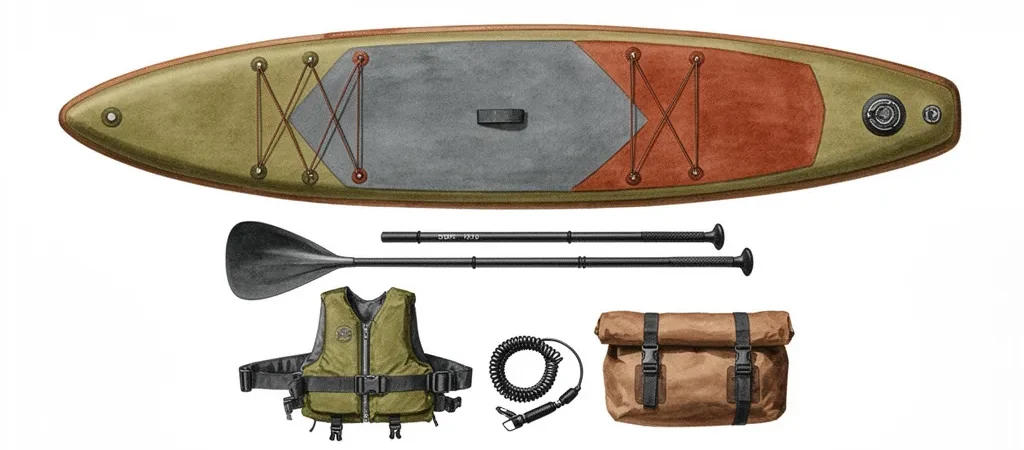
It’s peak July, someone you know just got hooked on paddle boarding, and the obvious gift is a $200 all-in-one inflatable SUP kit from the first page of Amazon. That’s also the gift most likely to be rotting in a garage by August. The single-layer PVC board bows in the middle under adult weight, the aluminum paddle wrecks shoulders, and the hand pump defeats most first-timers before they ever touch water.
The better move is to sort SUP gifts by what a first-season adult paddler actually uses. Someone who has paddled a handful of times on rented or borrowed boards doesn’t need the most impressive-looking package — they need the things that make the next outing easier to say yes to.
This guide covers both cases: the one board worth giving if you’re going big, and the accessories that improve every session whether the recipient owns a board or keeps renting.
How we select these gifts
- Specialty retailers first: We start with what paddle-focused specialty retailers actually stock — REI’s paddle department and dedicated shops like Austin Canoe & Kayak. Stores whose business depends on return customers don’t stock boards that taco or leashes that snap. Where a category isn’t covered locally, we check reputable national paddle retailers instead.
- Community consensus: We cross-reference retailer inventory against what paddlers recommend in their own communities — r/Sup beginner threads and long-running paddling forums. Products that show up in both signals get the heaviest weight.
- Age and stage fit: Every pick assumes an adult beginner in their first season — someone who’s paddled one to ten times, probably on rented boards, and is still falling during mounts and stance changes. That means 32–34″ board width and rigidity at 15 PSI matter more than speed, and gear that removes friction matters more than gear that adds capability.
- Budget range: Picks span $7 to $679, so the guide works whether you’re spending under $30 or giving the whole setup.
- Skip-this guidance: Where a popular pick isn’t right for this stage — or this type of water — we say so and explain why.
How We Pick Beginner SUP Gifts
The single biggest trap in SUP gifting is the cheap all-in-one kit, so our first criterion is anti-kit: no single-layer PVC boards, no boards rated below 15 PSI, no bundles built around a pump nobody will use twice. There’s a 60-second tell you can run on any listing. Look for the words “dual-layer,” “double-layer,” or a named fusion construction in the specs, and a recommended pressure of 15 PSI or higher. If the listing dodges construction details and leans on the carry bag and kayak-seat attachment instead, it’s a single-layer board that will flex like a banana under anyone over 150 pounds.
The first fork question for any gift-giver: do they already own a board? If yes, skip straight to the accessory picks — an electric pump, a wearable PFD, and a proper leash improve every session on any board, including rentals. If no, the inflatable-versus-hard question has a clear beginner answer: a quality dual-layer inflatable wins on storage, transport, and forgiving falls. Beginners fall on their boards constantly during mounts and stance transitions, and falling on inflatable deck padding is a very different experience than falling on epoxy.
There’s also a legal layer most shoppers don’t know exists. The US Coast Guard classifies paddle boards as vessels once you’re beyond a swim or surf zone, which means a USCG-approved PFD is required on board, and many states require a sound signal like a whistle. Leash choice is water-dependent: coiled leash for flatwater, quick-release belt for rivers, and never an ankle leash on moving water. Two of the picks below exist because the recipient legally needs them anyway — they might as well get the versions people actually use.
BOTE Breeze Aero: A Board That Won’t End Up in the Garage
If the gift is a board, the whole decision comes down to construction. The BOTE Breeze Aero is the anti-cheap-iSUP pick: its AeroUltra dual-layer PVC holds a full 15 PSI, which is the difference between a board that stays flat under an adult and one that folds at the midpoint every time the paddler steps back. BOTE backs it with a two-year warranty and runs its own flagship stores, so there’s a real company behind the board if a valve or fin box ever fails.
At 10’6″ and 33″ wide, it’s the shape beginner instructors put students on — long enough to track, wide enough to forgive a sloppy stance change. The package is genuinely complete: paddle, pump, fin, repair kit, and a backpack that fits everything.
The honest caveat: the bundled three-piece paddle is serviceable but heavy, and it’s the classic first upgrade every inflatable owner eventually makes. More on that in the next section, because it changes what the second-best gift in this guide is.
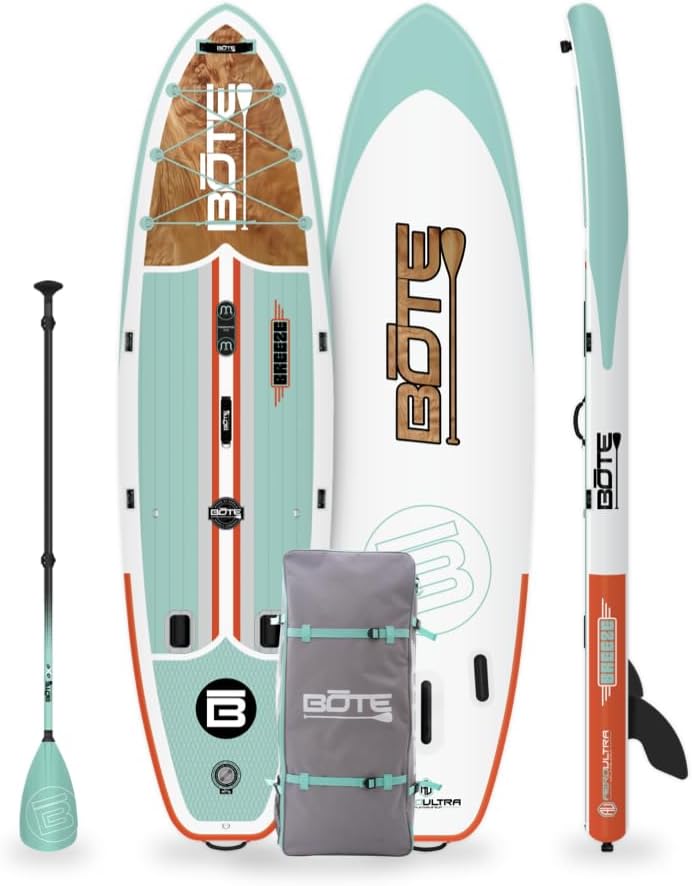
BOTE Breeze Aero 10’6″ Inflatable SUP Package
The anti-cheap-iSUP pick: BOTE’s AeroUltra dual-layer construction is what r/Sup regulars mean when they say spend once on a board that holds 15 PSI and doesn’t taco under an adult. The 10’6″ all-arounder is stable enough for a first-season adult paddler, and the complete package includes paddle, pump, fin, repair kit, and backpack.
- Dual-layer AeroUltra construction with 2-year warranty — rigid at pressure, unlike single-layer budget boards
- Complete package: 3-piece paddle, pump, fin, repair kit, and backpack included
- BOTE runs demo-friendly flagship stores for service and accessories
- Roughly 3x the price of the drop-shipped boards it replaces
- Included 3-piece paddle is serviceable but heavy — the classic first upgrade
The Upgrade Nobody Regrets: An Electric Pump — Plus a Word on Paddles
The OutdoorMaster Shark II is the sleeper gift of this entire guide. The number-one reason adult beginners quit inflatable SUP isn’t the water — it’s the ten minutes of exhausting manual pumping before every single session, in a parking lot, in July. Ask about electric pumps on r/Sup and “get the Shark” is the stock reply.
The workflow is what sells it: plug into the car’s 12V socket, set 15 PSI, walk away. The dual-stage pump moves volume first, then pressure, and shuts itself off at the target — no guessing whether the board is actually rigid. Active cooling means it can inflate two or three boards back to back, and it deflates boards for tighter packing on the way home.
The honest limitation: at this price there’s no built-in battery, so the recipient needs to launch somewhere they can park near the water. For most lake and bay paddlers, that’s every session.
One editorial note while we’re on the subject of arms and shoulders: if the recipient is stuck with a bundled aluminum paddle, a fiberglass upgrade like the Werner Vibe — stocked at REI and just about every paddle shop for around $150 — is the other transformative gift in this hobby. Aluminum paddles are heavy, fatigue shoulders fast, and sink when dropped. Sizing is simple: 6–8 inches over the paddler’s height. And if you want to hand them one free skill with the gift, tell them the blade angles away from the paddler — holding it backward is the universal beginner tell.

OutdoorMaster Shark II Electric SUP Pump (20 PSI)
The sleeper gift of the whole guide — the number-one reason adult beginners quit inflatable SUP is the 10-minute manual pumping ordeal before every session, and “get the Shark” is the stock r/Sup reply. Plugs into a car’s 12V socket, runs dual-stage to a set PSI, shuts itself off, and its active cooling can inflate multiple boards back to back.
- Set 15 PSI, walk away — auto-off means no guessing whether the board is rigid enough
- Active cooling handles 2-3 boards in a row without burning out
- Also deflates the board for tighter packing
- Requires a vehicle 12V outlet — no built-in battery at this price
The Safety Gifts That Are Legally Required Anyway
Do you legally need a life jacket on a paddle board? Yes — the Coast Guard treats SUPs as vessels outside swim and surf zones, so a USCG-approved PFD must be on board, and most states enforce it. The problem is what “on board” turns into in practice: a foam vest bungee-corded to the deck, doing nothing. The Onyx M-16 belt pack solves the real problem, which is that people don’t wear PFDs that are hot and bulky. At under a pound, it sits at the waist and disappears — which is exactly why paddlers actually keep it on in summer heat.
Its trade-off deserves plain language: this is a manual-inflation PFD. The wearer has to be conscious and able to pull the cord, and the CO2 cylinder is single-use per deployment. For a confident swimmer on a warm lake, that’s a reasonable trade for something they’ll actually wear. For a weak swimmer, or anyone headed to rivers, surf, or cold water, a foam vest like the Onyx MoveVent is the right call instead.
The BPS Storm coiled leash is the cheapest piece of genuine safety gear in the sport. On flat water, the board is the paddler’s flotation — a leash is what keeps it within reach when a beginner falls, and a first-season paddler falls a lot. The coiled cord rides up on the deck instead of dragging and snagging, and the double stainless swivels keep it from wrapping ankles.
One hard rule to pass along with this gift: ankle leashes are for flat water only. On flowing rivers they’re a documented entrapment hazard — moving water requires a quick-release waist belt, full stop.

Onyx M-16 Inflatable Belt Pack PFD
Most states require a PFD on board, and the M-16 is the one paddlers actually wear instead of bungee-ing a foam vest to the deck — a sub-1-lb belt pack that disappears at the waist in summer heat. USCG-approved, 16g CO2 pull-cord delivering up to 26.5 lbs of buoyancy.
- So low-profile it actually gets worn — the safety gear that works is the gear on your body
- Rectangular bladder floats you face-up more securely than tube-style competitors
- USCG-approved Type V satisfies state carry requirements
- Manual inflation only — the wearer must be conscious and able to pull the cord
- CO2 cylinders need replacing after each deployment

BPS Storm Ultralite 10′ Coiled SUP Leash
A proper coiled leash is the cheapest piece of genuine safety gear in SUP — on flat water the board is your flotation, and a leash keeps it attached when a beginner falls (which they will). Coiled cord stays up on the deck instead of dragging; padded neoprene cuff; double stainless swivels so it never wraps your feet.
- Coiled design eliminates drag and snagging on submerged branches — right choice for flat-water lakes
- Double stainless swivels and quick-release tab at a sub-$20 price
- 10-foot length correctly matches a 10’6″ beginner board
- An ankle leash is wrong for moving water — rivers require a quick-release waist belt instead
Under-$120 Gifts a First-Season Paddler Uses Every Single Outing
Every beginner learns the dry-bag lesson exactly once, usually the day their keys and towel go swimming. The Earth Pak 20L roll-top is the paddling community’s default answer and a Wirecutter dry-bag pick — clip it under the deck bungee and everything that shouldn’t get wet doesn’t. At 32,000+ ratings holding a 4.8, it’s about as proven as an under-$20 item gets.
The underrated pick in this tier is footwear. Nobody thinks about it until they’re barefoot on a scorching July boat ramp or losing traction on a wet deck pad — and then they think about it every outing. The Astral Loyak is the paddling community’s favorite deck shoe: sticky G.15 rubber, drain ports, and a sole thin enough to preserve board feel while balance is still a work in progress. The gifting risk is sizing — if you don’t know their shoe size, pick something else from this guide.
The budget anchor is the JOTO waterproof phone pouch, and it earns its spot as more than a stocking stuffer. A phone in an IPX8 pouch on a lanyard means a solo beginner can call for help from the water — that’s a genuine safety item disguised as a $7 accessory.

Earth Pak 20L Roll-Top Dry Bag
Every beginner learns the same lesson the first time keys and a towel go swimming: clip a roll-top dry bag to the deck bungee. The community’s default recommendation and a Wirecutter dry-bag pick — heavy-duty PVC, proper roll-top closure, five-year warranty, bundled IPX8 phone case.
- 4.8 stars across 32,000+ ratings — proven at scale, with a 5-year warranty
- 20L fits towel, dry clothes, snacks, and keys and still clips under deck bungees
- Bundled waterproof phone case included
- Roll-top keeps splash and brief dunks out, but nothing thick-PVC is truly submersion-rated for long soaks
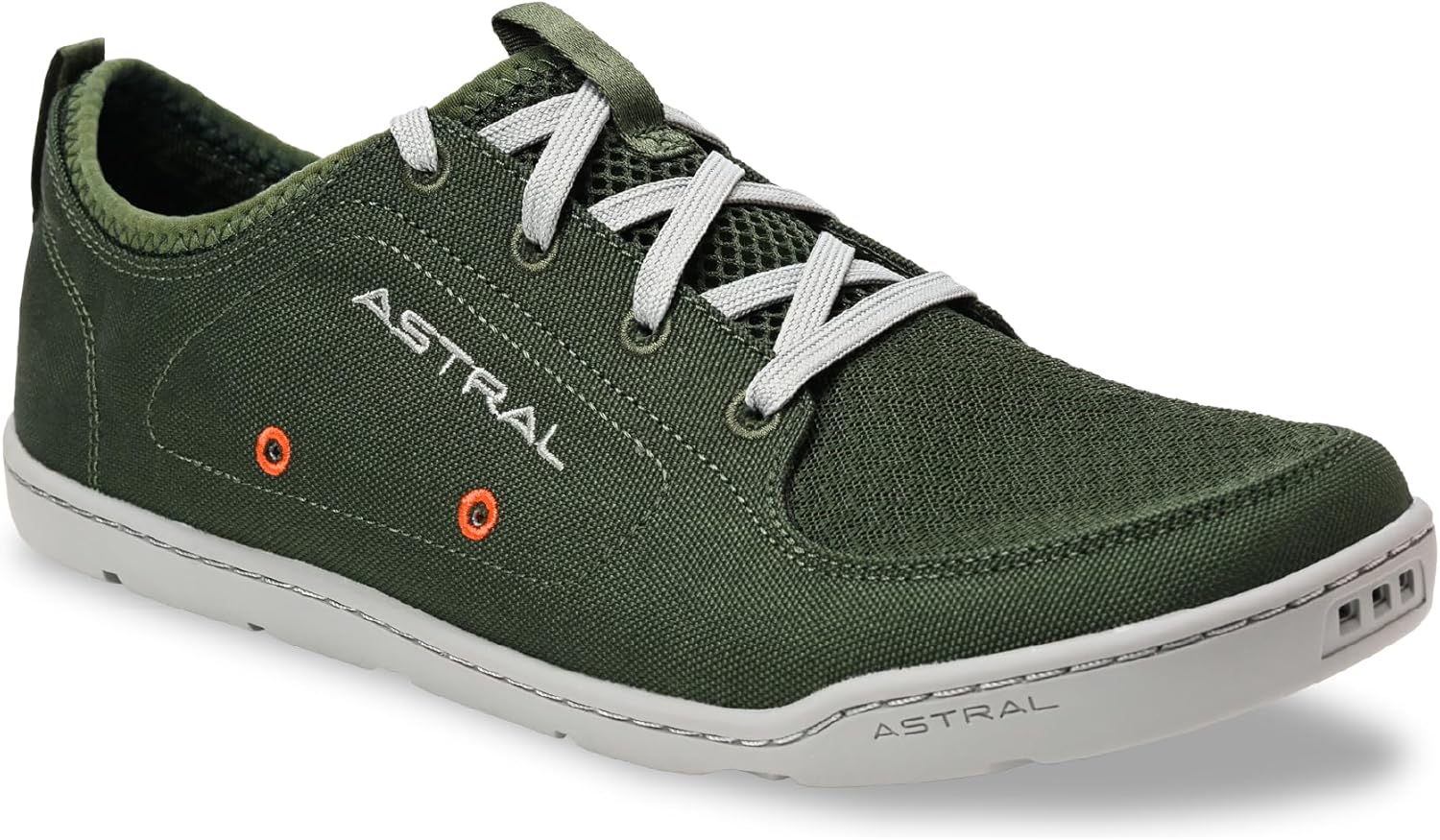
Astral Loyak Water Shoes
The underrated pick: nobody thinks about footwear until they’re barefoot on a scorching July boat ramp or sliding on a wet deck pad. Astral’s Loyak is the paddling community’s favorite deck shoe — sticky G.15 rubber, drain ports, and a low-profile fit that actually lets you feel the board.
- G.15 rubber outsole grips wet deck pads and slick launch ramps
- Quick-dry canvas with drainage — doubles as an everyday sneaker after the paddle
- Zero-drop, flexible sole preserves board feel, which matters when learning balance
- $110 is real money for water shoes
- Sizing is personal — a riskier gift than one-size accessories

JOTO Universal Waterproof Phone Pouch
The budget anchor of the guide and a genuine safety item: a phone in an IPX8 pouch on a lanyard means a solo beginner can call for help, navigate, and shoot photos from the water. With 87,000+ ratings it’s the most battle-tested waterproof pouch on Amazon.
- IPX8-rated to 100 feet, with clear windows front and back for photos
- Fits any phone up to 7 inches, lanyard included
- Cheap enough to pair with any other pick in this guide
- Touchscreen responsiveness through the film degrades when wet
- It doesn’t float on its own unless air is trapped inside
Gifts by Budget: Under $30 / Under $120 / The Big One
Under $30. The JOTO phone pouch ($6.99) is the safe pick for anyone — best for pairing with a card that says “call me from the lake.” The BPS Storm leash ($17.99) is best for the flat-water paddler who owns or borrows a board. The Earth Pak dry bag ($17.99) is best for the beginner still stashing keys in a flip-flop on shore.
Under $120. The Onyx M-16 belt pack ($84.69) is best for the confident swimmer who currently straps a foam vest to the deck instead of wearing it. The Shark II electric pump ($99.99) is best for any inflatable-board owner — it’s the pick most likely to be used every single outing. The Astral Loyak ($110) is best when you know their shoe size and their launch involves rocks, ramps, or July pavement.
The big one. The BOTE Breeze Aero ($679) is best for the beginner who has rented enough times to prove they’ll keep going and needs a board that won’t punish the commitment.
What to skip
Skip the sub-$250 all-in-one Amazon iSUP kit. The single-layer PVC board bows in the middle under anyone over 150 pounds, the aluminum paddle is heavy and sinks when dropped, and the single-chamber pump takes 15 exhausting minutes to reach a pressure the board can’t hold anyway. If your budget is $250, a quality electric pump plus a paddle upgrade will improve a borrowed or rented board more than a bad owned board ever will — and skip the novelty SUP-themed decor while you’re at it; a first-season paddler needs gear, not a “Life is Better on a Paddle Board” sign.
Match the gift to their season, not the marketing photo. Someone who has paddled fewer than five times doesn’t need more capability — they need less friction. An electric pump that erases the parking-lot ordeal or a dry bag that ends the wet-keys anxiety does more to keep a new paddler in the hobby than any board upgrade, because it makes the next outing easier to say yes to.
That’s also what this kind of gift signals: you noticed what actually stood between them and the water, not just what the hobby looks like from the outside.
If you’re still deciding between two picks, ask one question — do they already own a board? If yes, the pump. If no, and you’re not ready to commit $679, the belt-pack PFD plus the leash covers what they legally need anyway. It’s the first week of July; every pick here can be on the water this weekend.